 MineArchive
Howley Park Colliery
| Location | Howley Park, between Morley and Batley, Leeds and Kirklees, West Yorkshire — 53.7249, -1.6218 (approximate) |
|---|---|
| Commodities | Coal, Ironstone |
| Type | Coal |
| Worked | 1850–April 1936 |
| Operators | Howley Park Coal and Cannel Co. (?–1936, owner) — Howley Park Coal Co., later Howley Park Coal and Cannel Co. Ltd (DMM h268) |
A colliery at Howley Park, between Morley and Batley in the West Riding, worked from about 1850 to 1936 by the Howley Park Coal Co., later the Howley Park Coal and Cannel Co., with separate pits on the Cannel, Cromwell, Middleton and Beeston seams.
Location
Approximate location. The large pin is this mine; the small round markers are the nearest mines on record. Click one for its page. View on full map
History
Howley Park lay between Morley and Batley. The colliery dates from 1850, and its abandonment plans begin with the Adwalton Black Bed or Flockton seam in 1854 and run through the Cromwell and Stone seams in the 1860s and 1870s.
Its owner was the Howley Park Coal Co., later the Howley Park Coal and Cannel Co. Ltd, and the colliery was really several pits named for their seams. In 1894 the Cannel pit, with 150 people, raised gas coal, and the Cromwell pit, with 106, household coal; the Cromwell was abandoned by 1905, when a Little Middleton pit was working the Beeston and Middleton seams. By 1915 the Beeston pit was the largest, with ironstone as well as coal, alongside a Brown Metal pit and what was left of the Cannel; in 1923 the Beeston pit employed 602.
A run of plans closed on 5 April 1930 covers the Top and Low Beeston, Cromwell, Flockton, Brown Metal, Middleton Little and Wheatley Lime seams, and the last, for the Beeston Stone seam, is dated 19 February 1936. The colliery closed in April 1936. It stood apparently derelict at one stage.
Geology
Seams of the West Yorkshire Coal Measures: a cannel seam worked for gas coal; the Cromwell (or Silkstone), Stone or Stone Coal, Adwalton Black Bed or Flockton, Beeston (top and low), Middleton Little, Brown Metal (Green Lane) and Wheatley Lime; ironstone was raised from the Beeston pit by 1915.
Workings
Several pits under one name, each listed by its seam: Cannel, Cromwell, Little Middleton, Beeston and Brown Metal. The deaths recorded show pony haulage of tub sets, an engine plane and a screens with standing wagons beneath.
Closure
The workings were abandoned in stages from 1930, and the colliery closed in April 1936; the last plan, of the Beeston Stone seam, is dated 19 February 1936.
What remains
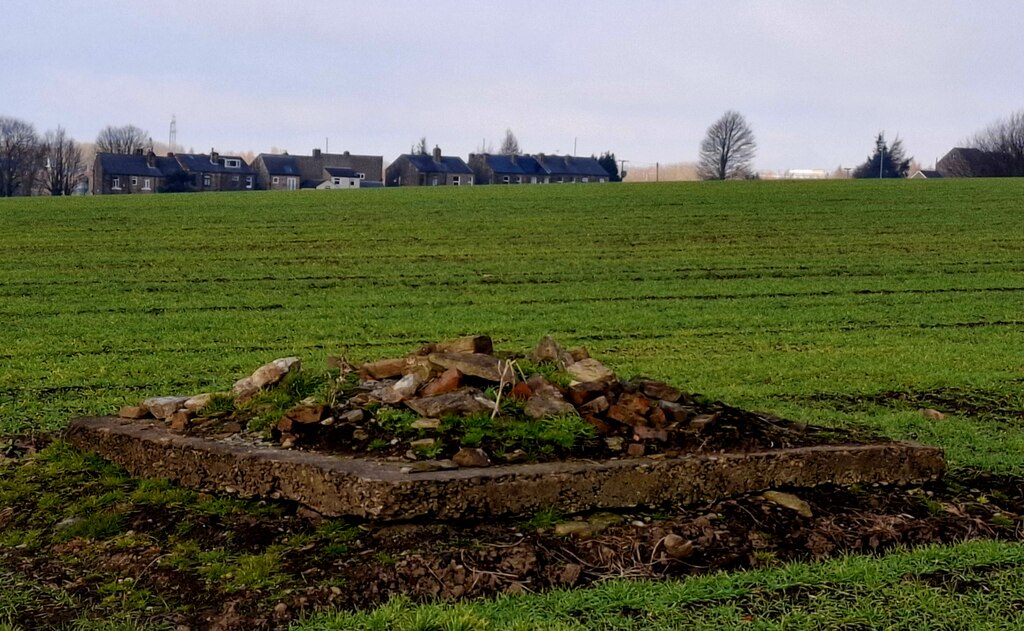
A concrete-capped airshaft in a field south of Howden Clough Road may have belonged to the colliery.
Possibly a capped airshaft.
Nearby mines
- Batley Colliery — 0.7 miles (1.1 km) SW
- Soothill Wood Colliery — 0.7 miles (1.1 km) S
- Chidswell Colliery — 1.4 miles (2.3 km) SE
- West Ardsley Colliery — 1.9 miles (3.0 km) NE
- White Lea Colliery — 1.9 miles (3.1 km) W
Straight-line distance, within 9 miles (15 km). Show on the map.
Further reading
The British Geological Survey catalogue entry for the colliery's last plan, the Beeston Stone seam, dated 19 February 1936.
View sourceSources
- (primary) Howley Park Colliery (Durham Mining Museum) — Durham Mining Museum
- (primary) BGS mine plan: HOWLEY PARK BEESTON, Stone seam, abandoned 19 February 1936 — British Geological Survey
- (primary) BGS mine plan: HOWLEY PARK, Adwalton Black Bed or Flockton seam, abandoned 1854 — British Geological Survey
- (primary) BGS mine plan: HOWLEY PARK, Cromwell seam, abandoned 5 April 1930 — British Geological Survey
- (secondary) Coal Mining in Morley, by Jim Thorp (British Mining No. 87, look-inside extract) — Northern Mine Research Society
Record created: 5 November 2026 · Last researched: 5 November 2026