 MineArchive
Great Orme Copper Mines
| Location | Great Orme, above Llandudno, Conwy — 53.3309, -3.8477 (exact) |
|---|---|
| Commodities | Copper, Lead |
| Type | Metal |
| Worked | c. 1700 BC–c. 600 BC |
| Maximum depth | prehistoric workings reach roughly 70m below surface; a separate Victorian-era shaft reaches 145m |
Overview
The Great Orme Copper Mines, on the limestone headland above Llandudno, are the largest prehistoric copper mine yet discovered anywhere in the world. Bronze Age miners worked the site for around eight centuries using stone and bone tools; forgotten for millennia, the workings were rediscovered in 1987 and are now open to visitors as a museum and self-guided underground tour.
History
Nineteen radiocarbon dates place mining activity at roughly 1700-900 BC, from the late Early Bronze Age into the Late Bronze Age. Research published in the journal Antiquity identifies a 'golden age' of major production around 1600-1400 BC — Britain's first mining boom — with the richest areas estimated to have yielded 202-756 tonnes of copper metal over roughly two centuries, around 1-4 tonnes a year, enough for an estimated 2,200-8,900 bronze axes annually. Lead-isotope analysis has matched Great Orme copper to bronze objects found as far afield as Brittany, the Netherlands and Sweden, pointing to active long-distance trade networks across Bronze Age Europe. Miners used stone hammers and animal bone and antler picks to work the ore; after the richest ground was exhausted, a long 'twilight period' of low-yield working on narrow veins continued to around 600 BC. The prehistoric workings were then forgotten until landscaping work in 1987 exposed them; a separate phase of mining using explosives and iron tools, evidenced by a 145-metre shaft and artefacts including clay pipes, shovels and a powder horn, is known to have worked the site from the late 17th century into the 19th century, long after the Bronze Age workings had passed out of memory.
Geology
The mine sits in Carboniferous (Visean) limestone, around 330 million years old, with localised dolomitisation and minor mudstone and sandstone. Hydrothermal fluids moving along faults and fractures deposited veins of the copper ore chalcopyrite, occasionally with the lead mineral galena, along with the secondary copper carbonates malachite and azurite — malachite made up most of the ore actually mined.
Geological setting: Hydrothermal Deposits (well documented example)
Workings
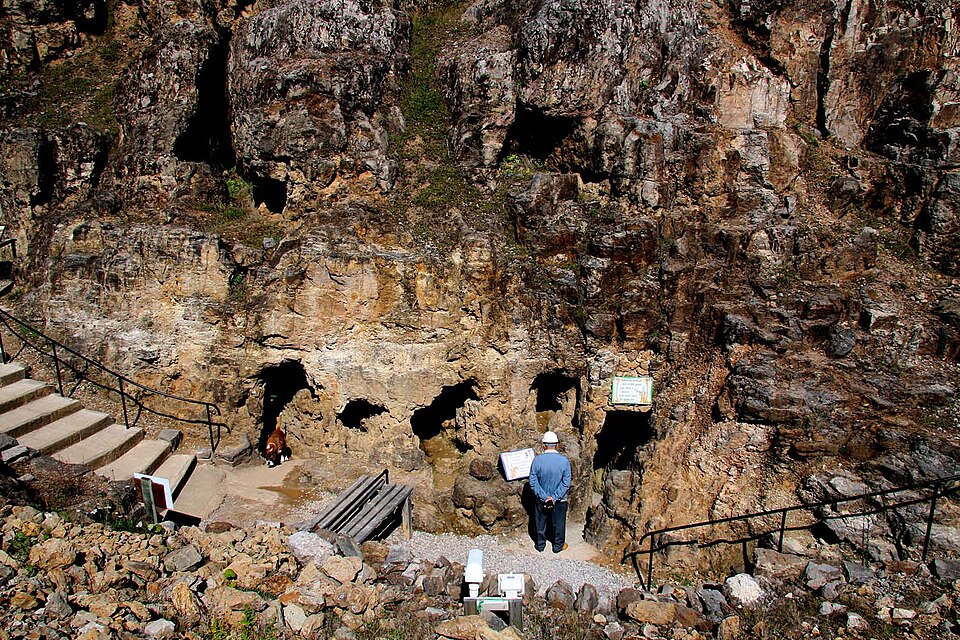
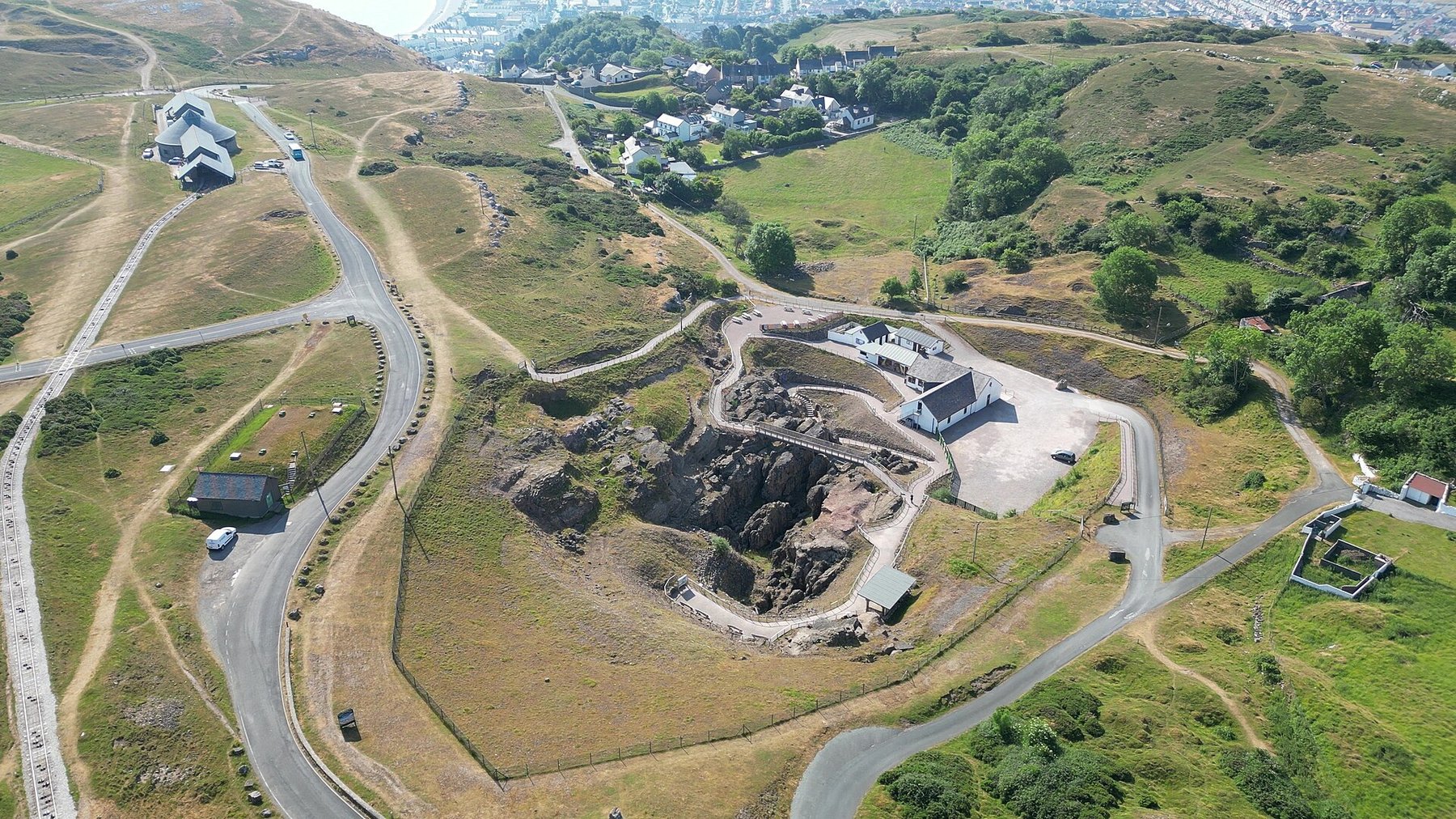
Excavation since 1987 has revealed more than 8km (5 miles) of tunnels and numerous chambers, with less than half of the prehistoric workings thought to have been found so far. The oldest, surface 'opencast' workings — probably a collapsed chamber — sit above a large underground chamber roughly 10 by 15 metres and 8 metres high, surrounded by several kilometres of mostly small, irregular underground workings following narrow veins. Bell pits aligned with geological faults are visible across the surface. A later, separate Victorian shaft reaches 145 metres deep, near the Great Orme Tramway's halfway station.
Closure
The main prehistoric phase of working tailed off by around 600 BC as the richest, most accessible ore was exhausted, leaving only narrow, low-grade veins; the site was then forgotten for over two thousand years. A distinct later phase reworked the site for copper from the late 17th century into the 19th century, using explosives and iron tools, before it too ceased and the prehistoric workings passed out of memory until their rediscovery in 1987.
What remains
The site is a Scheduled Monument (Cadw ref. CN216, designated 1994) and operates as a museum and visitor attraction, the Great Orme Mines, open February to October. Only two human bones have been found at the site to date, now on display in the visitor centre; any Bronze Age dead would ordinarily have been removed for burial according to the practice of the time, so their scarcity is not itself evidence the mine was unusually safe. As of the 2026 season the mine is open every day to the end of October; the self-guided visit runs about 45 minutes and takes in a 200 m underground route on two levels, a reconstructed smelting shelter and the opencast workings.
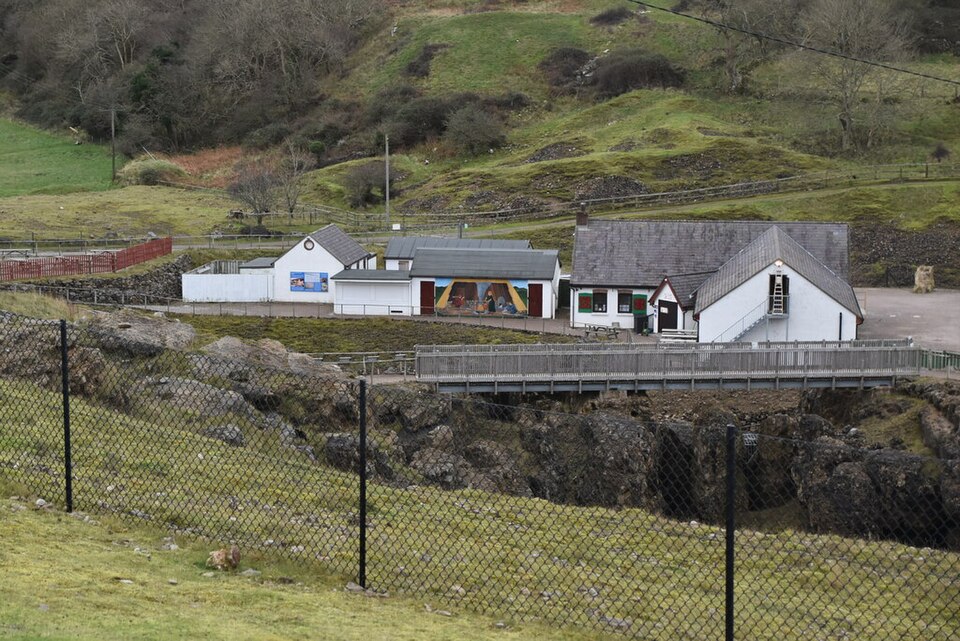
Surviving surface features include the opencast quarry — the oldest visible part of the site — spoil, and a reconstructed smelting shelter demonstrating how ore was turned into metal. Remnants of the later Victorian shaft and associated spoil survive near the tramway's halfway station.
Redevelopment
A self-guided tour of around 45 minutes takes visitors through the visitor centre, an introductory film, roughly 200 metres of underground passage across two levels (35 steps, 5-8°C, hard hats provided), and a surface walk around the smelting shelter and opencast workings. Original and replica Bronze Age tools are displayed in the visitor centre.
Nearby mines
- Penmaenmawr Granite Quarry — 6.3 miles (10.2 km) SW
- Penmon Quarry — 8.4 miles (13.5 km) W, Anglesey
Straight-line distance, within 9 miles (15 km). Show on the map.
Recorded claims
Individual factual claims, each attached to the source(s) that support it below. Where sources disagree, both are kept.
- Nineteen radiocarbon dates indicate mining activity spanning roughly eight centuries, from about 1700 BC to 900 BC. 1
- During the mine's peak, c. 1600-1400 BC, the richest areas are estimated to have yielded 202-756 tonnes of copper metal over roughly two centuries — around 1-4 tonnes a year, enough for an estimated 2,200-8,900 bronze axes annually. 1
- The prehistoric workings were rediscovered in 1987 during landscaping work on the Great Orme; excavation since then has revealed more than 8km (5 miles) of tunnels, with less than half of the prehistoric workings thought to have been found. 2
- A separate Victorian-era shaft on the site reaches 145 metres deep, evidence of a later phase of copper working from the late 17th century into the 19th century, long after the prehistoric mine had been forgotten. 3
- The copper ore occurs as chalcopyrite veins, with occasional galena, formed by hydrothermal fluids along fractures and faults in the Carboniferous limestone, alongside the secondary minerals malachite and azurite. 4
- The site is a Scheduled Monument (Cadw ref. CN216), designated on 26 January 1994. 5
- The prehistoric workings were uncovered in 1987 during a scheme to landscape part of the Great Orme, and the site operator describes them as the largest prehistoric mine yet found anywhere in the world. 6,7
Photographs & further reading
The peer-reviewed dating and production-scale study behind the figures cited above.
View sourceThe site's own visitor information, tour details and opening times.
View sourceSources
- (primary) Boom and bust in Bronze Age Britain: major copper production from the Great Orme mine and European trade, c. 1600-1400 BC — Antiquity (Cambridge University Press)
- (secondary) Great Orme Ancient Mines - History and Facts — History Hit
- (secondary) Bronze Age Mine Self Guided Tour — Great Orme Mines (official site)
- (secondary) 100 Great Geosites: Great Orme — The Geological Society
- (secondary) The Great Orme Mines, Llandudno, Wales — Historic UK
- (observational) The smelting shelter at the Great Orme Bronze Age Mine — Geograph Britain and Ireland
- (secondary) Great Orme Mines — visitor information — Great Orme Mines
Record created: 20 August 2026 · Last researched: 9 September 2026