 MineArchive
Gin Pit, Maesteg
| Also known as | Pwll Gwaith Newydd |
|---|---|
| Location | Maesteg, Bridgend — 51.6105, -3.6665 (approximate) |
| Commodities | Coal, Ironstone |
| Type | Coal |
| Worked | Probably early 1840s–1875 |
| Maximum depth | 328 feet (100 m), on the Red Vein level. |
| Operators | Llynvi Iron Company (1841–?), Llynfi, Tondu and Ogmore Coal and Iron Company (?–1875) |
Overview
A coal and ironstone pit sunk by the Llynvi Iron Company on the site of its Maesteg ironworks in the early 1840s, worked until 1875. It was the scene of the most serious mining accident in the Maesteg district: an explosion on Boxing Day 1863 that killed fourteen men and boys (see Disasters, below).
History
Gin Pit, also known by the Welsh name Pwll Gwaith Newydd ('New Works Pit'), probably originated as Nant-y-Crynwydd Colliery; the origin of the name 'Gin' is not known, but was probably a shortened form of 'Engine Pit'. It was opened by the Llynvi Iron Company on the site of its ironworks, probably in the early 1840s, and was probably a development of an earlier level at the site. The mine consisted of an upcast shaft on higher ground next to the Llynvi coke ovens and a 'horseway' or entrance drift on lower ground near the Llynvi blast furnaces, sunk to the Caerau seam at 108 yards; coal was produced from the 2ft 9in, 4ft and 6ft seams, and iron ore production was also significant. In the early 1860s about 160 men and 18 horses were employed at the colliery. On Boxing Day 1863 an explosion killed fourteen men and boys — the most serious mining accident in the Maesteg district (see Disasters, below). The pit worked in conjunction with the Dyffryn Madoc colliery 500 metres to the north, its associate shaft on the same Red Vein level. It closed in 1875, by then owned by the Llynvi, Tondu and Ogmore Coal and Iron Co. Ltd.
Geology
Worked the South Wales Coalfield's Llynfi Valley seams — the Caerau seam at 108 yards depth, and the 2ft 9in, 4ft and 6ft seams — alongside ironstone, on the same ground as the Llynvi Iron Company's ironworks.
Workings
An upcast shaft on higher ground beside the Llynvi coke ovens, and a horseway (entrance drift) on lower ground near the Llynvi blast furnaces, sunk to a depth of 328 feet on the Red Vein level (Buddlepit and the associated Dyffryn Colliery account both give this figure, consistent with the 108-yard/324-foot depth to the Caerau seam recorded elsewhere on the same page).
Closure
Closed in 1875 under the ownership of the Llynvi, Tondu and Ogmore Coal and Iron Co. Ltd. The Buddlepit mine database gives a working period of '1840s to 1975', which appears to be a transposition of the 1875 closure date given by its own cited source (Welsh Coal Mines) rather than an independent later closure — no other source records the pit working into the 20th century, and it is not treated as reliable here.
What remains
Buddlepit records the site as private land at approximately 170m elevation; no other observational account has been found.
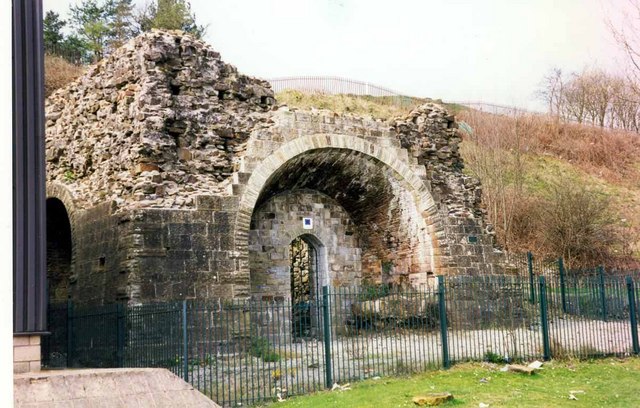
No specific account of surviving surface remains at Gin Pit itself has been found; the wider Llynfi Ironworks site nearby retains ruined blast-furnace structures.
Redevelopment
Not established from the sources read for this pass.
Nearby mines
- Coegnant Colliery — 2.1 km NE
- St John's Colliery — 2.8 km E
- Caerau Colliery — 3.5 km NE
- Ffaldau Colliery — 5.6 km E
- Lluest Colliery — 5.8 km E
Straight-line distance, within 15 km. Show on the map.
Disasters & major incidents
-
Gin Pit explosion, 1863
26 December 1863 · Explosion · 14 fatalities
A firedamp explosion at Gin Pit, Maesteg on the Saturday after Christmas Day 1863 killed fourteen men and boys — the most serious mining accident in the Maesteg district — after the pit went unexamined for almost 36 hours and a young, inexperienced fireman failed to inspect it before the shift began.
Recorded claims
Individual factual claims, each attached to the source(s) that support it below. Where sources disagree, both are kept.
- Gin Pit probably originated as Nant-y-Crynwydd Colliery and was opened by the Llynvi Iron Company on the site of its ironworks, probably in the early 1840s; the name is thought to be a shortened form of 'Engine Pit'. (uncertain) 1
- Sunk to the Caerau seam at 108 yards, working the 2ft 9in, 4ft and 6ft seams; an upcast shaft stood beside the Llynvi coke ovens and a horseway drift near the blast furnaces. Iron ore production was also significant. 1
- About 160 men and 18 horses were employed at the colliery in the early 1860s. 1,2
- Closed in 1875 under the Llynvi, Tondu and Ogmore Coal and Iron Co. Ltd. 1
- Gin Pit worked in conjunction with the Dyffryn Madoc colliery 500 metres to the north, its associate pit on the same Red Vein level. 1
Photographs & further reading
History, ownership, workings and the 1863 explosion, including an interview transcript on Bryncethin-area mining.
View sourceNorthern Mine Research Society account of the 1863 explosion, with the Mines Inspector's report and inquest evidence.
View sourceSources
- (secondary) Gin Maesteg (Welsh Coal Mines) — Welsh Coal Mines
- (secondary) Llynvi Colliery Explosion - Maesteg - 1863 — Northern Mine Research Society
Record created: 13 September 2026 · Last researched: 14 September 2026