 MineArchive
George Pit
| Also known as | George Pit, Cwmpennar, George Pit, Cefnpennar |
|---|---|
| Location | Cefnpennar, above Cwmpennar, Mountain Ash, Cynon Valley, Rhondda Cynon Taf — 51.7063, -3.3885 (approximate) |
| Commodity | Coal |
| Type | Coal |
| Worked | 1881 (sinking)–1905 or 1909 |
| Maximum depth | 1,335 feet 5 inches to the Nine-Feet seam (NMRS); Welsh Coal Mines gives 480 yards. |
| Operators | Powell Duffryn Steam Coal Company (1881–?) |
Overview
A Powell Duffryn steam-coal pit on the hillside at Cefnpennar, about a mile up the valley from the Lower Duffryn Colliery, sunk from 1881 to the Nine-Feet seam and reached by a self-acting incline. It employed more than 400 men in 1896 and closed in the 1900s, its coal then worked from the Lower Duffryn.
History
The Powell Duffryn Steam Coal Company began sinking the George Pit in 1881, on the eastern edge of its mineral take at Cefnpennar, about a mile up the valley from its Lower Duffryn Colliery at Cwmpennar. It opened for production in 1883. The shaft reached the Nine-Feet (Rhas Las) seam at 1,335 feet 5 inches by the Northern Mine Research Society's figure; Welsh Coal Mines gives 480 yards. The Upper-Four-Feet, Six-Feet, Nine-Feet, Bute and Seven-Feet seams were all worked, and the coal was low-volatile coking steam coal, served by the Taff Vale Railway.
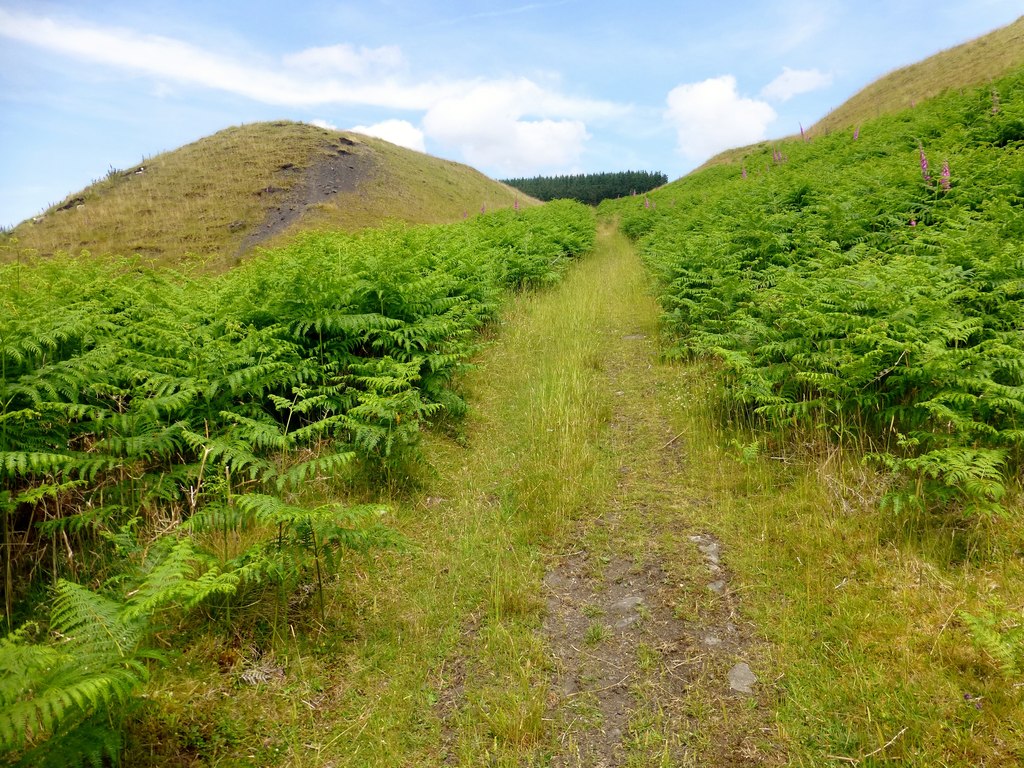
The pit was reached from the Upper Cwmpennar Pit by a self-acting incline. Men were forbidden to ride the wagons on it, and some had been prosecuted for doing so, but on 9 December 1886 five who were riding were killed when a stone on the points sent their wagons into a loaded run (see Disasters, below). The pit produced 138,098 tons of coal in 1889 and 136,709 in 1894; in 1896, managed by Gwilym Jones, it employed 353 men underground and 66 on the surface.
After a short life the pit wound down: the research society lists 51 men in 1900, rising to 105 in 1903, then 4 in 1904, and closure in 1909. Welsh Coal Mines gives closure in 1905, after which its coal was worked from the Lower Duffryn.
Geology
Steam-coal measures with about 75 feet of coal in section; the Upper-Four-Feet (63 inches), Six-Feet, Nine-Feet (10 feet 6 inches), Bute and Seven-Feet seams were worked. Coal types 202 and 203, low-volatile coking steam coals.
Workings
A shaft sunk to the Nine-Feet (Rhas Las) seam, linked to the Lower Duffryn Colliery's Upper Cwmpennar Pit by a self-acting incline about a mile long.
Closure
Closed after a relatively short life, in 1905 by Welsh Coal Mines' account or 1909 by the Northern Mine Research Society's; its coal was then worked from the Lower Duffryn.
What remains
Unknown.
Redevelopment
Unknown.
Related mines
- Lower Duffryn Colliery — Joined by the self-acting incline from the Upper Cwmpennar Pit; the George Pit's coal was later worked from the Lower Duffryn.
Nearby mines
- Gethin Colliery — 1.1 miles (1.7 km) NE, Merthyr Tydfil
- Lletty Shenkin Colliery — 1.1 miles (1.7 km) SW
- Lower Duffryn Colliery — 1.0 miles (1.7 km) S
- Perthyglisson Colliery — 1.0 miles (1.7 km) E, Merthyr Tydfil
- Cwmbach Colliery — 1.1 miles (1.8 km) W
Straight-line distance, within 9 miles (15 km). Show on the map.
Disasters & major incidents
-
Cwmpennar Colliery incline collision, 1886
9 December 1886 · Haulage / Transport · 5 fatalities
On the evening of 9 December 1886 men riding up the Powell Duffryn Company's self-acting incline at Cwmpennar to the George Pit were run into by descending coal wagons when a stone jammed the points. Five died and several more were injured; the inquest found the evidence of how the stone got there inconclusive.
What's uncertain
Points where sources disagree or the record could not be settled; both accounts are kept. All open questions in the archive.
- It was sunk to the Nine-Feet seam at a depth of 1,335 feet 5 inches. (disputed) 2
- It worked the Rhas Las (Nine-Feet) seam at a depth of 480 yards. (disputed) 1
- The colliery closed in 1905, its coal then being worked from the Lower Duffryn. (disputed) 1
- It was closed in 1909. (disputed) 2
Recorded claims
Individual factual claims, each attached to the source(s) that support it below. Where sources disagree, both are kept.
- The Powell Duffryn Steam Coal Company began sinking the George Pit in 1881. 1,2
- In 1896 it employed 353 men underground and 66 on the surface. 1,2
- It was sunk to the Nine-Feet seam at a depth of 1,335 feet 5 inches. (disputed) 2
- It worked the Rhas Las (Nine-Feet) seam at a depth of 480 yards. (disputed) 1
- The George Pit stood at the top of a self-acting incline from the Upper Cwmpennar Pit. 3,4
- The colliery closed in 1905, its coal then being worked from the Lower Duffryn. (disputed) 1
- It was closed in 1909. (disputed) 2
Photographs & further reading
Ray Lawrence's account of the pit's sinking, seams, output and deaths.
View sourceThe Lower Duffryn page, with a section on the George Pit a mile up the valley.
View sourceSources
- (secondary) Lower Duffryn (Cwmpennar), near Mountain Ash — Welsh Coal Mines
- (secondary) NMRS: George Pit — Northern Mine Research Society
- (primary) 'The recent disaster on the Cwmpennar incline: resumption of the inquest, verdict of the jury', Western Mail, 21 December 1886 — Welsh Newspapers Online (National Library of Wales)
- (secondary) NMRS: George Pit Accident, Mountain Ash, 1886 — Northern Mine Research Society
Record created: 11 October 2026 · Last researched: 11 October 2026