 MineArchive
Eppleton Colliery
| Location | near Hetton-le-Hole, County Durham, Tyne and Wear — 54.8289, -1.4333 (approximate) |
|---|---|
| Commodities | Coal, Fireclay |
| Type | Coal |
| Worked | 1833–1986 |
| Maximum depth | Unknown. |
| Operators | Hetton Coal Company (1825–1911), Lambton & Hetton Collieries Ltd (1911–1934), Lambton, Hetton & Joicey Collieries Ltd (1934–1947), National Coal Board (1947–1986) |
Overview
One of the Hetton collieries south-west of Sunderland, its Jane Pit sunk from May 1825 and the colliery dated from June 1833. It worked gas, household and steam coal with fireclay for over 150 years under the Hetton Coal Company and its successors, and was among the last East Durham pits to close, in March 1986. Two explosions mark its record — twenty killed in 1836 and nine in 1951.
History
Sinking at the Jane Pit began on 23 May 1825 under the Hetton Coal Company, and the colliery is dated from 8 June 1833; the Caroline and Lindsay pits followed. On 28 January 1836 an explosion in the Downs pit of the Hetton colliery killed twenty (see Disasters, below).
The Hetton Coal Company held the colliery through the nineteenth century, latterly as the Hon. A. Cochrane & Partners, before it passed to Lambton & Hetton Collieries Ltd in 1911 and to Lambton, Hetton & Joicey Collieries Ltd in 1934 — the great amalgamation of Durham coal-owning interests — and to the National Coal Board in 1947. From the 1890s the returns record gas, household and steam coal with fireclay, the Caroline and Jane pits returning slightly different classes of coal in the same years.
On 6 July 1951, under the Coal Board, an explosion of firedamp propagated by coal dust killed nine men. The ignition came from the defective master control box of a Joy loader — a mechanical coal-loading machine — and the Mines Inspector reported on it. The colliery closed on 30 March 1986, more than 150 years after its first coal. The Five Quarter seam was given up in 1954, its abandonment plan passing with the colliery's others to the Mining Remediation Authority.
Geology
The colliery worked the Coal Measures of the East Durham coalfield, where the productive measures lie beneath the Magnesian Limestone and the pits had to be sunk through it — the engineering problem that defined the Hetton sinkings of the 1820s. Seatearth fireclay beneath the coals was raised as a product alongside them for most of the colliery's life.
Geological setting: Concealed Coalfields (well documented example)
Workings
Three pits are recorded — Jane, sunk from May 1825, together with Caroline and Lindsay. The output returns from 1894 give gas, household and steam coal with fireclay, and from 1902 distinguish the Caroline and Jane pits, which returned different classes of coal in the same years. By 1951 the colliery was using Joy loaders at the face.
Closure
Closed on 30 March 1986, among the last of the East Durham collieries.
What remains
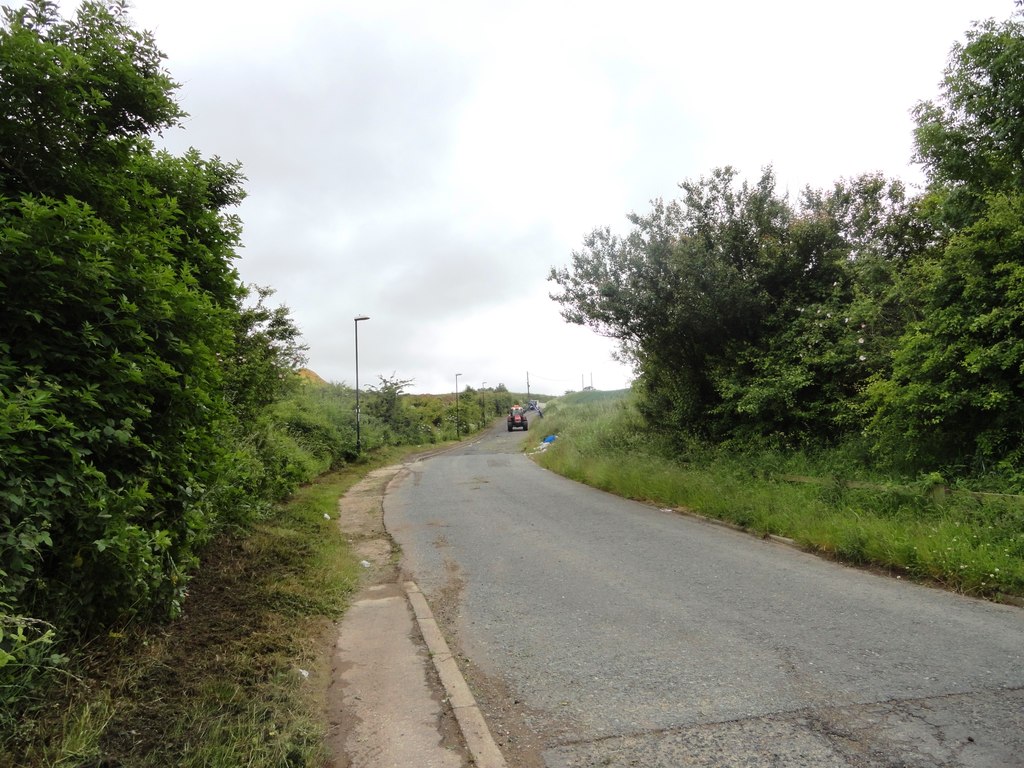
The colliery site has been cleared and reclaimed; nothing is recorded of surviving structures.
Related mines
- Elemore Colliery — Both Hetton Coal Company pits; Elemore's workers were transferred to Eppleton while Elemore stood idle in 1893-1897.
- Hetton Colliery — Both Hetton Coal Company collieries, joined by the company's private railway.
Nearby mines
- Hetton Colliery — 1.0 miles (1.5 km) S
- Hazard Colliery — 1.6 miles (2.6 km) W
- Elemore Colliery — 1.8 miles (2.9 km) S, County Durham
- North Hetton Colliery — 1.9 miles (3.1 km) SW
- Houghton Colliery — 2.0 miles (3.2 km) NW
Straight-line distance, within 9 miles (15 km). Show on the map.
Disasters & major incidents
-
Hetton Downs Pit Explosion, 1836
28 January 1836 · Explosion · 20 fatalities
An explosion in the Downs pit of the Hetton colliery on 28 January 1836 killed twenty and left another man so badly scorched there was little hope for him. The inquest found the cause was a boy failing to keep a ventilation trap door shut — and heard that the men preferred candles to the Davy lamp because candles gave a better light. -
Eppleton Colliery fall of stone, 1878
18 December 1878 · Collapse / Roof Fall · 2 fatalities
On 18 December 1878 two young colliers were killed by a fall of stone in the Hutton Seam at Eppleton Colliery, near Hetton-le-Hole in County Durham. -
Eppleton Colliery tubs accident, 1881
6 January 1881 · Haulage / Transport · 2 fatalities
On 6 January 1881 two boys were killed at Eppleton Colliery, near Hetton-le-Hole in County Durham, when the full tubs they were riding jumped the rails and up-ended on them. -
Eppleton Colliery gas deaths, 1895
13 December 1895 · Gas / Asphyxiation · 3 fatalities
On 13 December 1895 a deputy walked through a fence into a place known to be foul with gas at Eppleton Colliery, near Hetton-le-Hole in County Durham, and he, a putter and a hewer who went in to save them were all overcome and died. -
Eppleton Colliery Explosion, 1951
6 July 1951 · Explosion · 9 fatalities
An explosion at Eppleton Colliery on 6 July 1951 killed nine men. Firedamp was ignited by the defective master control box of a Joy loader — a mechanical coal-loading machine — and the flame was carried on by coal dust. The Mines Inspector reported on it.
Culture
- Eppleton Colliery Welfare F.C. (Sports)
The colliery whose welfare organisation gave the club its name and ground, and where the club's trainer was killed in the explosion of 6 July 1951.
What's uncertain
Points where sources disagree or the record could not be settled; both accounts are kept. All open questions in the archive.
- An explosion in the Downs pit on 28 January 1836 killed twenty, with another so badly scorched that there were faint hopes of his recovery. Over a hundred were employed in the pit at the time. (uncertain) 2
Recorded claims
Individual factual claims, each attached to the source(s) that support it below. Where sources disagree, both are kept.
- Sinking at the Jane Pit began on 23 May 1825; the Durham Mining Museum dates the colliery's opening to 8 June 1833. 1
- From 1894 the colliery's returns record gas, household and steam coal together with fireclay, and from 1902 distinguish the Caroline and Jane pits. 1
- An explosion of firedamp propagated by coal dust on 6 July 1951 killed nine; the ignition was caused by the defective master control box of a Joy loader. 1
- The colliery closed on 30 March 1986. 1
- An explosion in the Downs pit on 28 January 1836 killed twenty, with another so badly scorched that there were faint hopes of his recovery. Over a hundred were employed in the pit at the time. (uncertain) 2
- The Mining Remediation Authority holds abandonment plan D426 for the Five Quarter seam at Eppleton, abandoned in 1954, one of a long run of Eppleton plans in the catalogue. 3
Photographs & further reading
The colliery's pits and sinking dates, its owners from the Hetton Coal Company to the National Coal Board, the annual output returns, and the two disasters recorded there with the names of the dead.
View sourceSources
- (primary) Durham Mining Museum: Eppleton Colliery — Durham Mining Museum
- (primary) M. A. Richardson, Local Historian's Table Book (1844), on the Hetton Downs Pit explosion of 1836 — Durham Mining Museum, quoting Richardson
- (primary) EPPLETON (Mine Remediation Authority abandonment plan D426, BGS mine plans catalogue) — British Geological Survey / Mining Remediation Authority
Record created: 3 September 2026 · Last researched: 24 September 2026