 MineArchive
East Hedley Hope Colliery
| Also known as | East Hedleyhope Colliery |
|---|---|
| Location | East Hedleyhope, Deerness valley, near Tow Law, County Durham — 54.7587, -1.7552 (approximate) |
| Commodity | Coal |
| Type | Coal |
| Worked | 1836–31 January 1959 |
| Maximum depth | Unknown. |
| Operators | Sir B. Samuelson & Co. Ltd, Hedley Hope Coal Co. Ltd. (?–1936), Bearpark Coal & Coke Co. Ltd (1936–1947), National Coal Board (1947–1959) |
Overview
A Deerness valley colliery near Tow Law, opened in 1836, that made coking coal for the ironworks, lay almost idle for thirty years after 1902 and was revived to work until 31 January 1959.
History
East Hedley Hope Colliery lay in the Deerness valley about seven and a half miles west of Durham and three miles from Waterhouses. It opened in 1836 and gave rise to the pit village of East Hedleyhope. By the 1890s it belonged to Sir Bernhard Samuelson & Co., who worked it with their Hedleyhope colliery for coking coal; much of the output was made into coke for ironmaking, including at the Tow Law furnaces, in batteries of beehive ovens by the River Deerness. J. G. Wild managed it in the 1880s and W. H. Telford in the 1890s.
Employment rose from 172 in 1883 to a peak of 495 in 1900. Then the colliery fell almost idle: it was standing in 1902, and only a handful of men worked it between 1915 and 1930.
In the 1930s the Hedley Hope Coal Co. Ltd reopened it, and from June 1936 it belonged to the Bearpark Coal & Coke Co. Ltd; 295 men were employed in 1935, working the Ballarat, Harvey, Main and Three Quarter seams, with small drifts beside the pit. The National Coal Board took over in 1947 and employment reached 455 in 1950. The colliery closed on 31 January 1959 with the loss of 274 jobs.
Geology
Durham Coal Measures on the western edge of the coalfield. The colliery worked the Five Quarter, Three Quarter, Main, Brockwell, Ballarat and Harvey seams, and at the end the Busty and Tilley, with fireclay.
Workings
A colliery with several drifts beside it by 1950, among them the Bradley Five Quarter, South Five Quarter and Winter Ballarat, and the small Post Office and Three Quarter drifts of the 1940s. The Brockwell or Main was abandoned on 31 December 1937 and the Five Quarter on 22 January 1938.
Closure
The colliery closed on 31 January 1959 with the loss of 274 jobs.
What remains
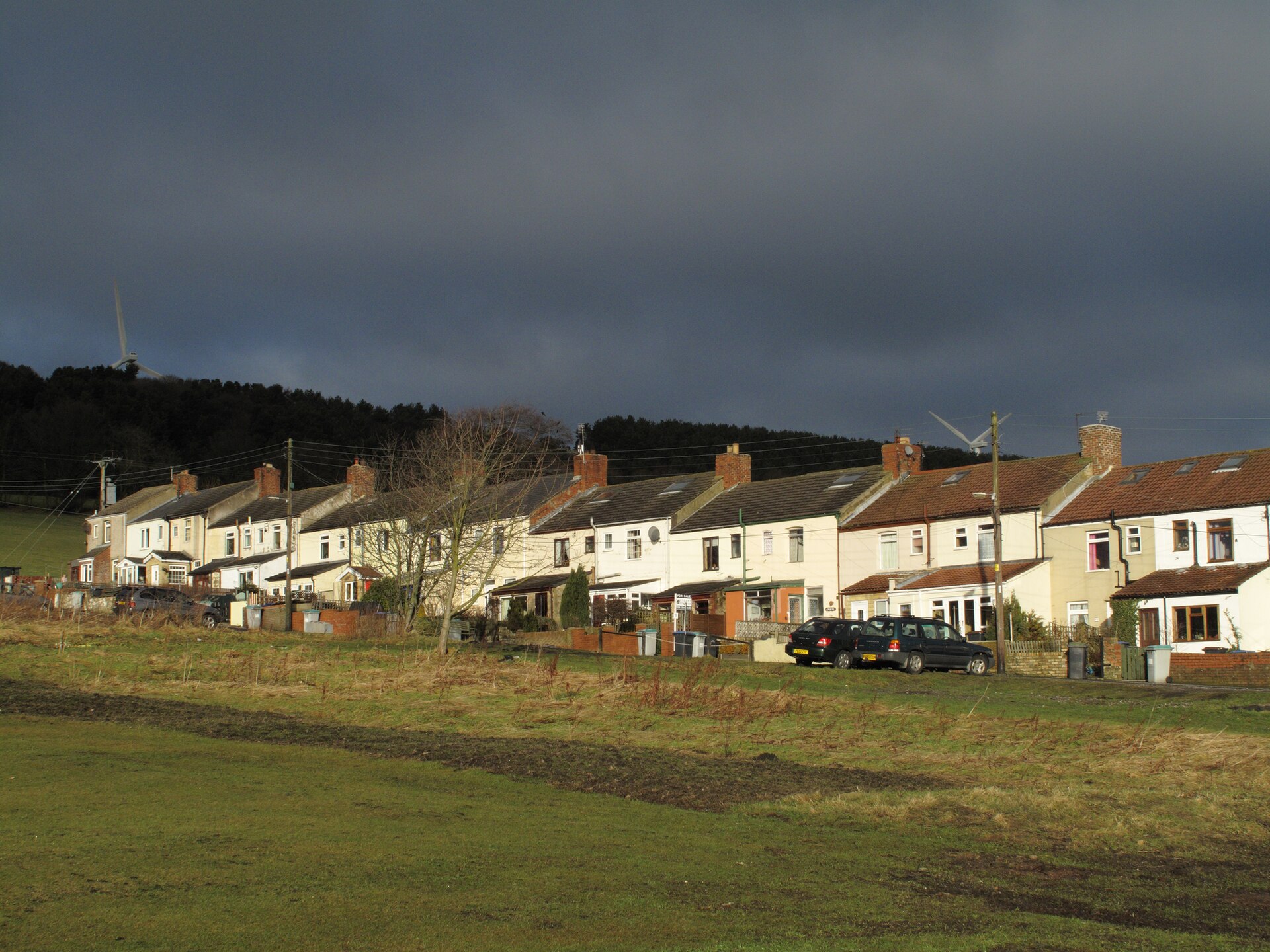
East Hedleyhope remains a village of colliery terraces in the Deerness valley.
Redevelopment
Unknown.
Related mines
- Bearpark Colliery — Both Bearpark Coal & Coke Co. collieries in the Deerness valley, East Hedley Hope from June 1936 to nationalisation.
- Littleburn Colliery — Both Bearpark Coal & Coke Co. collieries.
Nearby mines
- Hedleyhill Colliery — 0.6 miles (1.0 km) NE
- Cornsay Colliery — 2.1 miles (3.3 km) N
- Esh Winning Colliery — 2.2 miles (3.5 km) E
- Hamsteels Colliery — 2.2 miles (3.6 km) NE
- Roddymoor Colliery — 2.4 miles (3.9 km) S
Straight-line distance, within 9 miles (15 km). Show on the map.
Recorded claims
Individual factual claims, each attached to the source(s) that support it below. Where sources disagree, both are kept.
- East Hedley Hope Colliery opened in 1836 and gave rise to the village of East Hedleyhope. 1,2
- Much of the output was made into coke for iron production, including at the furnaces at Tow Law; there were three batteries of coke ovens and beehive ovens near the River Deerness. 2
- Employment peaked at 495 in 1900, 384 below ground and 111 on the surface. 1,2
- The owners were Sir Bernhard Samuelson & Co. Ltd in 1896, the Hedley Hope Coal Co. Ltd in the 1930s, the Bearpark Coal & Coke Co. Ltd from June 1936 and the National Coal Board from 1947. 1
- The colliery was standing in 1902 and employed only 5 to 39 men between 1915 and 1930. 1
- The colliery closed on 31 January 1959 with the loss of 274 jobs. 1,2
- The Brockwell or Main seam was abandoned on 31 December 1937 and the Five Quarter on 22 January 1938. 3
- J. G. Wild was manager from 1882 to 1888 and W. H. Telford from 1890 to 1900. 4
- Plans of the Bottom Busty or Five Quarter at Hedley Hope East record abandonment in 1956. 5
Photographs & further reading
Owners, output, employment and seams from 1883 to 1959, with an old directory description of the Hedleyhope collieries.
View sourceNewcastle University's community page on the colliery and village, with links to photographs and the coke ovens.
View sourceSources
- (primary) Durham Mining Museum - East Hedley Hope Colliery — Durham Mining Museum
- (secondary) East Hedley Hope Colliery (1836 - 1959) - Co-Curate — Co-Curate, Newcastle University
- (primary) Durham Mining Museum - Catalogue of plans of abandoned mines for East Hedley Hope Colliery — Durham Mining Museum
- (primary) Durham Mining Museum - East Hedley Hope Colliery: colliery management — Durham Mining Museum
- (primary) BGS mine plans: Hedley Hope East (Bottom Busty or Five Quarter, abandoned 1956) — British Geological Survey / Mining Remediation Authority
Record created: 1 October 2026 · Last researched: 1 October 2026