 MineArchive
Hedleyhill Colliery
| Also known as | Hedley Hill Colliery |
|---|---|
| Location | Hedley Hill, Deerness Valley, west of Durham, County Durham — 54.7653, -1.7436 (approximate) |
| Commodities | Coal, Fireclay |
| Type | Coal |
| Worked | By 1873–1925 (drifts until 1965) |
| Maximum depth | No depth figure has yet been located; the colliery worked by drifts. |
| Operators | Weardale Iron and Coal Company (?–1900), Weardale Steel, Coal and Coke Co. Ltd (1900–?), Bells House Coal Company (1940–?) |
Overview
A Weardale Iron and Coal Company colliery in the upper Deerness Valley, working thin seams by drifts and turning nearly all its coal into coke on the spot. The pit itself has been cleared and landscaped, but two ranges of its beehive coke ovens survive as one of the most complete groups left in the North East coalfield.
History
Hedleyhill was at work by the early 1870s and was being run by the Weardale Iron and Coal Company, whose ironworks at Tow Law and Tudhoe took the coke. A description of the colliery in the 1890s, when it had been going about eighteen years, records the Main Coal at 3 feet, the Five Quarter at 2 feet 9 inches and the Ballarat at 20 inches worked by several drifts, an output of 500 tons a day nearly all converted into coke, and employment for about 500 men and boys; the official returns give 296 people in 1883, 379 in 1894 and 356 in 1900. Fireclay was raised with the coal from the 1890s. The colliery passed to the Weardale Steel, Coal and Coke Company in the 1900s and had a broken history thereafter — closed between 1908 and 1912, closed again in 1914–15 and in the early 1920s, employing 186 in 1915 and 59 in 1921, and closing in May 1925 with 245 on the books. The Five Quarter seam was abandoned in September 1928 and the Main in January 1930. Small workings went on afterwards: the Bells House Coal Company had 26 people there in 1940, and the Ballarat and Three Quarter drifts worked on either side of the Second World War, the Ballarat Drift employing 26 as late as 1965. The colliery village of Hedleyhill, with the school and chapels built by the owners, stood on the hill above the pit.
Geology
The colliery worked the thin coals of the Durham Coal Measures on the western edge of the coalfield: the Main Coal at about 3 feet, the Five Quarter at 2 feet 9 inches, the Three Quarter or Yard, the Harvey and the Ballarat at only 20 inches, with fireclay beneath.
Workings
The coals were reached by several drifts rather than by deep shafts, the Ballarat and Three Quarter drifts outlasting the rest of the colliery. Almost all of the output, at least in the early years, went straight to the coke works 150 m to the south-east of the village, where the ovens were built as long banks: two ranges survive, one double and one single, of brick domes typically 3.58 m across, insulated by an earthen bank, many keeping the small central hole in the top and the flue at the back. A further double range to the west is too fragmentary to interpret.
Closure
The colliery became uneconomic and the main seams were given up between 1925 and 1930. Licensed drift working continued on a very small scale into the 1960s; Historic England's scheduling gives the abandonment date as 1950, which falls between the abandonment of the Ballarat seam in March 1949 and the resumption of drift working recorded in the 1950s returns.
What remains
The coke works ruins, earthworks and buried remains are a scheduled monument. A number of the ovens stand to their original height with a little over half their circumference surviving in the most complete examples. The colliery site itself has been largely cleared and landscaped and is not scheduled; the more substantial houses of the colliery village are still lived in.
Two ranges of beehive coke ovens, one double and one single, with their earthen banks, top holes and back flues, and the fragmentary remains of a third range.
Redevelopment
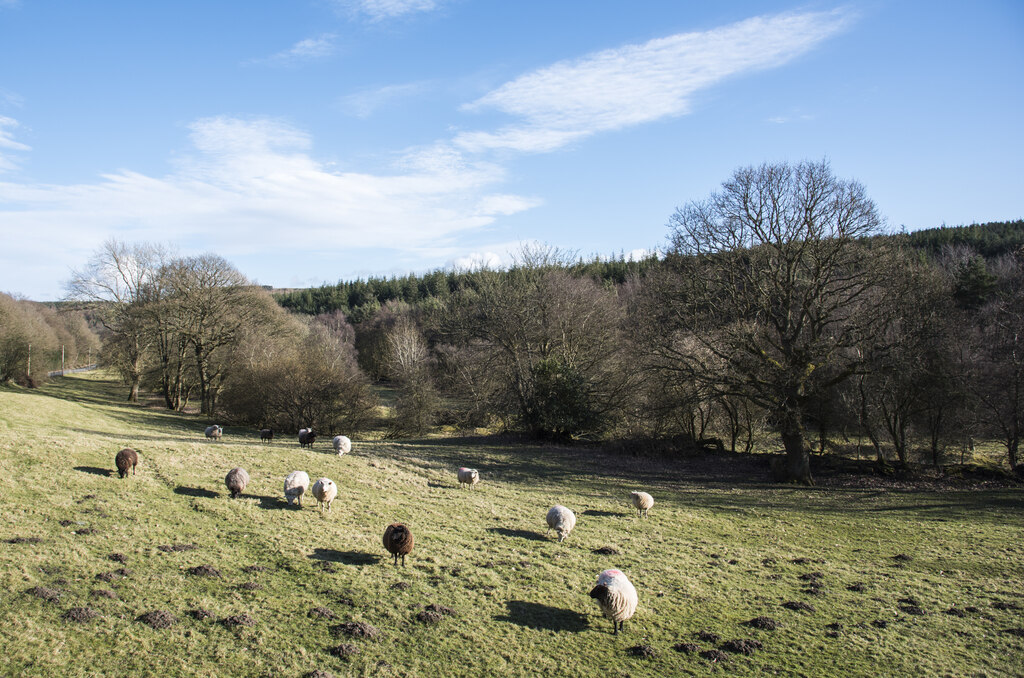
The colliery site has been cleared and landscaped; the coke works ranges lie in rough pasture.
Related mines
- Tudhoe Colliery — Both were collieries of the Weardale Iron and Coal Company, and Hedleyhill's coke went to the company's ironworks at Tow Law and Tudhoe.
Nearby mines
- Cornsay Colliery — 2.4 km N
- Hamsteels Colliery — 2.6 km NE
- Esh Winning Colliery — 3.2 km E
- Roddymoor Colliery — 4.7 km S
- Ushaw Moor Colliery — 5.7 km E
Straight-line distance, within 15 km. Show on the map.
What's uncertain
Points where sources disagree or the record could not be settled; both accounts are kept. All open questions in the archive.
- The colliery closed in May 1925, the Five Quarter seam being abandoned in September 1928 and the Main in January 1930. (disputed) 1
- The colliery had become uneconomic by the mid-20th century and was finally abandoned in 1950. (disputed) 2
Recorded claims
Individual factual claims, each attached to the source(s) that support it below. Where sources disagree, both are kept.
- The returns record 296 people at Hedley Hill in 1883, 379 in 1894 and 356 in 1900, falling to 59 in 1921. 1
- In the 1890s the colliery raised about 500 tons a day, nearly all of it converted into coke, and employed some 500 men and boys. 1
- The colliery and coke works were in operation from at least 1879 under the ownership of the Weardale Iron and Coal Company. 2
- The surviving coke ovens are beehive domes of brick, typically 3.58 m in diameter, insulated by an earthen bank, in one double and one single range. 2
- The colliery closed in May 1925, the Five Quarter seam being abandoned in September 1928 and the Main in January 1930. (disputed) 1
- The colliery had become uneconomic by the mid-20th century and was finally abandoned in 1950. (disputed) 2
Photographs & further reading
Owners, output, seams worked and year-by-year employment figures from the official lists of mines, with the 1890s description of the colliery.
View sourceSources
- (secondary) Hedley Hill Colliery — Durham Mining Museum
- (primary) Hedleyhill Colliery coke works, 500m south west of Hazlet House, Brandon and Byshottles (List entry 1018230) — Historic England
- (primary) Abandoned mine plan catalogue entry: HEDLEYHILL NORTH DRIFT (LICENCED MINE) — British Geological Survey
Record created: 22 September 2026 · Last researched: 22 September 2026