 MineArchive
East Ardsley Colliery
| Also known as | East Ardsley Main, Doggy Pit, Middleton Main Pit, East Ardsley |
|---|---|
| Location | East Ardsley, 3½ miles north-north-west of Wakefield, West Yorkshire — 53.7282, -1.5384 (exact) |
| Commodities | Coal, Ironstone |
| Type | Coal |
| Worked | 1872 or 1876 (sources differ)–1966 or January 1968 (sources differ) |
| Operators | R. Holliday & Sons Ltd (?–1947, owner) National Coal Board (1947–?, owner) |
Overview
Three pits north-west of Wakefield returned separately for twenty years and then as one colliery, working the Doggy, the Middleton Little and the Middleton Main. It employed around five hundred men for most of its life and closed in the 1960s. A plaque on Moor Knoll Lane is all that marks it.
History
East Ardsley sat on the Middleton seams south of Leeds, in a parish the Comprehensive Gazetteer of 1894-5 described as one where coal abounds, with iron-smelting works and a large woollen manufactory, and a population of 3,075.
The colliery was returned to the Mines Department not as one undertaking but as three — Doggy, Little and Middleton Main — each with its own workforce and its own seam, from 1894 until 1915. The Doggy was always the smallest, 51 people in 1894 and down to 18 by 1915, and it worked gas coal; the other two worked household coal and employed between two and three hundred each. The Little also returned ironstone in 1905 and 1910, which is a reminder that this is the ground the Low Moor and Bowling ironworks drew on.
From 1923 the returns give a single figure: 453 that year, 462 in 1933 and again in 1940, 412 when the National Coal Board took it in 1947, and 395 in 1954. The Board's first year produced 112,000 tons of gas, household and steam coal. By 1954 the colliery had left the Doggy and the Little behind and was working the Beeston, the Eleven Yards, the Flockton and the Middleton Main.
R. Holliday and Sons held it from the beginning until nationalisation. Nineteen deaths are recorded here between 1851 and 1919, and thirteen of them were falls of roof.
Geology
The Middleton seams of the Middle Coal Measures — the Middleton Main, the Middleton Little and the Doggy — with the Beeston, Eleven Yards and Flockton worked later. The Little carried ironstone as well as coal, and the returns for 1905 and 1910 record both coming out of it.
Workings
Three pits, each returned separately until 1915 and each working its own seam: the Doggy, the Little (returned as Middleton Little from 1915) and the Middleton Main. Between about a quarter and a fifth of the workforce was at surface throughout, and the 1915 return for Middleton Little is unusual in putting 119 of 343 above ground.
Closure
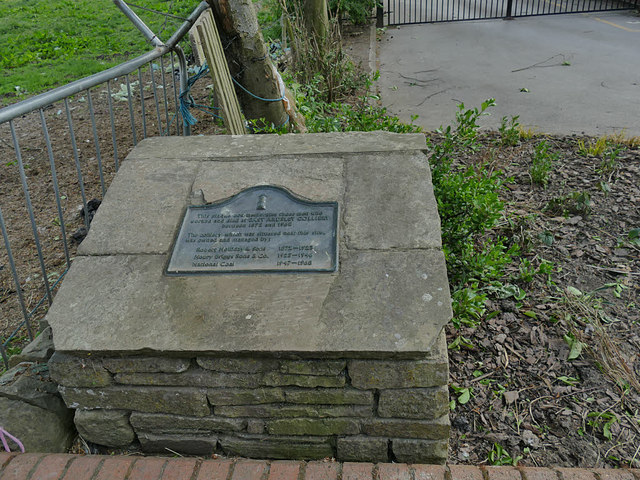
The memorial plaque on Moor Knoll Lane gives the colliery as working from 1872 to 1966. The Durham Mining Museum records returns as late as 1954 but no closure date, and other accounts give January 1968. The colliery site is now grassed over.
What remains
Nothing of the colliery stands. The site, on the north side of Moor Knoll Lane, is grassed over, and a simple plaque in the grounds of the offices opposite remembers the men who worked and died there.
The memorial plaque. Nothing of the workings.
Nearby mines
- Robin Hood Colliery — 1.3 miles (2.2 km) NE
- Lofthouse Colliery — 1.9 miles (3.1 km) SE
- Morley Main Colliery — 2.5 miles (4.1 km) NW
- Low Laithes Colliery — 2.7 miles (4.4 km) SW
- Wrenthorpe Colliery — 2.7 miles (4.4 km) SE
Straight-line distance, within 9 miles (15 km). Show on the map.
What's uncertain
Points where sources disagree or the record could not be settled; both accounts are kept. All open questions in the archive.
- The memorial on Moor Knoll Lane remembers the men who worked and died at East Ardsley Colliery, 1872 to 1966. (disputed) 1
Recorded claims
Individual factual claims, each attached to the source(s) that support it below. Where sources disagree, both are kept.
- The official Lists of Mines return Doggy, Little and Middleton Main separately from 1894 to 1915, each with its own seam and workforce: in 1894, 51 at the Doggy, 188 at the Little and 287 at Middleton Main. From 1923 a single figure is given for the colliery — 453 that year, 462 in 1933 and 1940, 412 in 1947 and 395 in 1954. 1
- The Little returned ironstone alongside gas and household coal in both 1905 and 1910. 1
- The National Coal Board took the colliery in 1947, when 412 people were employed, 325 of them below ground, and it produced 112,000 tons of gas, household and steam coal. By 1954 it was working the Beeston, Eleven Yards, Flockton and Middleton Main seams. 1
- Nineteen deaths are recorded at the colliery between 1851 and 1919, thirteen of them falls of roof. L. Edmundson, a collier of 85, was killed in February 1901 by shot-shaken coal falling from the roof of an airway he was repairing. Alfred Baines, a hurrier of 28, died in 1913 when a tub he had stopped pushing rolled back a foot and crushed his head against a bar eight inches above it. Stenton Scorah, a haulage hand of 16, was killed in 1919 when the brake lever of an electric haulier kicked and struck him. 1
- The Comprehensive Gazetteer of England and Wales describes East Ardsley as a village and parish of 1,818 acres and 3,075 people, three and a quarter miles north-west of Wakefield, where coal abounds and there are iron-smelting works and a large woollen manufactory. 2
- The memorial on Moor Knoll Lane remembers the men who worked and died at East Ardsley Colliery, 1872 to 1966. (disputed) 1
Photographs & further reading
Sixty years of returns for the three pits and then the one colliery, the seams each worked, and nineteen named dead with the inspector's account of each.
View sourceThe Comprehensive Gazetteer of 1894-5 on the parish, its acreage and population and the industries that stood beside the coal.
View sourceSources
- (primary) East Ardsley Colliery — Durham Mining Museum
- (secondary) East Ardsley, West Riding of Yorkshire — UK Genealogy Archives
Record created: 11 September 2026 · Last researched: 11 September 2026