 MineArchive
Double Arches Pit
| Also known as | New Trees Pit |
|---|---|
| Location | Near Heath and Reach, about three miles from Leighton Buzzard, Bedfordshire — 51.9530, -0.6410 (exact) |
| Commodity | Silica Sand |
| Type | Quarry |
| Worked | 1916–1985 |
| Maximum depth | Surface sand working; no depth figure applies. The valuer recorded the overburden being stripped at about twelve feet in 1927 and increasing. |
| Operators | J. Arnold & Sons Limited (1916–1985) |
Overview
A Leighton Buzzard silica sand quarry opened by Joseph Arnold in 1916, when the war cut off Belgian foundry sand and the ammunition factories needed a British source. It was the far terminus of the Leighton Buzzard Light Railway, built in 1919 because the sand companies were forbidden to keep carrying their output by road. It closed in 1985 and is now a Site of Special Scientific Interest.
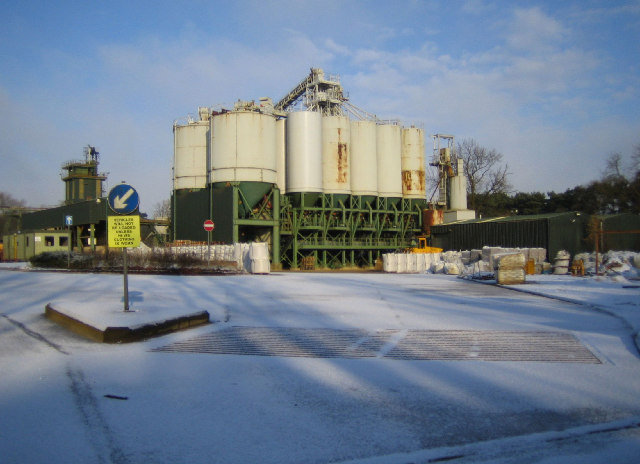
History
The pit, formerly known as New Trees Pit, was opened by J. Arnold & Sons Limited in 1916. The context was the war: the outbreak of the First World War cut off supplies of foundry sand from Belgium, sand was needed for the ammunition factories, and new sources were sought. The Leighton Buzzard sands proved well suited and production increased sharply.
In 1927 the site was valued under the Rating and Valuation Act 1925, and the valuer's notes survive: 'Saw foreman 22/8/27. Pit started during war. Plenty of sand, but has run out on east side near brook. Untopping now about 12 feet, increasing. About fifteen men working. Does not know output. Sand taken in trucks pulled by engine and horses to road. Light Railway from there. Excellent sand. Sifted for special contracts before it leaves the pit.' He recorded the site as 19.149 acres.
After 1919 the quarry companies were told they could no longer move sand by road, and a private industrial railway was proposed to take the traffic. The Leighton Buzzard Light Railway opened on Thursday 20 November 1919, a 2 ft gauge line just over three and a half miles long linking the sand quarries to the main line at Grovebury sidings south of the town. Double Arches lay at the far end of it, the line climbing towards two Double Arches pits owned by Joseph Arnold and by George Garside. Cement, Lime & Gravel magazine described the site as the 'largest and most important of the Firm's workings', with a system of locomotives moving material about the pit. By the mid-1960s Arnold's was the only sand quarry still using the railway. The site closed in 1985.
Archaeological excavation has established that a good-sized Roman settlement stood here, with multiple pieces of pottery and a Roman well found.
Geology
The pit works the Lower Greensand and the overlying Gault of the Leighton Buzzard area, and its SSSI notification in 1988 rested on its being the best accessible exposure of that junction in the district. It matters to geologists for studying fossil and environmental change across the interval covering the Leymeriella tardefurcata and Douvilleiceras mammillatum ammonite zones, and the citation singles out a unique example of channelling in the junction beds and a clear development of the Cirripede bed.
Geological setting: Sedimentary Beds and Seams (well documented example)
Workings
An open sand pit. The valuer of 1927 recorded about fifteen men working, untopping — the removal of overburden — then about twelve feet and increasing, and sand taken out in trucks pulled by engine and horses as far as the road, from where the light railway took it. Sand was sifted for special contracts before leaving the pit. Internal locomotives moved material around the workings, and the site was the furthest point reached by the Leighton Buzzard Light Railway.
Closure
The pit closed in 1985, having been the last of the Leighton Buzzard sand quarries still using the light railway by the mid-1960s.
What remains
A Site of Special Scientific Interest, notified in 1988, and a Geological Conservation Review site. A site assessment on 12 February 2008 found it in favourable condition and gave its area as 4.22 acres, against the 19.149 acres the 1927 valuer recorded for the working pit. There is no access, but the site can be viewed from the Leighton Buzzard Light Railway's Stonehenge Works on Mile Tree Road.
The worked faces, now protected as an SSSI exposure; the light railway that served the pit survives as a preserved line.
Nearby mines
- Leighton Buzzard Sand Quarries — 1.7 miles (2.7 km) S
- Totternhoe Stone Mines — 4.0 miles (6.5 km) S
- Kensworth Chalk Pit — 8.0 miles (12.9 km) SE
- Pitstone Chalk Quarry and Cement Works — 8.3 miles (13.3 km) S, Buckinghamshire
- Pulloxhill Gold Mine — 8.5 miles (13.7 km) E
Straight-line distance, within 9 miles (15 km). Show on the map.
Recorded claims
Individual factual claims, each attached to the source(s) that support it below. Where sources disagree, both are kept.
- The outbreak of the First World War cut off supplies of foundry sand from Belgium; sand was needed for the ammunition factories, new sources were sought, and the Leighton Buzzard sands proved well suited. J. Arnold & Sons opened the pit, formerly New Trees Pit, in 1916. 1,2
- A valuer visiting on 22 August 1927 under the Rating and Valuation Act 1925 recorded the pit at 19.149 acres, about fifteen men working, untopping about twelve feet and increasing, sand taken out in trucks pulled by engine and horses to the road, and sand sifted for special contracts before leaving the pit. 2
- After 1919 the quarry companies were told they could no longer transport sand by road, and the Leighton Buzzard Light Railway opened on 20 November 1919 — a 2 ft gauge line just over three and a half miles long from the quarries to Grovebury sidings, with Double Arches at its far end. 1,3
- The line climbed towards two Double Arches sand quarries, one owned by Joseph Arnold and one by George Garside. 3
- By the mid-1960s only one sand quarry, Arnold's, still used the Leighton Buzzard Light Railway; the site closed in 1985. 1,2
- The pit was notified as a Site of Special Scientific Interest in 1988 as the best accessible exposure of Lower Greensand and Gault in the Leighton Buzzard area; a 2008 assessment found it in favourable condition at 4.22 acres. 2
- Archaeological excavations concluded that a good-sized Roman settlement existed at the site, with multiple pieces of pottery and a Roman well discovered. 2
Photographs & further reading
Why the sand quarries needed a railway at all — the wartime demand that opened them and the ban on road haulage that put the line in — from the preserved railway that still runs it.
View sourceThe pit's history including the 1927 valuer's first-hand description of it at work, and the grounds of its SSSI notification.
View sourceSources
- (secondary) History — Leighton Buzzard Railway
- (secondary) Double Arches Pit — Wikipedia
- (secondary) Leighton Buzzard Light Railway — Wikipedia
Record created: 3 September 2026 · Last researched: 3 September 2026