 MineArchive
Donibristle Colliery
| Also known as | Donibristle Nos. 12 and 15 Pits, James and Marion Pits |
|---|---|
| Location | Donibristle, near Cowdenbeath, Fife — 56.0901, -3.3387 (exact) |
| Commodity | Coal |
| Type | Coal |
| Maximum depth | Unknown. The colliery worked through numerous shafts and daylight mines rather than one deep winding shaft, and the workings that failed in 1901 lay close enough beneath the moss for the peat to break through into them. |
| Operators | Grieve and Nasmyth, Donibristle Colliery Co., Fife Coal Company |
Overview
A west Fife colliery on the Donibristle estate near Cowdenbeath, worked from the nineteenth century by Grieve and Nasmyth, then the Donibristle Colliery Company, and finally the Fife Coal Company. Most of its workings lay beneath Mossmorran, a square mile of moss 450 feet above sea level, and that peat was what killed eight men on 26 August 1901 when it broke into a heading in the Mynheer seam. The colliery was a group of pits rather than one: Nos. 12 and 15, the James and Marion, an East Mine and a North Mine, with employment peaking at over 700 before the First World War.
History
The Donibristle coalfield lies in the parish of Aberdour, close to the burgh of Cowdenbeath on the southern edge of the Fife field. It had been worked for many years by the time the Inspector of Mines came to describe it in 1901, through numerous shafts and daylight mines reaching the various seams. The ground was awkward: several large faults cut the field and the inclination was irregular, though the general rise was southward, with the seams cropping out in that direction within the leased ground. The defining feature was what lay on top. Most of the workings ran under moss, a square mile of it at 450 feet above sea level, and that is the fact the colliery is remembered for.
The Durham Mining Museum records the owners as Grieve and Nasmyth, then the Donibristle Colliery Company, and finally the Fife Coal Co. Ltd. At the time of the disaster the company was a private partnership of James Armstrong Nasmyth and his son Alexander Hogg Nasmyth. The coal was sold as gas, household, manufacturing and steam coal, the full range.
Employment grew steadily and then broke into separate returns as the group spread: 362 in 1894, 297 in 1896, 350 in 1900, 483 in 1905 and 729 in 1910. From 1915 the Lists of Mines report Nos. 12 and 15 and the James and Marion pits separately, together with an East Mine and, by 1920, a North Mine of 29 people. The combined figure in 1923 was 611. By 1933 the colliery is returned as temporarily closed.
On 26 August 1901, at about twenty to two in the afternoon, soft peat began to flow into a heading in the East section of the Mynheer Coal Seam workings of the Nos. 12 and 15 pits. Eight men died and six were brought out alive, and two of the rescuers were themselves trapped the next day and had to be rescued in turn (see Disasters, below).
Geology
The Donibristle field is cut by several large faults and its inclination is irregular, though the seams generally rise to the south and crop out in that direction within the leased ground. The Mynheer coal was among the seams worked. What matters most about the geology here is not the coal but the cover: most of the workings lay beneath Mossmorran, a square mile of peat moss at 450 feet above sea level, and it was that saturated peat, not water or gas, that flowed into the East section heading in 1901 and buried the men working there.
Geological setting: Sedimentary Beds and Seams (well documented example)
Workings
A group of pits and mines rather than a single colliery. The Lists of Mines return Nos. 12 and 15 together, the James and Marion pits to the north, an East Mine and, from 1920, a North Mine, and the Inspector's 1901 report describes numerous shafts and daylight mines in use for the various seams. The 1901 inrush happened in a heading in the East section of the Mynheer seam workings of Nos. 12 and 15, where two men had been probing upward with a rod as part of forming an air shaft.
Closure
Neither the opening nor the closing date has been established here. Neither date is recorded; the Lists of Mines returns run from 1894 to a 1933 entry marking the colliery temporarily closed. The Inspector of Mines wrote in 1901 that the colliery had been in operation for many years already. A date for the final closure of the group, and for the individual pits within it, is work for a refresh.
What remains
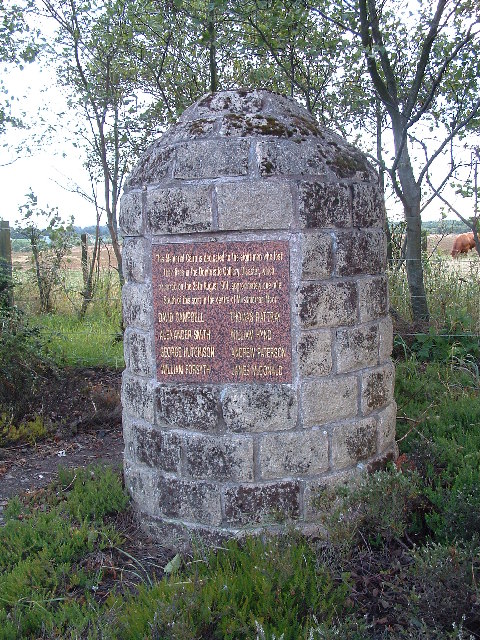
Nothing is recorded of the colliery site as it now stands. What survives publicly is commemorative: a memorial to the eight men killed in 1901 stands at Cowdenbeath, photographed on Geograph, and a cairn on Bridge Street in the town, overlooking Mossmorran, was raised by a grandson of one of the dead.
Unknown. No account of surviving colliery structures at Donibristle is recorded.
Related mines
- Dundonald Colliery — Both were worked by the Nasmyth partnership, Grieve and Nasmyth at Dundonald and James Nasmyth at Donibristle, as the Scottish Mining Website's parish history names them together.
Nearby mines
- Fordell Colliery — 0.6 miles (0.9 km) W
- Little Raith Colliery — 1.0 miles (1.6 km) N
- Mossbeath Colliery — 1.2 miles (2.0 km) NW
- Cowdenbeath No. 7 Colliery — 1.4 miles (2.3 km) N
- Hill of Beath Colliery — 1.5 miles (2.5 km) W
Straight-line distance, within 9 miles (15 km). Show on the map.
Disasters & major incidents
-
Donibristle Colliery Moss Inrush
26 August 1901 · Flooding / Inundation · 8 fatalities
At about twenty to two on the afternoon of 26 August 1901, soft peat began to flow into a heading in the East section of the Mynheer seam workings at Donibristle Colliery in west Fife. Most of the colliery ran beneath Mossmorran, a square mile of moss 450 feet above sea level, and two men probing upward with a rod to form an air shaft brought it down on themselves. Eight men died, smothered rather than drowned. Six were brought out alive, and the rescue was extraordinary in its own right: some three hundred volunteers came forward, and two of the rescuers were themselves trapped the following day and had to be got out in turn.
What's uncertain
Points where sources disagree or the record could not be settled; both accounts are kept. All open questions in the archive.
- The BGS mine-plans catalogue holds a Mining Remediation Authority abandonment plan titled 'Donibristle' (catalogue 7896, Lower Splint Or Dunfermline Splint, dated 1928); the catalogue gives no location and the plan's details do not clearly tie it to this working, so it may belong to another of the same name. (uncertain) 3
Recorded claims
Individual factual claims, each attached to the source(s) that support it below. Where sources disagree, both are kept.
- The Durham Mining Museum records the owners as Grieve and Nasmyth, the Donibristle Colliery Co. and the Fife Coal Co. Ltd. At the time of the 1901 disaster the company was a private partnership of James Armstrong Nasmyth and his son Alexander Hogg Nasmyth. 1,2
- Government Lists of Mines record 362 employed in 1894, 350 in 1900, 483 in 1905 and 729 in 1910; from 1915 the pits are returned separately, and the combined figure for 1923 is 611. The 1933 return marks the colliery temporarily closed. 1
- Most of the workings lay under moss, a square mile of it 450 feet above sea level, and the field was cut by several large faults with an irregular inclination rising generally to the south. 2
- At about 1.40 p.m. on 26 August 1901 soft peat or moss began to flow into a heading in the East section of the Mynheer Coal Seam workings of the Nos. 12 and 15 pits. Eight men were killed. 2
- The BGS mine-plans catalogue holds a Mining Remediation Authority abandonment plan titled 'Donibristle' (catalogue 7896, Lower Splint Or Dunfermline Splint, dated 1928); the catalogue gives no location and the plan's details do not clearly tie it to this working, so it may belong to another of the same name. (uncertain) 3
Photographs & further reading
Owners, grid reference, the coal sold, and employment by List of Mines year from 1894 to 1933, with the separate returns for Nos. 12 and 15, the James and Marion pits and the East and North mines, together with a long roll of men killed at the colliery.
View sourceExtracts from the report of J. B. Atkinson, H.M. Inspector of Mines: a description of the coalfield and its cover of moss, the narrative of the inrush, the names and ages of the eight dead, the six rescued, the two rescuers trapped the following day, and the parties at the Dunfermline inquiry.
View sourceThe Scottish Mining Website's gathering of contemporary reporting and record on the disaster, including the men involved and the course of the rescue.
View sourceSources
- (primary) Donibristle Colliery — Durham Mining Museum
- (primary) Donibristle Colliery Disaster, 26 August 1901: extracts from the report of J. B. Atkinson, H.M. Inspector of Mines — Durham Mining Museum, transcribing the Inspector of Mines report
- (primary) BGS / Mining Remediation Authority mine plans: DONIBRISTLE — British Geological Survey / Mining Remediation Authority
Record created: 10 September 2026 · Last researched: 10 September 2026