 MineArchive
Diana Maria Mine
| Location | Rogerley Quarry, Frosterley, County Durham — 54.7395, -2.0430 (approximate) |
|---|---|
| Commodity | Fluorspar |
| Type | Mineral |
| Worked | 2017 (opencast)–Still active |
| Maximum depth | No depth figure published; the mine follows the Sutcliffe Vein in from the quarry face rather than working from a shaft |
| Operators | UK Mining Ventures Ltd (2017–?) |
Overview
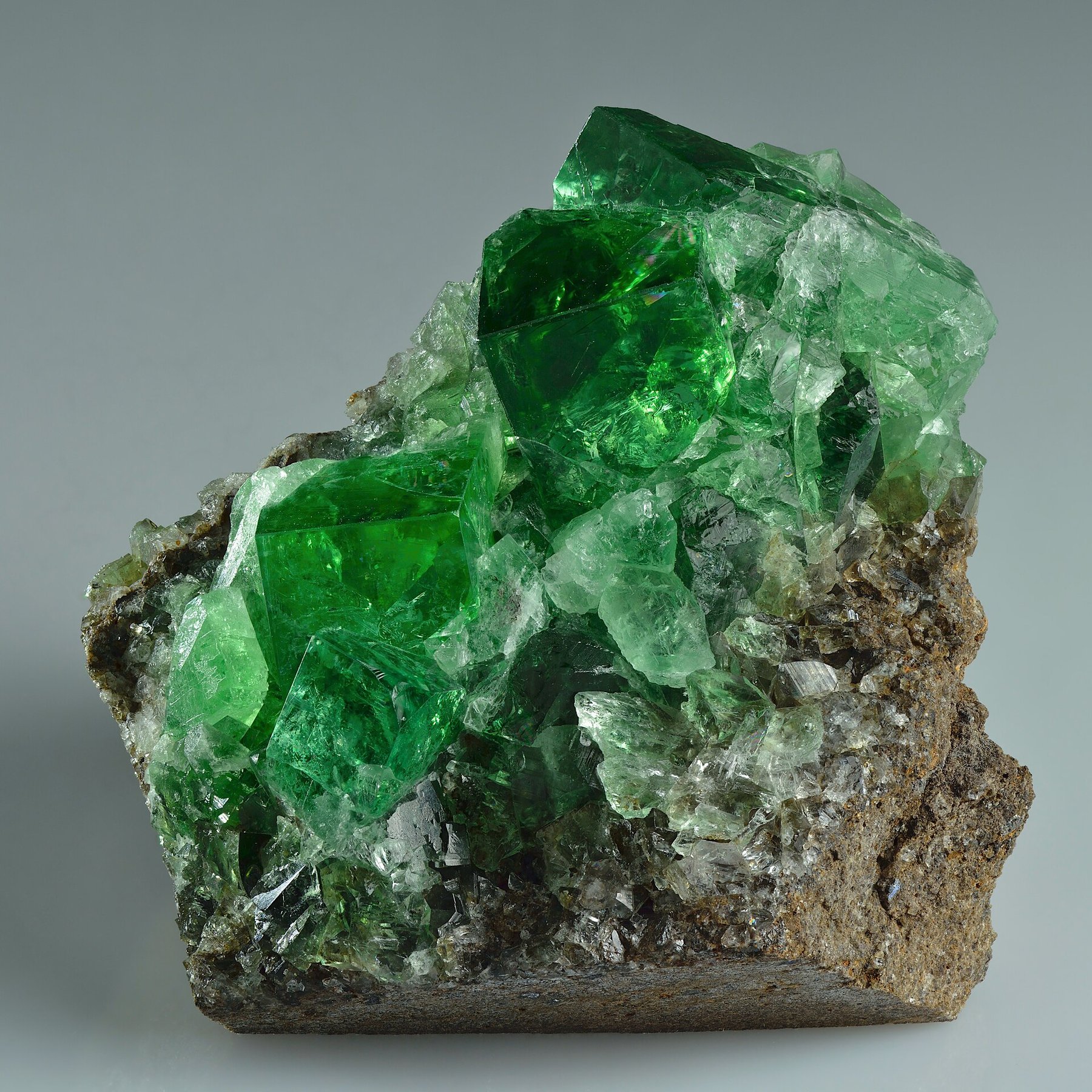
A working mine in Rogerley Quarry near Frosterley in Weardale, opened in 2017 and driven for one thing only: fluorite crystals for collectors. It works the Sutcliffe Vein, which two collectors had briefly opened in the 1970s and nobody had pursued, and it produces emerald-green, purple and zoned fluorite reckoned among the finest in the world, much of it strongly fluorescent in daylight as well as under ultraviolet. It is named for Diana Maria Bruce, who owns it with her husband Ian.
History
The Rogerley Mine, on the same quarry, was found in the early 1970s, when Lindsay Greenbank and Michael Sutcliffe collected good green fluorite there; the vein they briefly opened alongside it carries Sutcliffe's name. UK Mining Ventures has worked Rogerley seasonally since the summer of 1999.
In 2017 the Rogerley operation passed to Ian and Diana Bruce, trading as UK Mining Ventures Ltd. While Rogerley was being upgraded, opencast work began around the outcrop of the Sutcliffe Vein, on ground that had been an untouched grassy slope since the original limestone quarry worked there in the middle of the nineteenth century. The preparatory cut exposed classic green fluorite of high quality, which was encouragement enough to follow the vein down. That opencast working was named the Diana Maria mine, for Ian Bruce's wife, who comes from a Saxon family of mineral collectors — her paternal grandfather, Fritz Herrmann Schlegel, has the mineral schlegelite named after him.
Tunnelling began in 2018 and the mine now works all year round rather than seasonally. Its pockets are named as they are found and the names have become part of the collecting literature: Graeber Jones, Snowstorm, Green Hill, Emerald Peaks, Heavy Metal, Purple Haze, and the Papa pocket opened in May 2019.
Geology
The mine works the Great Limestone, exposed in the quarry face: interbedded limestones and shales laid down on a marine shelf during the Namurian stage of the Carboniferous, between about 326 and 313 million years ago. The limestone is well indurated while the shale bands between are soft and friable, which is what makes roof support the controlling problem underground here. The fluorite sits in the Sutcliffe Vein cutting that sequence, part of the Northern Pennine Orefield mineralisation that made Weardale a lead and fluorspar district.
Geological setting: Hydrothermal Deposits (well documented example), Veins and Lodes (well documented example)
Workings
Work began as an opencast cut along the vein outcrop and went underground in 2018, driven from the quarry face. It is a small operation using rail haulage: a mine locomotive with tipping wagons, and a rail-mounted compressed-air rocker shovel for loading. Extraction is deliberately careful rather than productive, since the object is to bring out crystal groups intact, and pockets are worked individually and recorded under their own names.
Closure
Still working, all year round since the underground drivage began in 2018.
What remains
An active mine, worked with the Rogerley mine on the same quarry. Specimens from it circulate widely in the mineral trade and in museum collections, which is how most people encounter the place.
An active mine, worked with the Rogerley mine on the same quarry.
Related mines
- Rogerley Mine — Both are worked by UK Mining Ventures in the same quarry at Frosterley; the Diana Maria was opened on the Sutcliffe Vein in 2017 while the Rogerley mine was being upgraded, and the two are now run together all year.
Nearby mines
- Stanhopeburn Mine — 1.4 miles (2.2 km) N
- Lady Annabella Mine — 1.9 miles (3.1 km) SW
- Cambokeels Mine — 2.3 miles (3.7 km) W
- Rogerley Mine — 2.8 miles (4.5 km) E
- Stotsfield Burn Mine — 2.9 miles (4.7 km) NW
Straight-line distance, within 9 miles (15 km). Show on the map.
Recorded claims
Individual factual claims, each attached to the source(s) that support it below. Where sources disagree, both are kept.
- Opencast work on the Sutcliffe Vein outcrop began in 2017 after the Rogerley operation passed to Ian and Diana Bruce, and the mine was developed underground from 2018. 1
- The mine is named for Diana Maria Bruce; her paternal grandfather, Fritz Herrmann Schlegel, has the mineral schlegelite named in his honour. 1
- The workings are in the Great Limestone, interbedded limestones and shales deposited on a marine shelf in the Namurian, roughly 326 to 313 million years ago; the soft shale bands between hard limestone are what make roof support difficult. 1
- The mine produces emerald-green, purple, yellow and zoned fluorite, twinned crystals, and occasionally crystals carrying fluid inclusions with movable bubbles; much of the material fluoresces strongly in daylight as well as under ultraviolet light. 2,1
Photographs & further reading
The operator's own detailed account of the mine, with the geology of the Great Limestone here, the named pockets as they were opened, and a photographic archive of the workings.
View sourceSources
- (secondary) The Diana Maria Mine, Frosterley, Weardale — UK Mining Ventures Ltd
- (secondary) The Rogerley Mine, Weardale - A Condensed History — Mineraltown.com
- (observational) Fluorite from the Diana Maria mine, Rogerley Quarry, Stanhope — Wikimedia Commons

Record created: 9 September 2026 · Last researched: 9 September 2026