 MineArchive
Cwm Capel Colliery
| Also known as | Kenross Colliery, Ashburnham Slant |
|---|---|
| Location | Cwm Capel valley, Burry Port, Carmarthenshire — 51.6958, -4.2405 (approximate) |
| Commodity | Coal |
| Type | Coal |
| Worked | 1761–1952 |
| Maximum depth | Unknown. |
| Operators | George Bowser (1807–1835), Mason and Elkington (1858–1883), Elliott's Metal Co. Ltd (1884–1898), David Rees (1899–1905), John Rowlands (1906–?), Ashburnham Collieries Ltd (1916–?), Welsh Anthracite Collieries, Ltd (1925–1931), Pwll Coal and Brick Company (1941–1952), Lord Cawdor |
Overview
A Burry Port colliery in the Cwm Capel valley, worked from 1761, developed by George Bowser with his tramway to the harbour, and closed in 1952 after nearly two hundred years of mining in the valley.
History
Cwm Capel Colliery, also called Kenross, lay in the Cwm Capel valley above Burry Port. A coal mine there is first mentioned in 1761, worked by Hector Morris, John Thomas of Panthowell and Thomas Bowen of Llanelli, its coal carted to Barnaby Pill. George Bowser leased pits and levels in the valley from 1807 and 1816, driving 400 yards into the Cenrhos seam; his tramway of 1831 carried the coal to the new Burry Port harbour.
Mason and Elkington held the colliery from 1858 to 1883 and Elliott's Metal Co. from 1884 to 1898, driving 500 yards further into the Coed Rhyal seam. It employed 107 in 1896 and was ventilated by fires. Abandoned in 1898, it was restarted by David Rees and from 1906 by John Rowlands, who employed 115 in 1908. On 7 December 1907 a working holed old workings and two miners drowned.
Ashburnham Collieries Ltd took it over in 1916, with 144 men in 1918. Welsh Anthracite Collieries Ltd worked it from 1925 to 1931. The Pwll Coal and Brick Co. had it from 1941, with thirteen men in 1945, supplying the Pwll brickworks, and it closed in 1952.
Geology
The Cenrhos (Kenross) seam, with the Coed Rhyal and Lower Caerhedyn seams; worked by levels and drifts in the hillside.
Workings
Levels and drifts driven into the hillside: 400 yards into the Cenrhos by 1816, a further 500 yards into the Coed Rhyal, a cross-measures drift by John Rowlands and a new 333-yard drift to the Cenrhos in 1915. In 1898 the downcast shaft was 36 feet deep and the upcast 12 feet.
Closure
Abandoned in 1898, 1922 and 1931 and reopened each time; it closed finally in 1952, ending nearly two hundred years of mining in the valley.
What remains
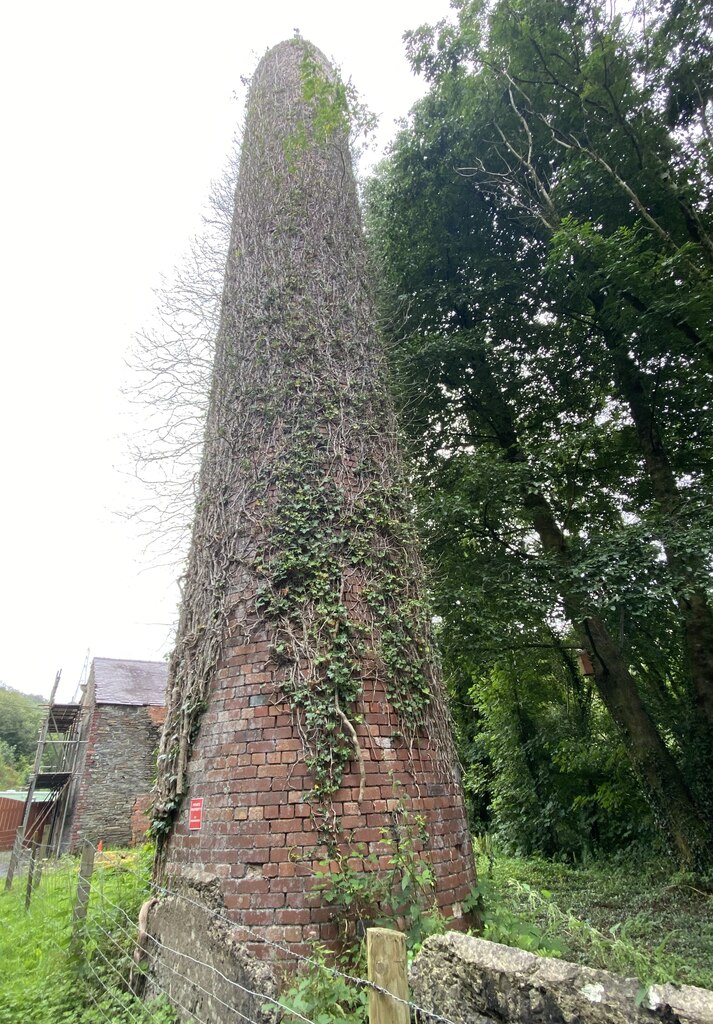
The colliery's brick ventilation chimney stands beside Cwm Capel Road with some of the colliery buildings, opposite McKiernon's Quarry.
The ventilation chimney and remaining colliery buildings.
Redevelopment
Unknown.
Related mines
- New Lodge Colliery — Bowser's Cwm Capel tramway joined Pemberton's New Lodge line to the harbour in 1831, and both collieries were reopened together under the Pwll Coal and Brick Company to supply the Pwll brickworks.
Nearby mines
- Achddu Colliery — 0.3 miles (0.5 km) SW
- New Lodge Colliery — 0.7 miles (1.1 km) SE
- Gwscwm Colliery — 0.9 miles (1.4 km) SW
- New Pool Colliery — 1.1 miles (1.7 km) SE
- Crown Colliery — 1.2 miles (2.0 km) SE
Straight-line distance, within 9 miles (15 km). Show on the map.
Recorded claims
Individual factual claims, each attached to the source(s) that support it below. Where sources disagree, both are kept.
- A coal mine at Cwm Capel is first mentioned in 1761. 1
- The colliery was opened in the early 19th century by Lord Cawdor, and George Bowser leased it in 1816. 2
- George Bowser leased land and coal pits from Sir Hugh Owen in 1807. 1
- The colliery worked the Cenrhos (Kenross) seam. 2,3,4
- On 7 December 1907 the workings holed old workings and two miners drowned. 5,2
- It employed 144 in 1918 under Ashburnham Collieries Ltd. 2
- The colliery closed in 1952. 1,2
Photographs & further reading
Owners, drifts, employment and abandonments from the early 19th century to 1952.
View sourceThe valley's mining from 1761, George Bowser, the tramway to the harbour and what remains.
View sourceSources
- (secondary) The Tramway and Cwm Capel (Pembrey and Burry Port Heritage) — Pembrey and Burry Port Heritage
- (secondary) Welsh Coal Mines: Cwm Capel (with Gwscwm Colliery) — Welsh Coal Mines
- (primary) BGS / Mining Remediation Authority mine plan: CWM CAPEL, DRIFT, Cenrhos and Lower Caerhedyn seams — British Geological Survey
- (primary) BGS / Mining Remediation Authority mine plan: CWM CAPEL, OLD PENTWYN SLANT, RHIWLAS, Cenrhos seam — British Geological Survey
- (secondary) Mining fatalities, 1907 - Welsh Coal Mines — Welsh Coal Mines
Record created: 10 October 2026 · Last researched: 10 October 2026