 MineArchive
Closehouse Mine
| Also known as | Close House Mine, Closehouse Barytes Mine |
|---|---|
| Location | Arngill Beck, Lunedale, near Middleton-in-Teesdale, County Durham — 54.6006, -2.2344 (approximate) |
| Commodities | Barite, Lead |
| Type | Mineral |
| Worked | From 1937–late 1990s |
| Maximum depth | Worked by levels and latterly opencast; no shaft depth applies. |
| Operators | Athol G. Allen (Stockton) Ltd (1937–1985), Closehouse Minerals Ltd (1989–1999), London Lead Company |
Overview
A barytes mine in Lunedale on the north-east flank of Close House Crags, worked out of ground the lead miners had already been through. The site of ancient large hushes, it was later worked by the London Lead Company for lead from the Deerfold and West Hush levels, where the main gangue mineral was barytes. In 1937 Athol G. Allen (Stockton) Ltd took the lease and began reworking the old levels for that barytes; the mine later went opencast, passed to Fordamin Ltd in 1985 and Closehouse Minerals Ltd in 1989, and was abandoned late in the 1990s. The exposed barite ore body is now a Site of Special Scientific Interest.
History
Closehouse is a mine that was worked twice for two different things. The ground carries the remains of ancient large hushes — the water-stripping method used to expose veins on these fells — and was later worked by the London Lead Company for lead, from the Deerfold and West Hush levels. In those workings the main gangue mineral, the waste run out with the ore, was barytes. A century later that waste became the product. In 1937 Athol G. Allen (Stockton) Ltd acquired the lease and began reworking the old levels for barytes; later the working shifted to opencast methods. Fordamin Ltd took over in 1985 and Closehouse Minerals Ltd in 1989, and the mine was finally abandoned late in the 1990s. The site was designated a Site of Special Scientific Interest in 1995, covering 3.37 hectares.
Geology
The mine lies within the Lunedale fault system at the southern limit of the Alston Block, and its mineralisation is bound up with the Whin Sill. The quartz-dolerite Whin Sill was intruded into the Carboniferous strata of the northern Pennines and is especially well exposed in Upper Teesdale; the largest mineralised body at Closehouse appears to have formed by metasomatism of a fractured dyke-link within that suite of quartz-dolerite intrusions — the hot fluids replacing the rock along the fracture rather than simply filling it. A large barite ore body is exposed at the mine, which is why it is protected, and the rare mineral rosasite has been identified here.
Workings
Levels driven for lead — Deerfold and West Hush are the two named — reworked from 1937 for the barytes left in them, and later replaced by opencast working in Arngill Beck on the north-east flank of Close House Crags. The ancient hushes on the site are the earliest workings of all: water impounded and released to strip the hillside and expose the vein.
Closure
Abandoned late in the 1990s after sixty years of barytes working under four successive companies. What remains is protected for the ore body itself rather than for the industry: the exposed barite is the reason the site is notified.
What remains
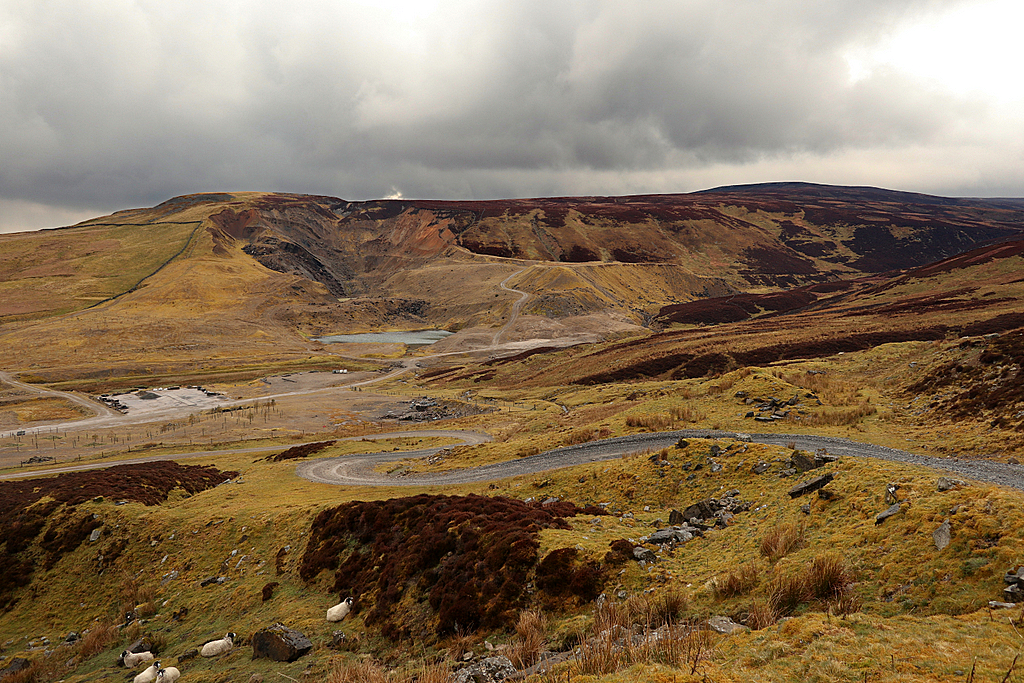
A disused opencast site, notified as a 3.37-hectare Site of Special Scientific Interest established in 1995, near Barnard Castle. The barite ore body is exposed at the mine.
The opencast workings in Arngill Beck, the levels driven for lead, and the ancient hushes cut into the flank of Close House Crags.
Nearby mines
- Lunehead Mine — 1.5 miles (2.4 km) S
- Force Garth Quarry — 3.6 miles (5.9 km) NE
- Borrowdale Colliery, Brough — 4.4 miles (7.1 km) S, Cumbria
- Cabbish Mine — 4.6 miles (7.3 km) S, Cumbria
- Cow Green Mine — 4.9 miles (7.9 km) NW
Straight-line distance, within 9 miles (15 km). Show on the map.
Recorded claims
Individual factual claims, each attached to the source(s) that support it below. Where sources disagree, both are kept.
- The site of ancient large hushes was later worked by the London Lead Company for lead from the Deerfold and West Hush levels; the main gangue mineral is barytes, and in 1937 Athol G. Allen (Stockton) Ltd acquired the lease and began reworking the old levels for that mineral. Later the mining shifted to opencast methods. 1
- Fordamin Ltd took over the mine in 1985 and Closehouse Minerals Ltd in 1989, the mine finally being abandoned late in the 1990s. 1
- Closehouse Mine is a disused opencast mine in Arngill Beck on the north-east flank of Close House Crags in Lunedale Forest, within the Lunedale fault system at the southern limit of the Alston Block. 1
- The largest mineralised body at Closehouse seems to have been formed by metasomatism of a fractured dyke-link within the Whin Sill suite of quartz-dolerite intrusions. 2
- A large barite ore body is exposed at the mine, and the rare mineral rosasite has been identified at the site; it was established as a Site of Special Scientific Interest of 3.37 hectares in 1995. 1
Photographs & further reading
The site’s working history from the ancient hushes through the London Lead Company to the four barytes companies, and its designation as an SSSI for the exposed barite ore body.
View sourceSources
- (secondary) Close House Mine — Wikipedia
- (primary) Geology of the country around Brough-under-Stainmore (BGS Memoir, sheet 31) — British Geological Survey
Record created: 8 September 2026 · Last researched: 8 September 2026