 MineArchive
Cefn Golau Colliery
| Also known as | Cefn Stylle Colliery, Cefnstelle Colliery, Cefn Goleu Colliery |
|---|---|
| Location | Near Gowerton, three-quarters of a mile west of Bishwell Colliery, Swansea — 51.6441, -4.0674 (approximate) |
| Commodity | Coal |
| Type | Coal |
| Worked | c. 1878–1922 |
| Maximum depth | Unknown. |
| Operators | J. W. Pearce (1880–1884), Cefnstelle Colliery Co. (1902–?), Cefngoleu Colliery Ltd (?–1922) |
Overview
Two collieries of the name near Gowerton: a farm pit abandoned in 1884, and the Cefn Stylle shaft and slant, opened in 1902 half a mile away, which employed 180 men in 1920 and was abandoned in 1922.
History
The first Cefn Golau Colliery stood on the farm of that name near Gowerton and appears on the 1878 Ordnance Survey map. It was listed in 1880 as Cefn Golan, Gower Road, owned by J. W. Pearce, and was still working on the 1884 map, but it was abandoned that year and was marked disused in 1898.
A second mine opened in 1902 as Cefn Stylle, about half a mile north-west of the old one, and later took the name Cefn Goleu. It had a shaft and a slant and at various times worked the Swansea Four-Feet, Five-Feet, Six-Feet, Three-Feet and Two-Feet seams. In 1908 the Cefnstelle Colliery Co. of Park Street, Llanelli, employed 59 men underground and 11 on the surface there, with H. W. Thomas as manager. Cefngoleu Colliery Ltd later became the owners; in 1918 the slant employed 130 men underground and 42 on the surface under J. Phillips, and there were 180 men in 1920.
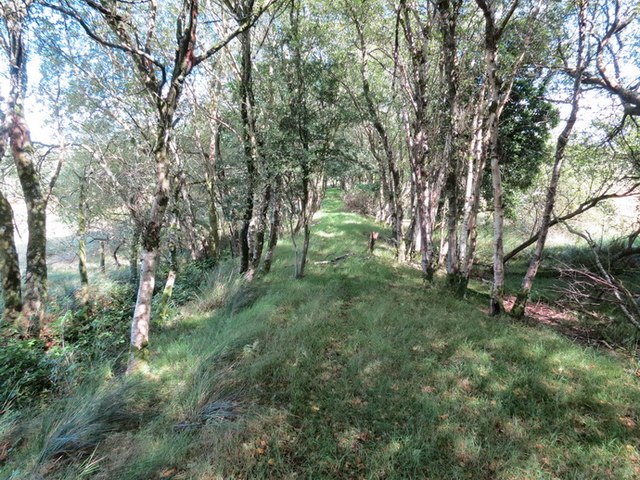
The colliery was abandoned in 1922. Cefngoleu Colliery Ltd was wound up voluntarily in March 1939. The line of the tramroad that carried the first colliery's coal towards the main line at Gowerton survives as an embankment through woodland.
Geology
The Swansea Four-Feet, Five-Feet, Six-Feet, Three-Feet and Two-Feet seams at various times; Hughes seam workings are on its abandonment plans.
Workings
The 1902 mine had a shaft and a slant; the slant employed 172 men in 1918.
Closure
The first mine was abandoned in 1884 and marked disused on the 1898 map; the second was abandoned in 1922, and its company was wound up in 1939.
What remains
The embankment of the tramroad from the first colliery towards Gowerton survives through woodland.
Redevelopment
Unknown.
Related mines
- Berthlwyd Colliery — A single abandonment plan covers Cefnstylle (Cefngolau) with the Berthlwyd slants and levels.
Nearby mines
- Elba Colliery — 0.5 miles (0.8 km) NE
- Berthlwyd Colliery — 1.0 miles (1.6 km) SW
- Wernbwll Colliery — 1.0 miles (1.6 km) SW
- Bishwell Colliery — 1.5 miles (2.4 km) E
- Cae Duke Colliery — 1.5 miles (2.4 km) NE
Straight-line distance, within 9 miles (15 km). Show on the map.
Recorded claims
Individual factual claims, each attached to the source(s) that support it below. Where sources disagree, both are kept.
- The first Cefn Golau was listed in 1880 as Cefn Golan, owned by J. W. Pearce, and was abandoned in 1884. 1
- A second mine opened in 1902 as Cefn Stylle, about half a mile north-west, and later became Cefn Goleu. 1,2
- In 1908 the Cefnstelle Colliery Co. employed 59 men underground and 11 on the surface. 1
- In 1918 the slant employed 130 men underground and 42 on the surface; there were 180 men in 1920. 1
- The colliery was abandoned in 1922. 1
- Its abandonment plans cover workings in the Hughes seam. 2,3
- Albert Lloyd, a pump boy of 17, was killed at Cefnstelle in 1906, and Thomas Jones, a collier of 53, in 1909. 4
- The tramroad that linked the first Cefn Golau Colliery with the main line at Gowerton survives as an embankment through woodland. 5
Photographs & further reading
Both Cefn Golau mines, their owners, managers and manpower, beside Bishwell and Berthlwyd.
View sourceSearch 'Cefnstelle' for the men killed at the colliery in 1906 and 1909.
View sourceSources
- (secondary) Berthlwyd Colliery — Welsh Coal Mines
- (primary) BGS / Mining Remediation Authority mine plan: CEFNSTYLLE (CEFNGOLAU) / BERTHLWYD SLANT / BERTHLWYD / DAY LEVEL / JOINERS SLANT, Hughes seam — British Geological Survey
- (primary) BGS / Mining Remediation Authority mine plan: CEFN GOLEU, Hughes seam — British Geological Survey
- (secondary) NMRS coal mining accidents and deaths database: Coytrahén Park, Tondu — Northern Mine Research Society
- (observational) Geograph 3100091: Tramffordd Glofa Cefn Goleu Colliery Tramroad (Alan Richards, 2012) — Geograph Britain and Ireland
Record created: 10 October 2026 · Last researched: 10 October 2026