 MineArchive
Castle-an-Dinas Wolfram Mine
| Also known as | Castle Mine, Castle-an-Dinas Mine |
|---|---|
| Location | Castle-an-Dinas, near St Columb Major, Cornwall — 50.4251, -4.8938 (approximate) |
| Commodity | Tungsten |
| Type | Metal |
| Worked | 1917–1957 |
Overview
Cornwall's only mine ever worked for a single ore alone — wolfram, dug from directly beneath an Iron Age hillfort — kept going through two world wars by hand-drilling and steam power because tungsten was too strategically valuable to wait for modern machinery.
History
Castle-an-Dinas takes its name from the Iron Age hillfort whose ramparts crown the hill above it, a vertical wolfram lode running north-south straight through the middle of the ancient earthwork. The mine opened in 1917, driven by the First World War's urgent need for tungsten, which hardens steel and was essential for munitions and cutting tools. It became Cornwall's premier wolfram producer and, unusually for any Cornish mine, was worked for wolfram and nothing else throughout its life — along with Carrock Fell in Cumbria, one of only two mines in the country ever worked as a single-ore tungsten producer. Wartime restrictions on capital investment and imported equipment meant the mine relied on hand-drilling and steam-powered machinery for much of its working life rather than the more modern plant a peacetime mine of its importance might have installed. Its busiest period came in the Second World War and after, from 1945 to 1958, when it produced some 3,000 tons of wolfram concentrate, running at around 200 tons a year when fully operational. The mine finally closed in 1957 or 1958, sources differing on the exact year, and no tungsten has been produced in Cornwall since.
Geology
The wolfram occurs in a vertical, north-south trending lode cutting directly through Castle-an-Dinas hill, associated with the granite-driven tin and tungsten mineralisation typical of central Cornwall. Wolfram (wolframite) and scheelite are the two principal ores of tungsten, and Castle-an-Dinas worked wolfram specifically and exclusively — genuinely unusual, since most Cornish tin and tungsten mines produced a mix of ores rather than a single one.
Workings
Ore was won largely by hand-drilling for much of the mine's life, with steam power supplementing rather than replacing manual methods well into the 20th century because wartime and post-war restrictions limited capital investment in more modern equipment.
Closure
The mine closed in 1957 (some sources give 1958), bringing Cornish tungsten production to an end; none has been produced in the county since.
What remains
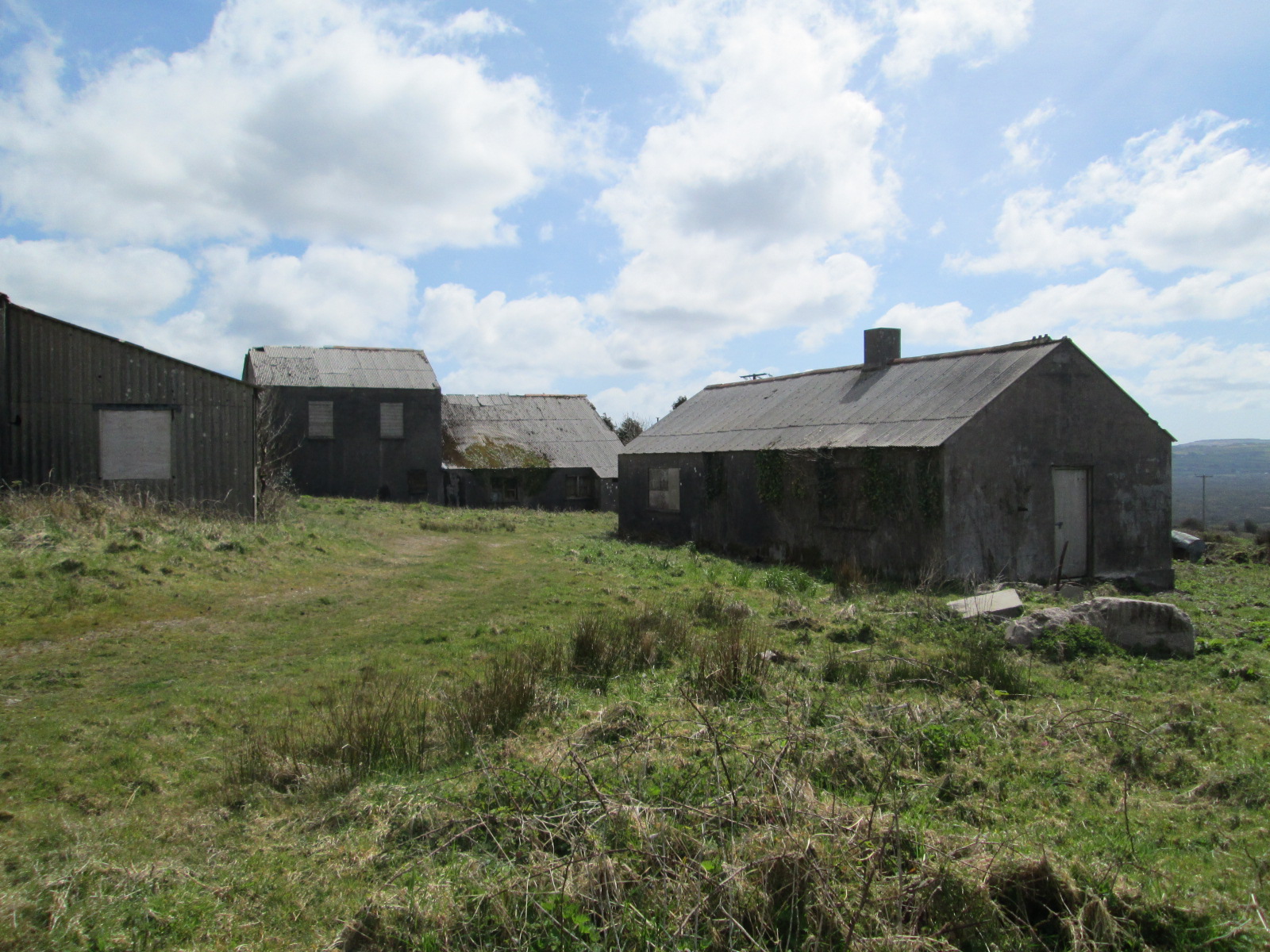
Mine buildings survive close to the hillfort, including buildings associated with the wolfram works themselves, along with abandoned mine buildings and a fenced-off shaft to the south of the site; the earthwork ramparts of the hillfort itself, cut through by the lode the mine once worked, remain a prominent local landmark.
Surviving wolfram mine buildings, further abandoned mine buildings to the south, and a fenced mine shaft, all close beneath the ramparts of Castle-an-Dinas hillfort.
Redevelopment
None — the site remains open ground beside the hillfort, on land partly in Cornwall Heritage Trust care.
Nearby mines
- Belowda Mine — 1.5 miles (2.4 km) E
- Gaverigan Tin Streaming — 2.1 miles (3.4 km) S
- Wheal Remfry — 3.0 miles (4.9 km) S
- Goonvean Pit — 4.4 miles (7.1 km) S
- Tregargus China Stone Quarries — 5.2 miles (8.4 km) S
Straight-line distance, within 9 miles (15 km). Show on the map.
Recorded claims
Individual factual claims, each attached to the source(s) that support it below. Where sources disagree, both are kept.
- The mine opened in 1917 in response to First World War demand for tungsten, and became Cornwall's premier wolfram producer, worked for wolfram alone throughout its life. 1
- The wolfram occurs in a vertical, north-south lode running directly through the hill beneath the Castle-an-Dinas hillfort ramparts. 2
- Wartime restrictions on capital and imported equipment meant the mine relied on hand-drilling and steam power for much of its life rather than more modern machinery. 1
- Its busiest years, 1945-58, produced about 3,000 tons of wolfram concentrate, running at around 200 tons a year when fully operational. 1
- The mine closed in 1957 (some sources give 1958); no tungsten has been produced in Cornwall since. 1
Sources
- (primary) Castle-an-Dinas Wolfram Mine — cornwall-calling.co.uk
- (secondary) Castle-an-Dinas Hillfort education pack — Cornwall Heritage Trust
Record created: 24 August 2026 · Last researched: 24 August 2026