 MineArchive
Cassop Colliery
| Location | Cassop, County Durham — 54.7383, -1.4672 (approximate) |
|---|---|
| Commodity | Coal |
| Type | Coal |
| Worked | 1840–1868 |
| Maximum depth | Unknown. |
| Operators | R. P. Philipson, Edward Robinson and Company |
Overview
An early East Durham colliery worked from 1840 to 1868, whose abandoned workings later drowned ten men at neighbouring East Hetton Colliery.
History
Cassop Colliery lay about five miles east-south-east of Durham, in the township of Cassop-cum-Quarrington. Borings were begun from the surface down to the Main Coal Seam on 4 April 1836, and the colliery shipped its first coal at Hartlepool in 1840. It was worked in stages, each proved by boring before it was cut. In 1856 boring was begun at the bottom of the Vale Pit to prove the Hutton and Harvey seams, and in 1864 the colliery was sunk from the Main Coal down to the Harvey, with boring carried on further to the Brockwell. The main colliery gave up in 1868 and the Vale Pit worked on to 1877; the Five Quarter and Main Coal seams were abandoned in 1878. R. P. Philipson is returned as owner in the 1850s and Edward Robinson & Company in the 1870s. Like most of the small Durham pits its casualties were individual rather than catastrophic, and a great many of them were children. John Bell, a rolley driver of fourteen, was buried by a fall of stone in the B Pit one Friday evening in September 1846. Henry Bainbridge, a pony putter of twelve, was killed in January 1854 riding out on the limmers when his head was caught between a tub and the roof. William Barrass, who was seven and not employed at the pit at all, was run over in August 1848 while crossing the colliery railway with his grandfather's breakfast. The village went down with the pit. Whellan's directory of 1894 recorded that coal had once been extensively worked in the township and that, the collieries having been laid in, many of the cottages in the parish had fallen into ruin; New Cassop, it wrote, had been a village formerly inhabited entirely by miners and since the collieries ceased to work had fallen much into decay, though it was still principally miners and quarrymen who lived there, pleasantly placed on the hillside. St Paul's church was built in 1868, the year the main colliery closed; it was shut in the 1980s and has been demolished, though its churchyard is still used. The workings outlasted the working. On 6 May 1897 water burst out of Cassop's disused workings into the Harvey seam at neighbouring East Hetton Colliery and drowned ten men.
Geology
Worked coal on the concealed East Durham coalfield beneath the Magnesian Limestone, drawing on the Main Coal, Hutton, Harvey, Five Quarter and Brockwell seams.
Workings
Worked in stages, each proved by boring first: the Main Coal from 1840, the Hutton and Harvey proved by boring from the bottom of the Vale Pit in 1856, and a sinking from the Main Coal to the Harvey in 1864 with boring carried on down towards the Brockwell. There was a B Pit besides the Vale Pit, and a colliery railway to the raff-yard and the shaft mouth. The Five Quarter and Main Coal seams were abandoned in 1878.
Closure
The main colliery closed in 1868 and the Vale Pit worked on until 1877, with the Five Quarter and Main Coal seams abandoned in 1878. The abandoned workings later flooded the Harvey seam at East Hetton, on 6 May 1897, drowning ten men.
What remains
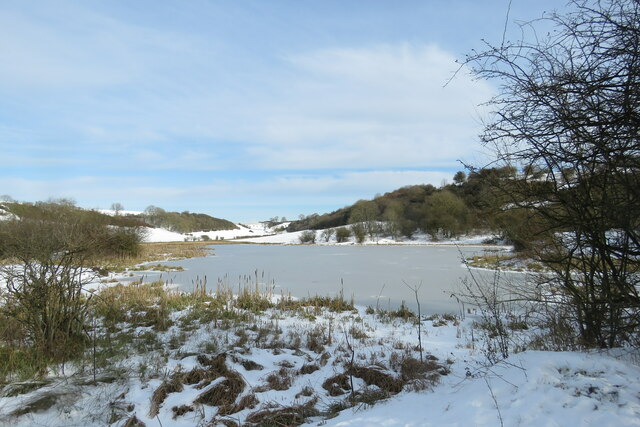
The colliery is long gone; the site at Cassop Vale is now a nature reserve.
Little survives beyond earthworks; the course of the waggonway that linked the colliery to the railway can still be traced.
Redevelopment
Unknown.
Related mines
- East Hetton Colliery — Water from Cassop's disused workings broke into East Hetton's Harvey seam in 1897, drowning ten men.
Nearby mines
- East Hetton Colliery — 1.3 km S
- Thornley Colliery — 1.6 km E
- Raisby Hill Quarry — 3.0 km S
- Trimdon Grange Colliery — 3.6 km SE
- Bowburn Colliery — 3.9 km W
Straight-line distance, within 15 km. Show on the map.
Recorded claims
Individual factual claims, each attached to the source(s) that support it below. Where sources disagree, both are kept.
- Borings began at Cassop in April 1836, and the colliery shipped its first coal at Hartlepool in 1840. 1
- Worked the Main Coal, Hutton, Harvey, Five Quarter and Brockwell seams; in 1864 it was sunk from the Main Coal to the Harvey Seam. 1
- Owned by R. P. Philipson in the 1850s and by Edward Robinson & Co. in the 1870s. 1
- The colliery closed in 1868 and the Vale Pit in 1877, the Five Quarter and Main Coal seams being abandoned in 1878. 1
- On 6 May 1897 water from the disused Cassop workings broke into the Harvey seam at neighbouring East Hetton Colliery, drowning ten men. 2
- The abandoned workings are recorded in the mine-plans catalogue of the British Geological Survey. 3
- Borings were begun at Cassop from the surface to the Main Coal Seam on 4 April 1836, and the colliery shipped its first coal at Hartlepool in 1840. 1
- Boring was begun at the bottom of the Vale Pit in 1856 to prove the Hutton and Harvey seams, and in 1864 the colliery was sunk from the Main Coal to the Harvey with boring continued down to the Brockwell. The Five Quarter and Main Coal seams were abandoned in 1878. 1
- The colliery's recorded deaths include John Bell, a rolley driver of fourteen buried by a fall of stone in the B Pit in September 1846; Henry Bainbridge, a pony putter of twelve killed in January 1854 when his head was caught between a tub and the roof; and William Barrass, aged seven and not employed there, run over on the colliery railway in August 1848 while carrying his grandfather's breakfast. 1
- Whellan's 1894 directory records that, the collieries of the township having been laid in, many of the parish's cottages had fallen into ruin, and that New Cassop, once inhabited entirely by miners, had fallen much into decay while remaining a village of miners and quarrymen. 1
Photographs & further reading
Owners, output, sinking history, seams worked and the roll of those killed at the colliery.
View sourceCoroner's inquiry into the 1897 inrush at East Hetton from the disused Cassop workings.
View sourceSources
- (primary) Cassop Colliery (DMM c021) — Durham Mining Museum
- (primary) East Hetton Colliery Disaster Report, 1897 — Durham Mining Museum
- (primary) Cassop Colliery abandonment plans (BGS mine-plans catalogue) — British Geological Survey
- (secondary) Cassop — Wikipedia
Record created: 23 September 2026 · Last researched: 23 September 2026