 MineArchive
Bullhouse Colliery
| Also known as | Ecklands Pit, Bullhouse Mine |
|---|---|
| Location | Millhouse Green, near Penistone, South Yorkshire — 53.5129, -1.6735 (exact) |
| Commodities | Coal, Fireclay |
| Type | Coal |
| Worked | to 1954 |
| Maximum depth | Unknown. The workings were drained not from a deep shaft but by a water drift, a long straight tunnel driven on a gentle downward gradient with its outfall in the bank of the River Don. |
| Operators | General Refractories Ltd. (?–1946), National Coal Board (1947–?), J. Hinchcliffe and Co. |
Overview
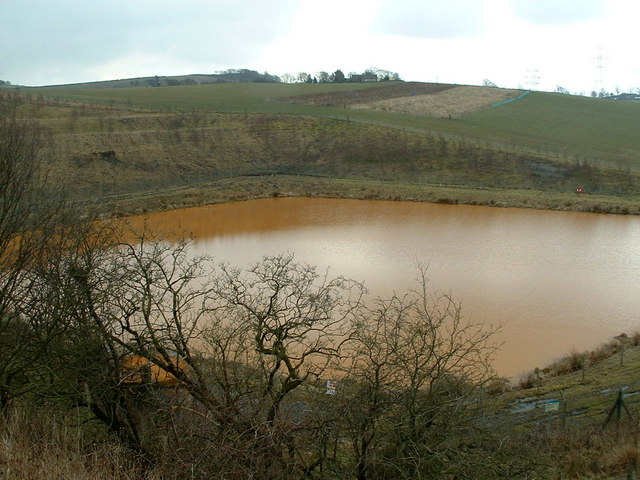
A small colliery at Millhouse Green near Penistone, on the western edge of the Yorkshire coalfield, working the Halifax Hard Bed for coking and manufacturing coal and later fireclay. It never employed more than about seventy people. It is now better known for what it left behind than for what it raised: water building up in the abandoned workings discharged ochre into the upper River Don for decades, and the Bullhouse minewater treatment scheme, with its cascades, settlement lagoon and reedbed, is one of the visible pieces of coalfield remediation in the Pennines.
History
Bullhouse stands at Millhouse Green, west of Penistone, about eight and a half miles from Barnsley and near the western limit of the Yorkshire coalfield. It was a small pit throughout. The Lists of Mines record 69 employed in 1894, 66 in 1896, then a decline to 52 in 1900, 44 in 1905 and 49 in 1910, and later 20 in 1940 and 68 in 1947. The Durham Mining Museum names Ecklands Pit among its workings and gives the owners as J. Hinchcliffe and Co., then General Refractories Ltd, and from 1947 the National Coal Board. The coal was coking and manufacturing coal in the 1890s, and from 1905 the returns are for manufacturing coal and fireclay, which fits the later ownership by a refractories company: the fireclay was worth as much as the coal. The seam worked, given in every return from 1905 to 1915, was the Halifax Hard Bed. Output in 1947 was 10,000 tons. The mine was drained by a water drift, a long straight tunnel driven on a gentle downward gradient with its outfall in the bank of the River Don. That arrangement is why the colliery still matters locally. After abandonment, water built up in the old workings and came out of that drift carrying dissolved iron, and the ochreous discharge polluted the upper stretches of the Don for many years, turning the water orange and killing plant life. A remediation scheme now treats it: the minewater passes over cascades to aerate it and encourage the ochre to drop out, then into a large settlement lagoon where the ochre settles and the clear water is siphoned off, and finally through a reedbed that traps the remaining fine particles before the water is returned to the watercourse. The date of abandonment is not settled between the sources. One account, describing the water drift, gives 1915; the caption on the photograph of the remediation scheme gives 1918. The museum's returns show the colliery still working, under the National Coal Board, in 1947 and 1954, so the earlier dates most likely refer to the abandonment of particular workings rather than of the colliery as a whole.
Geology
Bullhouse worked the Halifax Hard Bed, a coal of the Lower Coal Measures found near the western edge of the Yorkshire coalfield where the measures rise towards the Pennines. The same measures carry the fireclay that appears in the colliery's returns from 1905 and that made it worth a refractories company's while. The iron in those strata is what gives the abandoned workings their legacy: water standing in them dissolves iron and brings it to the surface as ochre, which drops out as a bright orange precipitate when the water meets air.
Geological setting: Sedimentary Beds and Seams (well documented example)
Workings
A small colliery with more than one working, the Durham Mining Museum naming Ecklands Pit among them. Drainage was by water drift rather than by pumping from a shaft: a long, straight, gently graded tunnel carried water out to the bank of the Don. Coal and fireclay were raised together for much of the colliery's later life.
Closure
The sources disagree and the disagreement is left standing. An account of the water drift says the mine was abandoned in 1915; the caption to the remediation scheme photograph says the old Bullhouse colliery working closed in 1918. Against both, the Lists of Mines returns show the colliery working under the National Coal Board in 1947, with an output of 10,000 tons and 68 employed, and again in 1954. The most likely reading is that 1915 and 1918 refer to the abandonment of particular workings, the ones that now hold the water, rather than of the colliery itself; a final closure date is not known.
What remains
The colliery is gone and the site is given over to treating what it left. The Bullhouse minewater remediation scheme occupies the ground: cascades aerate the discharge, a large settlement lagoon lets the ochre drop out, and a reedbed polishes the water before it goes back to the river. Geograph photographs from 2006 through to 2017 and 2019 show the ochreous discharge, the settlement lagoon and the brown pond at Bullhouse, and the site sits alongside the A628 near the Trans-Pennine Trail.
No colliery buildings are recorded. What survives is the drainage: the water drift is still discharging, which is the reason the treatment scheme exists, and the ground has been reshaped into lagoons and reedbeds around it.
Redevelopment
The site now functions as a water treatment works rather than a mine, run as a coalfield minewater remediation scheme. An industrial site stands nearby alongside the A628 Manchester Road at Bullhouse.
Nearby mines
- Hazlehead Colliery — 2.9 miles (4.7 km) NW
- Stocksbridge Colliery — 3.5 miles (5.6 km) SE
- Huskar Pit — 4.9 miles (7.9 km) E
- Wentworth Silkstone Colliery — 5.9 miles (9.5 km) E
- Duke Wood Colliery — 6.2 miles (10.0 km) NE, West Yorkshire
Straight-line distance, within 9 miles (15 km). Show on the map.
What's uncertain
Points where sources disagree or the record could not be settled; both accounts are kept. All open questions in the archive.
- One account of the water drift gives 1915 as the year the mine was abandoned; the caption to the remediation scheme photograph gives 1918 for the closure of the old Bullhouse working. Neither sits easily with the Lists of Mines returns showing the colliery at work in 1947 and 1954. (disputed) 1,2
Recorded claims
Individual factual claims, each attached to the source(s) that support it below. Where sources disagree, both are kept.
- The Durham Mining Museum records owners J. Hinchcliffe and Co., General Refractories Ltd and, from 1947, the National Coal Board, with Ecklands Pit named among the workings. Employment was 69 in 1894, 52 in 1900, 44 in 1905, 20 in 1940 and 68 in 1947, and the 1947 output was 10,000 tons. 1
- The seam worked, in every return from 1905 to 1915, was the Halifax Hard Bed. The colliery sold coking and manufacturing coal in the 1890s and manufacturing coal with fireclay from 1905. 1
- The mine was drained by a water drift, a long straight tunnel on a gentle downward gradient with its outfall in the banks of the River Don. Ochreous discharge caused by water building up inside the old workings long polluted the upper stretches of the Don. 2
- The minewater now passes over cascades to react with air before entering the lagoon, encouraging the ochre to drop out more quickly; it is then held in a large settling lagoon so the ochre settles and the clear water can be siphoned off, and finally passes through a reedbed which traps any remaining fine particles. 2,3
- One account of the water drift gives 1915 as the year the mine was abandoned; the caption to the remediation scheme photograph gives 1918 for the closure of the old Bullhouse working. Neither sits easily with the Lists of Mines returns showing the colliery at work in 1947 and 1954. (disputed) 1,2
- The BGS mine-plans catalogue holds a Mining Remediation Authority abandonment plan titled 'Bullhouse' (catalogue 6819, Halifax Hard Coal & Ganister, dated 1915). 4
Photographs & further reading
Location and grid reference, Ecklands Pit, the three owners, output and employment by List of Mines year from 1894 to 1947, the Halifax Hard Bed seam, and three men recorded as killed at the colliery between 1878 and 1908.
View sourceA photograph of the ochreous discharge from the abandoned workings with an account of how it arises and how the scheme treats it, and the statement that the old working closed in 1918.
View sourceThe manmade lagoon that filters the contaminated water from the former colliery, part of the treatment sequence of cascades, settlement and reedbed now occupying the site.
View sourceSources
- (primary) Bullhouse Colliery — Durham Mining Museum
- (observational) Bullhouse Mine Water Remediation Scheme — Nigel Homer, Geograph Britain and Ireland
- (observational) Settlement lagoon at Bullhouse — Neil Theasby, Geograph Britain and Ireland
- (primary) BGS / Mining Remediation Authority mine plans: BULLHOUSE — British Geological Survey / Mining Remediation Authority
Record created: 10 September 2026 · Last researched: 10 September 2026