 MineArchive
Browns Folly Mine
| Also known as | Brown's Folly Mine, Browne's Folly, Farleigh Down Stone Quarry |
|---|---|
| Location | Bathford Hill, near Bathford, Somerset — 51.3944, -2.2989 (approximate) |
| Commodities | Freestone, Limestone |
| Type | Stone |
| Maximum depth | Unknown. |
| Operators | Wade-Browne |
Overview
The Bath stone workings under Bathford Hill, whose owner built the folly above them in 1848 to advertise his stone, and which are now a Site of Special Scientific Interest and one of Britain's most important bat roosts.
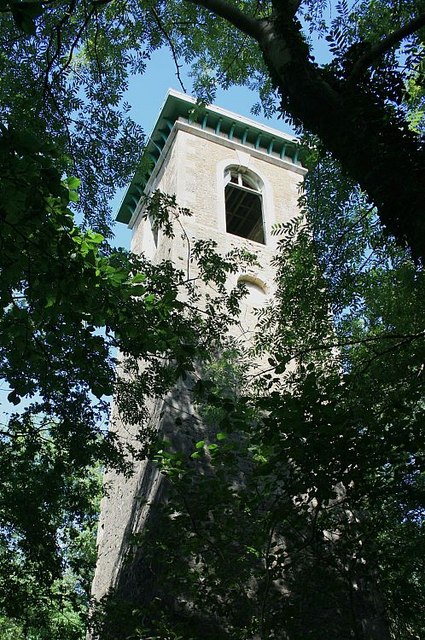
History
The Bath stone workings on the steep west-facing slopes of Bathford Hill, above the River Avon, are known as the Farleigh Down Stone Quarry and, from the tower that stands over them, as Browns Folly Mine. Stone from here went into the facade of Buckingham Palace. The tower is the quarry's own advertisement. It was put up in 1848 for Wade-Browne, a local quarry owner, ostensibly to show off the quality of his stone; the trade was in a downturn at the time and he also saw the work as a way of keeping idle men employed. The folly is a listed building and is not in the same hands as the reserve below it. Accounts of its date differ by a year, 1848 or 1849. Underground the mine is a fairly large but uncomplicated set of workings. The southern section runs as several long main routes with the waste stone stacked along the sides of the passages, and there are few roof falls, the pillars having been left strong and at regular intervals. Stables survive in that part. Further into the hillside is a junction of several routes into the different headings, known as Clapham Junction from the rails laid in its floor; rails of that kind mean a relatively recent and substantial mine. The workings were originally continuous with the Monkton Farleigh quarry next door, and the main adit was blasted, probably by the military, to shut off access to the ammunition depot that Monkton Farleigh became. What the mine is valued for now is not the stone. Ninety-eight and a half acres around and above the workings were notified as a Site of Special Scientific Interest in 1974, both biological and geological, and the ground is managed as a nature reserve by the Avon Wildlife Trust. The disused underground quarries are a roost for the greater horseshoe bat and five other bat species, and form part of the Bath and Bradford-on-Avon Bats Special Area of Conservation; Boris, the oldest greater horseshoe bat ever recorded in Britain, was found here in January 2000. Downland flora has taken the spoil heaps, with wild thyme, harebell and nine species of orchid including the rare fly orchid, and the damp faces carry ferns, fungi and spiders. The underground workings are of speleological interest too, well decorated with delicate stalactites and with examples of gull formation, the fissures opened by land slippage. Caving access was controlled by the Council of Southern Caving Clubs, with voluntary closure during the bat roosting season, until the Trust withdrew it in 2000 pending a mine inspector's report required under health and safety law for its own staff and volunteers counting bats.
Geology
The site is of major importance in British Bathonian stratigraphy. The calcareous soils have developed on Lower Lias clays, fuller's earth and the oolitic limestone of Jurassic age that was the object of the quarrying. The underground workings are well decorated with delicate stalactites and show examples of gull formation, the wide fissures opened in the rock by land slippage on the steep valley side.
Workings
A fairly large but uncomplicated stone mine. The southern section is several long main routes, the waste stone stacked along the sides of the passages, with strong pillars left at regular intervals and few roof falls as a result. Stables survive in that section, and further into the hill a junction of routes into the separate headings is known as Clapham Junction from the rails in its floor. The workings were once continuous with those at Monkton Farleigh, and the main adit was blasted to separate the two.
Closure
Quarrying had ended before the workings were cut off from Monkton Farleigh, which became an ammunition depot in the later 1930s. The year stone working ceased here is unknown.
What remains
The ground above and around the workings is a nature reserve of about forty hectares managed by the Avon Wildlife Trust, with grazing animals, walking trails on steep and often muddy slopes, and commanding views towards Bath. The underground quarries are a bat roost of national importance and the main roost area is marked on the cavers' survey so that it can be left alone. Caving access, formerly controlled by the Council of Southern Caving Clubs, was withdrawn by the Trust in 2000.
The quarry faces and spoil heaps survive across the reserve, the heaps now under downland flora, and are described as a valuable insight into the area's industrial past. Browne's Folly itself, the Grade II listed tower of 1848, still stands on Bathford Hill, though it is now largely screened by trees.
Redevelopment
The site has not been redeveloped. It was notified as a Site of Special Scientific Interest in 1974 and forms part of the Bath and Bradford-on-Avon Bats Special Area of Conservation.
Related mines
- Monkton Farleigh Quarry — Originally one set of workings with Monkton Farleigh; the main adit was blasted to separate Browns Folly from the ammunition depot.
Nearby mines
- Monkton Farleigh Quarry — 1.4 km SE, Wiltshire
- Box Quarry — 3.3 km NE, Wiltshire
- Combe Down Stone Mines — 5.6 km SW
- Spring Quarry — 6.1 km NE, Wiltshire
- Tunnel Quarry, Corsham — 6.9 km NE, Wiltshire
Straight-line distance, within 15 km. Show on the map.
What's uncertain
Points where sources disagree or the record could not be settled; both accounts are kept. All open questions in the archive.
- The folly was commissioned in 1849. (disputed) 1
Recorded claims
Individual factual claims, each attached to the source(s) that support it below. Where sources disagree, both are kept.
- The folly above the workings was built for Wade-Browne, a local quarry owner, partly to advertise the quality of his stone and partly to employ idle quarrymen during a downturn. 1
- The tower was built in 1848 and is a Grade II listed building. 2
- The folly was commissioned in 1849. (disputed) 1
- Stone from the quarry workings provided the facade of Buckingham Palace. 2
- The site was notified as a biological and geological Site of Special Scientific Interest in 1974, covering 39.9 hectares. 2
- The disused underground quarries are a roost for the greater horseshoe bat and five other bat species, and Boris, the oldest greater horseshoe bat recorded in Britain, was found here in January 2000. 2
- The workings were originally part of the Monkton Farleigh quarry and the main adit was blasted to separate them from the ammunition depot. 3
Photographs & further reading
The Avon Wildlife Trust's account of the reserve on the old quarries, its wildlife and the folly's origin.
View sourceAn article on the site, its designation as a Site of Special Scientific Interest and its bat populations.
View sourceSources
- (secondary) Browne's Folly nature reserve — Avon Wildlife Trust
- (secondary) Browne's Folly — Wikipedia
- (observational) Browns Folly Mine, Monkton Farleigh — Higgypop
Record created: 23 September 2026 · Last researched: 23 September 2026