 MineArchive
Spring Quarry
| Location | Corsham, Wiltshire — 51.4216, -2.2229 (approximate) |
|---|---|
| Commodities | Freestone, Limestone |
| Type | Stone |
| Worked | 1875–1937 |
| Maximum depth | Unknown. |
| Operators | Ministry of Aircraft Production (1940–1945), Bristol Aeroplane Company (1941–1945), Bath and Portland Stone Company (?–1940) |
Overview
A Bath stone quarry south of Corsham, worked from 1875, which the Ministry of Aircraft Production turned in 1941 into the largest underground factory in the world, and whose northern end later became the government's nuclear-war headquarters.
History
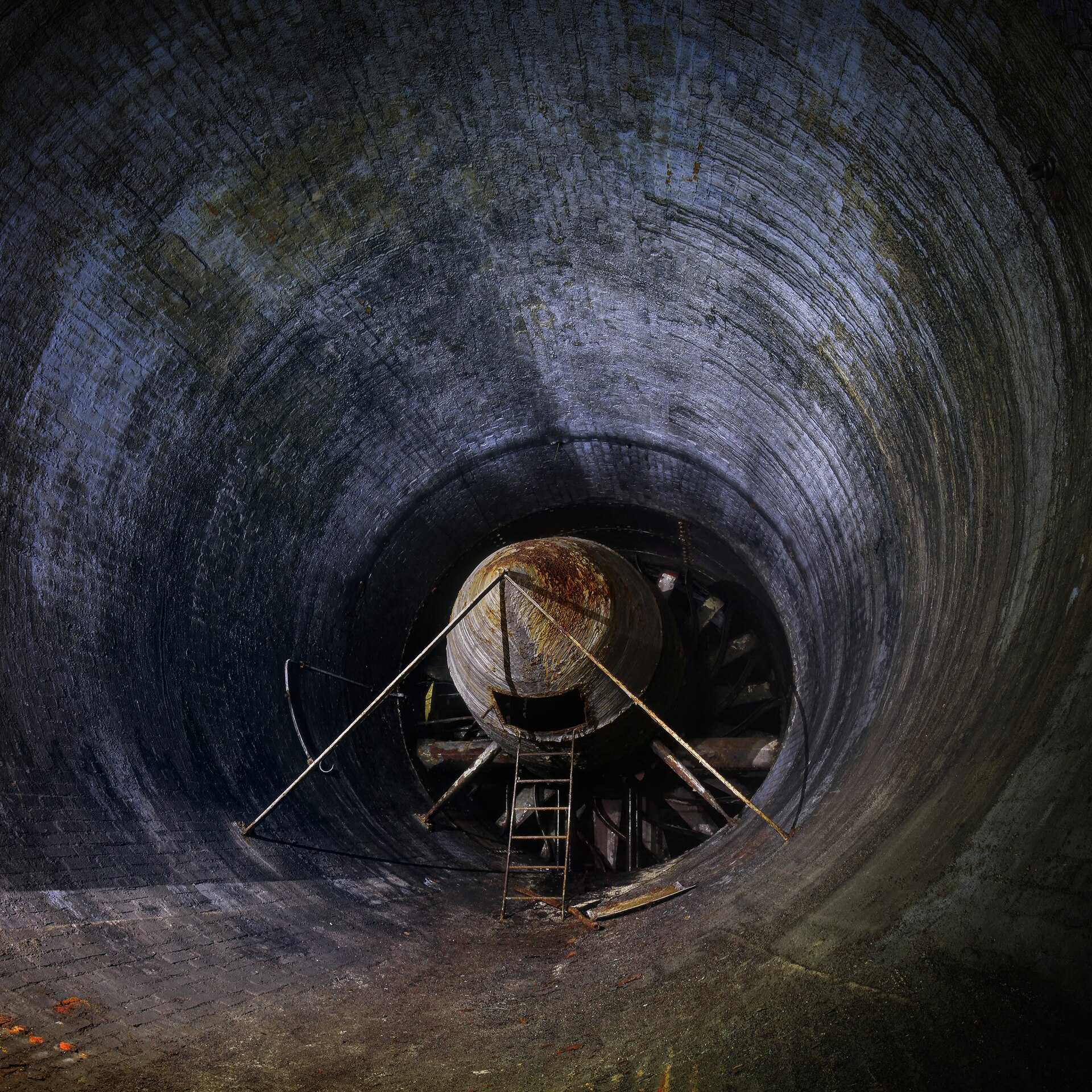
Pictors opened Waterhole Quarry near Hawthorn in 1856, found it very wet, and in 1875 moved the work to Spring Quarry on the south side of Corsham. It was worked for building stone for the rest of the century and beyond, latterly by the Bath and Portland Stone Company, and stone working ceased in 1937, the year the quarry was drawn into the government's underground storage programme around Corsham. In 1940 the Ministry of Aircraft Production bought the quarry outright from the Bath and Portland Stone Company. The Bristol Aeroplane Company's works at Filton had been bombed in September 1940, and Lord Beaverbrook's response was to put aircraft production underground. Conversion began in 1941 and produced what was then the largest underground factory in the world: some 2,250,000 square feet of space, divided into chambers for different firms, with floors levelled, pillars and roofs strengthened in steel and concrete, and lifts, escalators and a large ventilation system installed. The Bristol Aeroplane Company built Hercules aero engines here; BSA made gun barrels; Dowty was to have made undercarriages, but the Dowty section in the north-west was never finished, the German bombing threat having receded before the work was done. Olga Lehmann was commissioned to paint murals in the canteens. The factory closed in 1945, having been used very little, at a cost to the taxpayer of some twenty million pounds; higher figures of around thirty million have also been given. The quarry then passed to the Ministry of Supply, and most of it was used for Admiralty stores until the early 1990s. The northern part had a second career. It was chosen as the seat of government in the event of nuclear war and fitted out as the Hawthorn Central Government War Headquarters, known over the years as Stockwell, Chanticleer, Subterfuge, Turnstile, Peripheral, Site 3 and Burlington. The site was taken off the secret list in 2004, and nine separate areas within it have since been designated as scheduled monuments. Spring Quarry joins Tunnel Quarry along its south edge and the smaller, abandoned Sands Quarry, which served as an emergency exit while the factory was working.
Geology
The quarry works the Bath freestone of the Great Oolite, the same oolitic limestone taken all round Corsham and Box. Its consistency allows a wide span to be left unsupported, so the worked-out ground stands as large galleries and chambers rather than narrow headings. Like the other Corsham quarries it holds a near-constant temperature of about fifty degrees Fahrenheit, with a humidity high enough to rule out the long-term storage of most materials unless the air is conditioned.
Workings
Stone was taken in the usual Corsham manner, leaving pillars of unworked rock between the chambers. The wartime conversion levelled the floors, corseted the pillars and roofs in steel and concrete, and installed lifts, escalators and a ventilation system whose fans, in the western lung, are still in place. The factory floor covered about 2,250,000 square feet, divided among the several firms working underground.
Closure
Stone working ended in 1937. The aircraft factory closed in 1945 with the end of the war, after very little production; the Dowty section was never completed at all.
What remains
Most of the underground area is abandoned. The quarry remains Ministry of Defence property and is secured, bordering active underground areas; part is used by a private company, and one area on the western side forms part of Corsham Media Park's underground studio complex. The Burlington headquarters is kept on a care and maintenance basis.
The entrances, lift heads and ventilation structures stand within the Ministry of Defence establishment at Corsham. Nine areas underground are scheduled monuments.
Redevelopment
Admiralty stores occupied most of the quarry from the late 1940s to the early 1990s, and the northern end was rebuilt as the Central Government War Headquarters. Part of the western side is now an underground studio complex.
Related mines
- Box Quarry — Another of the Corsham and Box freestone quarries worked in the same stone.
- Tunnel Quarry, Corsham — Adjoining quarry, joined to Spring along its south edge and likewise taken by the government.
Nearby mines
- Tunnel Quarry, Corsham — 0.8 km E
- Ridge Quarry — 3.0 km SE
- Box Quarry — 3.1 km W
- Monks Park Mine — 3.2 km E
- Eastlays Quarry — 3.8 km SE
Straight-line distance, within 15 km. Show on the map.
What's uncertain
Points where sources disagree or the record could not be settled; both accounts are kept. All open questions in the archive.
- From 1937 Spring Quarry served as the second largest ammunition store, before the aircraft factory took it over. (uncertain) 4
Recorded claims
Individual factual claims, each attached to the source(s) that support it below. Where sources disagree, both are kept.
- The Ministry of Aircraft Production bought Spring Quarry from the Bath and Portland Stone Company in 1940. 1,2
- The underground factory covered some 2,250,000 square feet and was the largest in the world when it was built. 2
- The factory cost the taxpayer about twenty million pounds. 2,3
- Stone working moved here from Waterhole Quarry in 1875 and ceased in 1937. 4
- From 1937 Spring Quarry served as the second largest ammunition store, before the aircraft factory took it over. (uncertain) 4
- The northern part of the quarry was fitted out as the Hawthorn Central Government War Headquarters, later known as Burlington. 1,2
Photographs & further reading
An overview of the Corsham underground sites, their conversion and what became of each.
View sourceSources
- (secondary) Corsham Ammunition Depot and Standby Government Headquarters — Subterranea Britannica
- (observational) Spring Quarry, Corsham — Higgypop
- (secondary) Spring Quarry - Secret Underground Cities — N. J. McCamley
- (secondary) Chronological History of Bath Stone Quarrying — Cerberus Spelaeological Society Journal
Record created: 23 September 2026 · Last researched: 23 September 2026