 MineArchive
Brandon Flint Mines
| Also known as | Lingheath Flint Mines |
|---|---|
| Location | Ling Heath, Brandon, Suffolk — 52.4367, 0.6355 (exact) |
| Commodity | Flint |
| Type | Mineral |
| Worked | c. 4000 BC–1930s |
| Maximum depth | up to 40 feet (12m) |
Overview
Worked on and off for some 6,000 years, from Neolithic axe-flint to the Napoleonic-era gunflint trade that made Brandon the sole supplier of musket flints to the British Army.
History
Flint has been dug at Ling Heath, on the edge of Brandon in Suffolk, since the Early Neolithic, around 4000 BC, when miners sank shallow shafts to reach flint-bearing chalk for making stone axes — the same tradition documented at this site's own Grime's Graves. Working resumed here on an industrial scale in the post-medieval period as Brandon grew into the capital of England's gunflint trade: during the Napoleonic Wars (1789-1815) Brandon flintmasters held the sole contract to supply the British Army with musket gunflints, and in 1813 fourteen Brandon flintmasters were contracted to supply 1,060,000 flints a month, worth around £18,000 a year and employing some 160 knappers and pit diggers between them — flints from Brandon supplied British troops at the Battle of Waterloo. Individual miners typically worked alone, renting a small plot of ground on which to sink their own pit down through the chalk to reach the black flint, in shafts up to 40 feet deep with steps and toe-holes cut into the chalk walls and short galleries radiating out at the bottom to follow the seam. Flint mining at Lingheath continued in a reduced, specialist form into the 1930s, well after the flintlock itself had become militarily obsolete, supplying a shrinking market for older weapons and reproduction firearms.
Geology
The mines exploit the same high-quality band of flint nodules within the Cretaceous chalk of the Norfolk-Suffolk Breckland worked at Grime's Graves, some miles to the north.
Workings
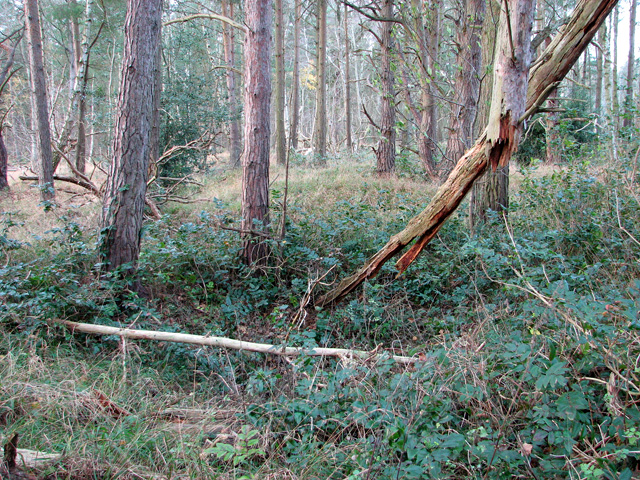
Individual miners rented small plots and sank their own shafts, up to 40 feet deep, with steps and toe-holes cut into the chalk and short galleries radiating from the shaft bottom to follow the flint seam — leaving the distinctive horseshoe-shaped spoil heaps that still mark the site.
Closure
Industrial-scale flint mining at Lingheath wound down through the early 20th century, continuing in a reduced, specialist form until the 1930s.
What remains
The site survives as a recognised archaeological landscape within Thetford Forest, its shaft depressions and spoil heaps visible on the ground and in aerial and lidar survey.
Numerous horseshoe-shaped shaft depressions and chalk-and-flint spoil heaps survive across the site, now within Thetford Forest.
Related mines
- Grime's Graves — Brandon's earliest flint-mining phase followed the same technique documented at Grime's Graves, and worked a continuation of the same Cretaceous chalk flint band.
Nearby mines
- Grime's Graves — 3.1 miles (5.0 km) NE, Norfolk
Straight-line distance, within 9 miles (15 km). Show on the map.
Recorded claims
Individual factual claims, each attached to the source(s) that support it below. Where sources disagree, both are kept.
- Flint mining at Ling Heath began in the Early Neolithic, around 4000 BC, using the same shallow shaft-mining tradition documented at Grime's Graves. 1,2
- During the Napoleonic Wars, Brandon flintmasters held the sole contract to supply the British Army with musket gunflints; in 1813 fourteen flintmasters were contracted to supply 1,060,000 flints a month, worth around £18,000 a year, and flints from Brandon supplied British troops at Waterloo. 3
- Individual miners rented plots and sank their own shafts up to 40 feet deep, with steps and toe-holes cut into the chalk and galleries radiating from the shaft bottom, leaving characteristic horseshoe-shaped spoil heaps. 1
- Flint mining at Lingheath continued in reduced, specialist form into the 1930s, long after the flintlock's military obsolescence. 2
Photographs & further reading
A long illustrated account of the Brandon trade: the Lingheath pits, how the flint was got and worked, the gunflint contracts and the last knappers.
View sourceThe Breckland Society on flint working across the district, setting the Brandon mines in the wider Breckland context.
View sourceSources
- (secondary) Brandon Flint Mine Pits — Breaking New Ground
- (secondary) Lingheath Flint Mines, Brandon — Breckland Society
- (secondary) A History of Flint Knapping in Brandon, Suffolk — nosher.net
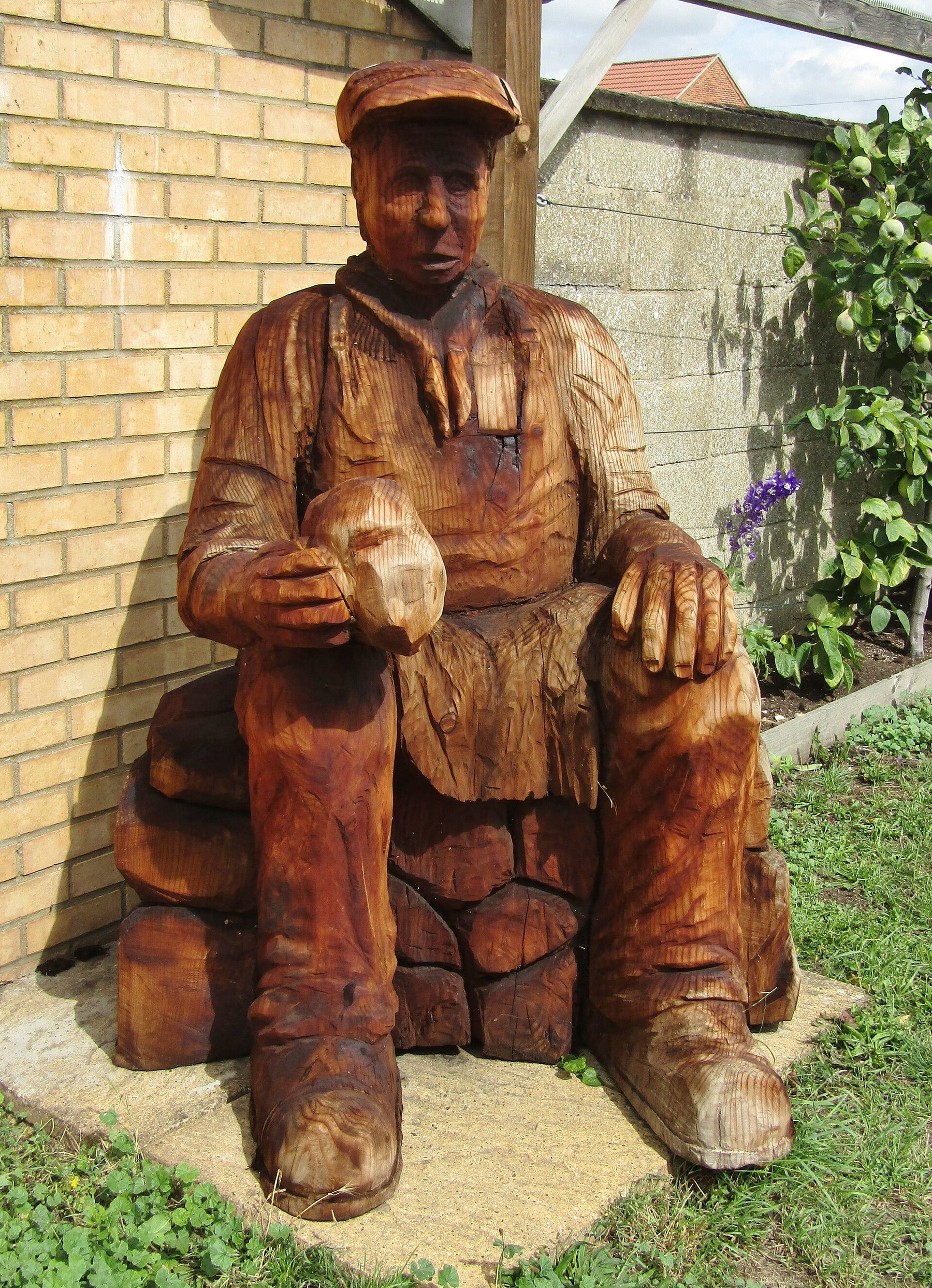
- (observational) Brandon flint knapper carving (Geograph 6715602) — Geograph Britain and Ireland, Colin Smith
Record created: 21 August 2026 · Last researched: 11 September 2026