 MineArchive
Bowburn Colliery
| Location | Bowburn, near Durham, County Durham — 54.7350, -1.5278 (approximate) |
|---|---|
| Commodity | Coal |
| Type | Coal |
| Worked | 1906 (earlier shafts from 1840)–22 July 1967 |
| Maximum depth | Unknown. |
| Operators | Bell Brothers (1906–1923), Dorman, Long & Co. Ltd. (1923–1946), National Coal Board (1947–1967) |
Overview
The pit that made the village of Bowburn, south-east of Durham. A first shaft of 1840 failed to find workable coal; the colliery proper was sunk by Bell Brothers in 1906 and worked the Busty, Beaumont and Harvey seams, two of them coking coals. Dorman, Long took it over in 1923 and the National Coal Board in 1947. Its surface plant was rebuilt in 1931-32 around a Baum washer handling 135 tons an hour, and by the late 1930s it was raising 2,900 tons a day. It closed on 22 July 1967, and an industrial estate covers most of the site.
History
Coal was sought at Bowburn long before the colliery that gave the village its shape: a first shaft called Bowburn Colliery was sunk in 1840 and failed to find workable coal, and a second was sunk a few years later near Park Hill, one of several in the Quarrington and Coxhoe area close to the terminus of the Durham branch of the Clarence Railway. The colliery that lasted was sunk by Bell Brothers in 1906. It worked the Busty, Beaumont and Harvey seams, the first two coking coals, and returned household, gas, manufacturing and steam coals as well as fireclay through its life. Employment rose from 359 in 1910 to 724 in 1930. In April 1923 the colliery passed to Dorman, Long and Company, the Teesside steelmakers, and in 1931-32 the surface plant was entirely reconstructed with a new washing plant built round a Baum washer of 135 tons an hour and new grading and classifying screens; the Iron and Coal Trades Review of 1937 recorded an output of 2,900 tons a day from the three seams. The National Coal Board took the colliery over in 1947, when it raised 575,352 tons. The Durham Mining Museum records no disaster at Bowburn but names 52 men and boys killed there over its life. The colliery closed on 22 July 1967 after sixty-one years.
Geology
The Busty, Beaumont and Harvey seams of the Durham coalfield, the Busty and Beaumont yielding coking coal; fireclay was raised with the coal in several return years.
Geological setting: Sedimentary Beds and Seams (well documented example)
Workings
Shafts of 1906 with an upcast pit alongside. The surface plant was entirely reconstructed in 1931-32, the new washery built around a Baum washer of 135 tons an hour with new grading and classifying screens.
Closure
The National Coal Board closed Bowburn on 22 July 1967. The site was afterwards taken for an industrial estate, apart from the ground around the former coal-winding shaft.
What remains
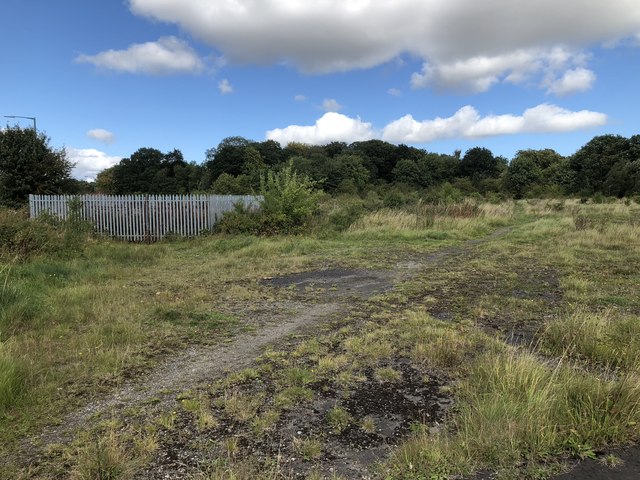
An industrial estate covers most of the colliery site; a fenced enclosure marks the old downcast, coal-winding shaft on the last piece of open ground.
No colliery buildings survive. A fence surrounds the site of the winding shaft, and 'The People's Lamp', a sculpture by Andrew McKeown unveiled in 2022, stands in the village in memory of the colliery.
Redevelopment
Bowburn industrial estate.
Nearby mines
- Tudhoe Whinstone Mine — 3.4 km W
- Thrislington Colliery — 4.0 km S
- East Hetton Colliery — 4.2 km E
- Tudhoe Colliery — 4.2 km SW
- Raisby Hill Quarry — 4.3 km SE
Straight-line distance, within 15 km. Show on the map.
Recorded claims
Individual factual claims, each attached to the source(s) that support it below. Where sources disagree, both are kept.
- A first Bowburn Colliery, a shaft sunk in 1840, failed to find workable coal, and a second was sunk a few years later near Park Hill among the Quarrington and Coxhoe pits. 1
- The colliery that lasted was sunk in 1906 by Bell Brothers; it passed to Dorman, Long and Company in April 1923 and to the National Coal Board in 1947. 2
- The Busty, Beaumont and Harvey seams were worked, the first two being coking coals, and by the Iron and Coal Trades Review of 1937 the three seams together yielded 2,900 tons a day. 2
- The surface plant was entirely reconstructed in 1931-32, with a new washing plant built round a Baum washer of 135 tons an hour and new grading and classifying screens. 2
- Employment rose from 359 in 1910 to 724 in 1930, and the colliery raised 575,352 tons in 1947, its first year under the National Coal Board. 2
- Bowburn Colliery closed on 22 July 1967; the Durham Mining Museum records no disaster there but names 52 men and boys killed at the colliery. 2
Photographs & further reading
Owners, output and employment by year, the seams worked, the 1937 description of the reconstructed plant, and the names of 52 men killed at the colliery.
View sourceSources
- (secondary) Bowburn — Wikipedia
- (secondary) Bowburn Colliery — Durham Mining Museum
Record created: 20 September 2026 · Last researched: 20 September 2026