 MineArchive
Bonville's Court Colliery
| Location | Saundersfoot, Pembrokeshire — 51.7198, -4.7170 (exact) |
|---|---|
| Commodity | Anthracite |
| Type | Coal |
| Worked | 1842 or 1855 (sources differ)–1930 |
| Maximum depth | 246 yards (the K pit, 72 yards below the Tower pit bottom at 174 yards) |
| Operators | Bonville's Court Coal Co. Ltd (?–1930), Myers Mining Co. |
Overview
Bonville's Court was the largest colliery of the Pembrokeshire anthracite coalfield, half a mile inland from the sea at Saundersfoot and named after a local estate house. It worked a block of coal measures between the Harbour and Erroxhill faults through two shafts: the Tower pit, sunk 174 yards to the Lower Level seam, and the K pit 110 yards away and 72 yards deeper to the Kilgetty seam. Its anthracite was good enough to be burnt on Queen Victoria's royal yacht. By 1925 it was raising 82 per cent of the county's coal, but the seams here are badly disturbed, and long haulage roads and bad faulting closed it in 1930.
History
Pembrokeshire anthracite is the best in Britain and the hardest to win: the seams are severely disturbed by faulting. Bonville's Court, opened by the Myers Mining Co. — 1842 by one account, 1855 by another — worked a large area of the coal measures between the Harbour and Erroxhill faults, and was connected with five other collieries to Saundersfoot harbour, built for the coal trade in 1829. Ownership passed through Messrs Myers, M. and T. Kirkwood, the Bonville's Court Colliery Co. and the Bonville's Court Coal Co. Ltd. The Inspector of Mines list for 1896 records 195 people at the colliery, and the daily output in 1900 was 150 tons. The workforce was 314 in 1908 and 347 in 1918; a fire in 1913 destroyed the records of the intervening years, but Ministry of Fuel and Power figures after 1912 show an average of 35,000 tons a year until 1926. A list of 1923 gives 356 people working the Lower Level and Kilgetty veins. By 1925 the colliery was responsible for 82 per cent of the coal output of Pembrokeshire.
Geology
The Pembrokeshire coalfield carries anthracite of very high rank, but its seams are severely disturbed. Bonville's Court worked a block of coal measures bounded by the Harbour and Erroxhill faults, taking the Lower Level and Kilgetty veins; the faulting and the long haulage roads it forced are what finally made the colliery uneconomic.
Geological setting: Faults and Fractures (well documented example), Sedimentary Beds and Seams (well documented example)
Workings
Two shafts. No. 1, the Tower pit, was sunk 174 yards to the Lower Level seam; 110 yards west of its pit bottom the K pit was sunk a further 72 yards to the Kilgetty seam. The colliery was one of six linked by railway to Saundersfoot harbour, which had been built for the coal trade in 1829.
Closure
From 1926 the output declined under long haulage roads and bad faulting until the colliery was closed in 1930, many of the men transferring to Hook colliery. Its machinery went on processing coal from other sites after the pit itself had stopped.
What remains
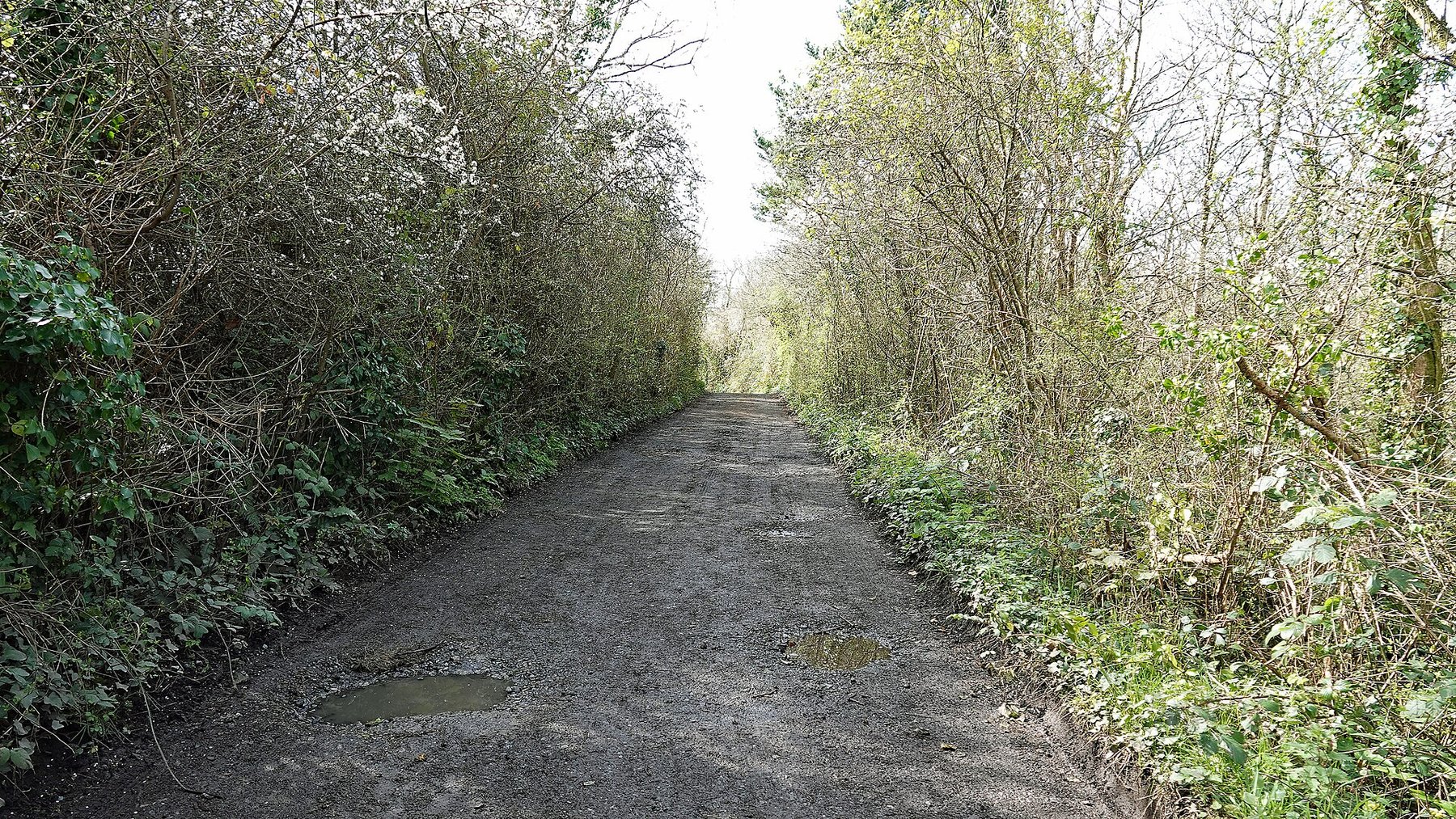
The colliery site is now Bonville's Court Country Park on the edge of Saundersfoot. The colliery's heapstead survives and is a listed building; the incline and the course of the mineral railway that carried the coal down to the harbour are walked as the Incline Way.
The listed heapstead survives in Bonville's Court Country Park, with the incline and the course of the mineral railway down to the harbour.
Related mines
- Broom Colliery — Broom's coal was screened at the new plant at Bonvilles Court in the 1930s.
- Moreton Colliery — Moreton's workings are on joint abandonment plans with Bonvilles Court, Cants, Foxhole and Tower.
Nearby mines
- Moreton Colliery — 0.7 miles (1.2 km) SW
- Grove Colliery, Kilgetty — 1.4 miles (2.3 km) NE
- Kilgetty Colliery — 1.5 miles (2.4 km) NE
- Wood Level Colliery — 1.5 miles (2.4 km) NE
- Broom Colliery — 1.7 miles (2.7 km) NW
Straight-line distance, within 9 miles (15 km). Show on the map.
What's uncertain
Points where sources disagree or the record could not be settled; both accounts are kept. All open questions in the archive.
- Welsh Coal Mines dates the opening to 1842 under the Myers Mining Co.; the Durham Mining Museum gives 1855. (disputed) 1,3
Recorded claims
Individual factual claims, each attached to the source(s) that support it below. Where sources disagree, both are kept.
- Bonville's Court was the largest colliery in the Pembrokeshire coalfield, and by 1925 was responsible for 82 per cent of the coal output of the county. 1,2
- Welsh Coal Mines dates the opening to 1842 under the Myers Mining Co.; the Durham Mining Museum gives 1855. (disputed) 1,3
- The Tower pit was sunk to the Lower Level seam at 174 yards, and 110 yards west of its pit bottom the K pit was sunk a further 72 yards to the Kilgetty seam. 1
- Ministry of Fuel and Power figures after 1912 show an average of 35,000 tons a year until 1926; the daily output in 1900 had been 150 tons. 1
- From 1926 output declined because of the long haulage roads and bad faulting until the colliery closed in 1930, many of the men transferring to Hook colliery. 1
- A fire in 1913 destroyed the colliery's records for the years between 1908 and 1918. 1
Photographs & further reading
The fullest account: the two shafts and their depths, the faults that bounded the take, the Inspector of Mines returns and the reasons for the 1930 closure.
View sourceA heritage point at the colliery site covering the ownership chain, the workforce and the colliery's share of Pembrokeshire's output in its last years.
View sourceSources
- (primary) Bonville's Court Colliery — Welsh Coal Mines, from the Inspector of Mines lists
- (secondary) Site of Bonville's Court Colliery, Saundersfoot — HistoryPoints
- (primary) Durham Mining Museum: Bonville's Court Colliery — Durham Mining Museum, from the Lists of Mines
- (observational) Track near Bonville's Court, Saundersfoot (photographed 2024) — Geograph Britain and Ireland, Dylan Moore
Record created: 10 September 2026 · Last researched: 10 September 2026