 MineArchive
Blaenrhondda Colliery
| Also known as | North Dunraven Colliery, Dunraven North |
|---|---|
| Location | Blaenrhondda, head of the Rhondda Fawr, near Treherbert, Rhondda Cynon Taf — 51.6952, -3.5560 (exact) |
| Commodity | Coal |
| Type | Coal |
| Worked | 1859–1920s |
| Maximum depth | Unknown. |
| Operators | Cardiff and Merthyr Steam Coal Company (1859–1875), London and South Wales Steam Coal Company (1875–?), George Watkinson & Sons (1893–?) |
Overview
The first colliery at Blaenrhondda, at the head of the Rhondda Fawr, opened in 1859 and also called the North Dunraven; its shafts were later taken into Fernhill Colliery, and it closed in the 1920s.
History
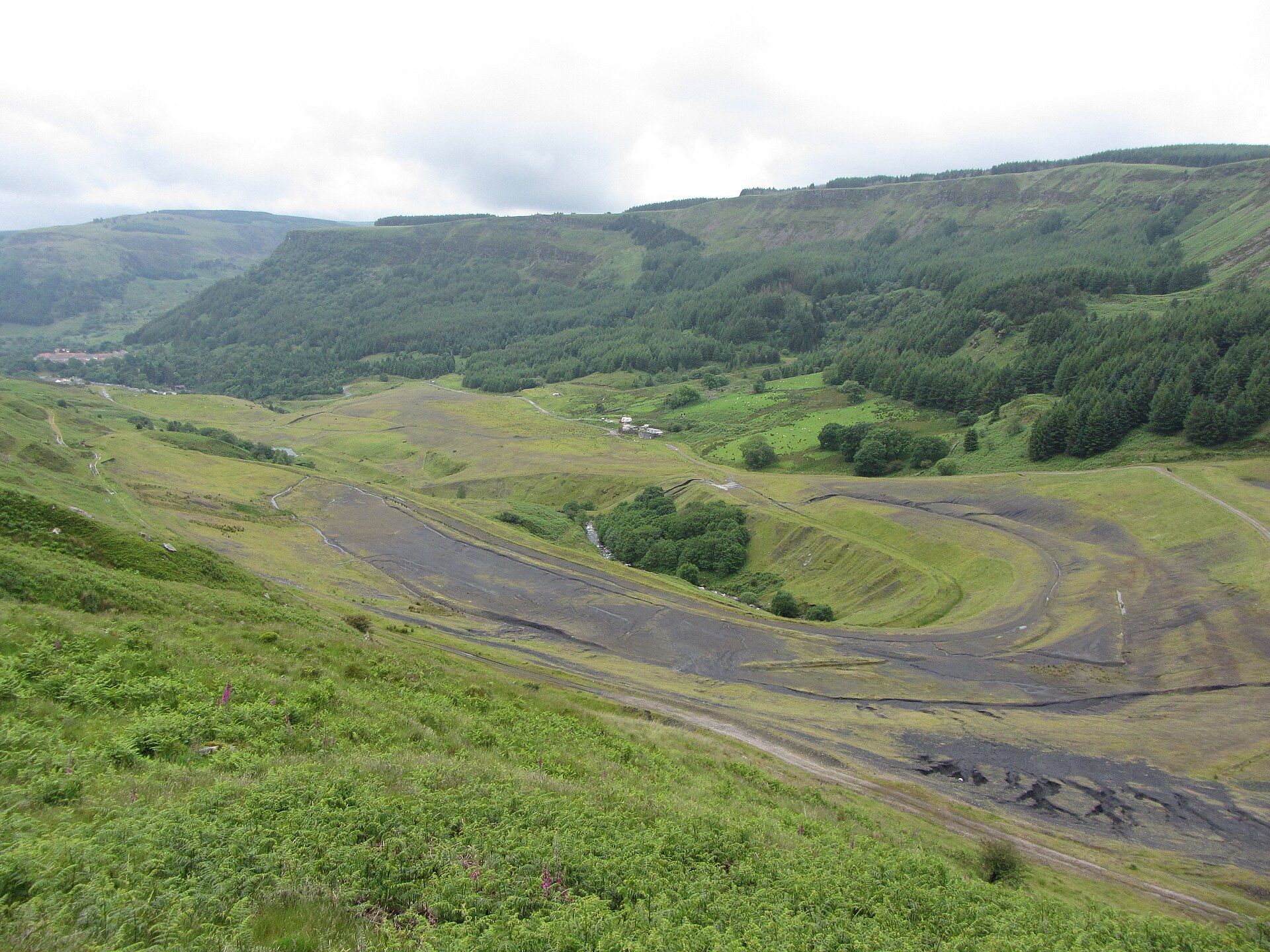
Blaenrhondda Colliery, also called the North Dunraven, was the first colliery at Blaenrhondda, at the head of the Rhondda Fawr above Treherbert. It began as two levels and was sunk in 1859 by George Lockett, James Marychurch, Herbert Kirkhouse and Rees Jones, trading as the Cardiff and Merthyr Steam Coal Company. Two shafts were added in 1872; they later became Fernhill's Nos. 3 and 4 pits. In 1875 the colliery was bought by the London and South Wales Steam Coal Company.
In the 1890s, in 1893 by one account, George Watkinson and Sons, owners of the neighbouring Fernhill Colliery, bought it and merged it with Fernhill. It employed 198 men in 1896 producing steam coal, under the manager D. R. Jones, and 386 in 1908; employment peaked at 537 in 1915. In 1906 a collier, John Hargreaves, was run over by a journey of trams at the top of an incline. By 1918 Fernhill Collieries Limited, the former Watkinson firm, employed 478 men at the Dunraven North levels, and in 1923 Dunraven North and Fernhill levels worked as one unit of 336 men in the No. 2 Rhondda seam. The North Dunraven closed during the 1920s.
Geology
South Wales Coalfield: the No. 2 Rhondda seam.
Workings
Two levels from 1859 and two shafts added in 1872, which later became Fernhill Nos. 3 and 4.
Closure
Closed during the 1920s; its shafts continued as part of Fernhill Colliery.
What remains
Unknown.
Redevelopment
Unknown.
Related mines
- Fernhill Colliery — Bought by Fernhill's owners in the 1890s; its 1872 shafts became Fernhill Nos. 3 and 4.
Nearby mines
- Fernhill Colliery — 0.1 miles (0.2 km) S
- Dunraven Colliery — 0.8 miles (1.2 km) W
- Glenrhondda Colliery — 1.4 miles (2.3 km) S
- Bute Colliery — 1.6 miles (2.5 km) SE
- Lady Margaret Colliery — 1.9 miles (3.1 km) SE
Straight-line distance, within 9 miles (15 km). Show on the map.
Recorded claims
Individual factual claims, each attached to the source(s) that support it below. Where sources disagree, both are kept.
- The North Dunraven, also known as the Blaenrhondda, was sunk in 1859. 1,2
- It was sunk by George Lockett, James Marychurch, Herbert Kirkhouse and Rees Jones, trading as the Cardiff and Merthyr Steam Coal Company. 1
- Two shafts added in 1872 later became Fernhill Nos. 3 and 4 pits. 1
- George Watkinson and Sons bought the North Dunraven (Blaenrhondda) Pit in 1893 and merged it with Fernhill. 3,4
- It employed 198 men in 1896, 386 in 1908 and 537 in 1915. 1
- In 1923 Dunraven North and Fernhill levels worked as one unit employing 336 men in the No. 2 Rhondda seam. 1
- The North Dunraven closed in the 1920s. 1,2
Sources
- (secondary) Blaenrhondda (North Dunraven) Colliery — Welsh Coal Mines
- (secondary) Blaenrhondda — Wikipedia
- (secondary) Treherbert (Rhondda heritage trail) — Rhondda Cynon Taf County Borough Council
- (primary) NMRS Coal Mining Accidents and Deaths: John Hargreaves, North Dunraven, 1906 — Northern Mine Research Society
Record created: 17 October 2026 · Last researched: 17 October 2026