 MineArchive
Glenrhondda Colliery
| Location | Blaencwm, Rhondda Cynon Taf — 51.6754, -3.5655 (exact) |
|---|---|
| Commodity | Coal |
| Type | Coal |
| Worked | 1911–1966 |
| Maximum depth | Unknown. |
| Operators | Glenavon Garw Collieries Limited (1911–1947), National Coal Board (1947–1966) |
Overview
A Blaencwm colliery opened in 1911 by Glenavon Garw Collieries Ltd, whose workforce founded a colliery brass band that still performs today, long after the pit itself closed in 1966.
History
Glenrhondda Colliery was opened in 1911 at Blaencwm, in the upper Rhondda Fawr, by Glenavon Garw Collieries Limited, a company owned by R. McEwen and W. F. Gibb of Post Office Chambers, Port Talbot. The colliery was served by the Rhondda and Swansea Bay Railway, which ran through the Rhondda Tunnel to move its coal onward. On 25 September 1913 a leading sinker, William Roberts, aged 35, drowned after falling from a moving stage into 13 yards of water in the shaft during a walling operation -- a single-fatality accident that does not meet this archive's threshold for a full disaster record. Glenrhondda passed to the National Coal Board on nationalisation and was closed by the NCB in 1966. The Gorllwyn seam was given up in 1954, its abandonment plan held with the Ty Draw plans by the Mining Remediation Authority.
Geology
Coal of the South Wales field at the head of the Rhondda Fawr; the seams worked are not recorded.
Workings
Served by the Rhondda and Swansea Bay Railway via the Rhondda Tunnel; a leading sinker drowned in the shaft in a 1913 walling accident.
Closure
Closed by the National Coal Board in 1966, alongside the neighbouring Dunraven Colliery; the two Blaencwm sites have since been landscaped.
What remains
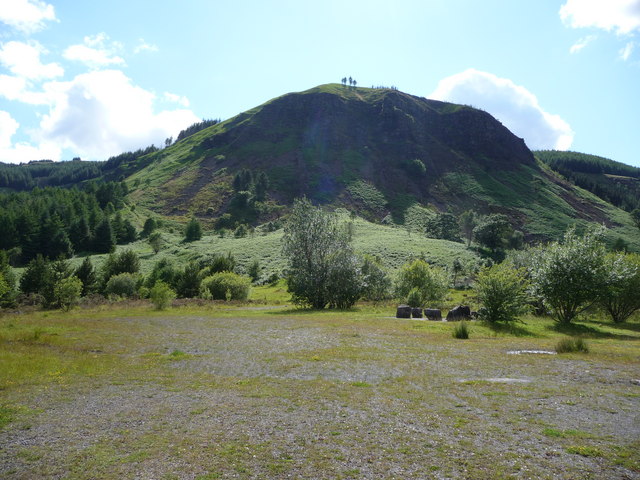
The site has been landscaped; boulders mark the former pithead location.
Boulders marking the former pithead location.
Related mines
- Dunraven Colliery — Neighbouring Blaencwm collieries whose closures were previously mistakenly conflated in this archive -- corrected 2026-09-01; cross-linked so the correction is discoverable from either page.
- Nantewlaeth Colliery — Glenavon Garw Collieries pits.
Nearby mines
- Bute Colliery — 1.0 miles (1.6 km) E
- Lady Margaret Colliery — 1.3 miles (2.1 km) E
- Fernhill Colliery — 1.3 miles (2.2 km) N
- Dunraven Colliery — 1.6 miles (2.6 km) N
- Ynysfeio Colliery — 1.7 miles (2.8 km) E
Straight-line distance, within 9 miles (15 km). Show on the map.
Culture
- Treherbert Band (Music)
The band was founded by and named after this colliery's own workforce, performing as the Glenrhondda Colliery Silver Band for decades before the pit's 1966 closure.
Recorded claims
Individual factual claims, each attached to the source(s) that support it below. Where sources disagree, both are kept.
- Glenrhondda Colliery was opened in 1911 by Glenavon Garw Collieries Limited, owned by R. McEwen and W. F. Gibb of Port Talbot, and served by the Rhondda and Swansea Bay Railway via the Rhondda Tunnel. 1
- On 25 September 1913 leading sinker William Roberts, aged 35, drowned after falling from a stage into 13 yards of water in the shaft during a walling operation. 2
- The Mining Remediation Authority holds abandonment plan SWR730 for the Gorllwyn seam at Glenrhondda, abandoned in 1954, among nine catalogue entries for Glenrhondda and Ty Draw. 3
Photographs & further reading
Further detail on the colliery's ownership and workings.
View sourceSources
- (secondary) Blaencwm — Wikipedia
- (secondary) Glen Rhondda Colliery — Northern Mine Research Society
- (primary) GLENRHONDDA (Mine Remediation Authority abandonment plan SWR730, BGS mine plans catalogue) — British Geological Survey / Mining Remediation Authority
Record created: 1 September 2026 · Last researched: 24 September 2026