 MineArchive
Billingham Anhydrite Mine
| Also known as | ICI Billingham Anhydrite Mine, Billingham Mine |
|---|---|
| Location | Billingham, north bank of the Tees, Stockton-on-Tees — 54.5982, -1.2771 (approximate) |
| Commodity | Anhydrite |
| Type | Mineral |
| Worked | 1927 (sinking from 1926)–1971 (shaft capped 1978) |
| Maximum depth | Shaft about 237 m (850 ft); workings 130-280 m below ground |
| Operators | Imperial Chemical Industries (1926–1978) |
Overview
A mine that existed to feed a chemical works rather than to sell a mineral. ICI dug thirty-three million tons of anhydrite from under Billingham to make sulphuric acid and fertiliser, and when the chemistry changed to natural gas the whole thing was simply sealed and left.
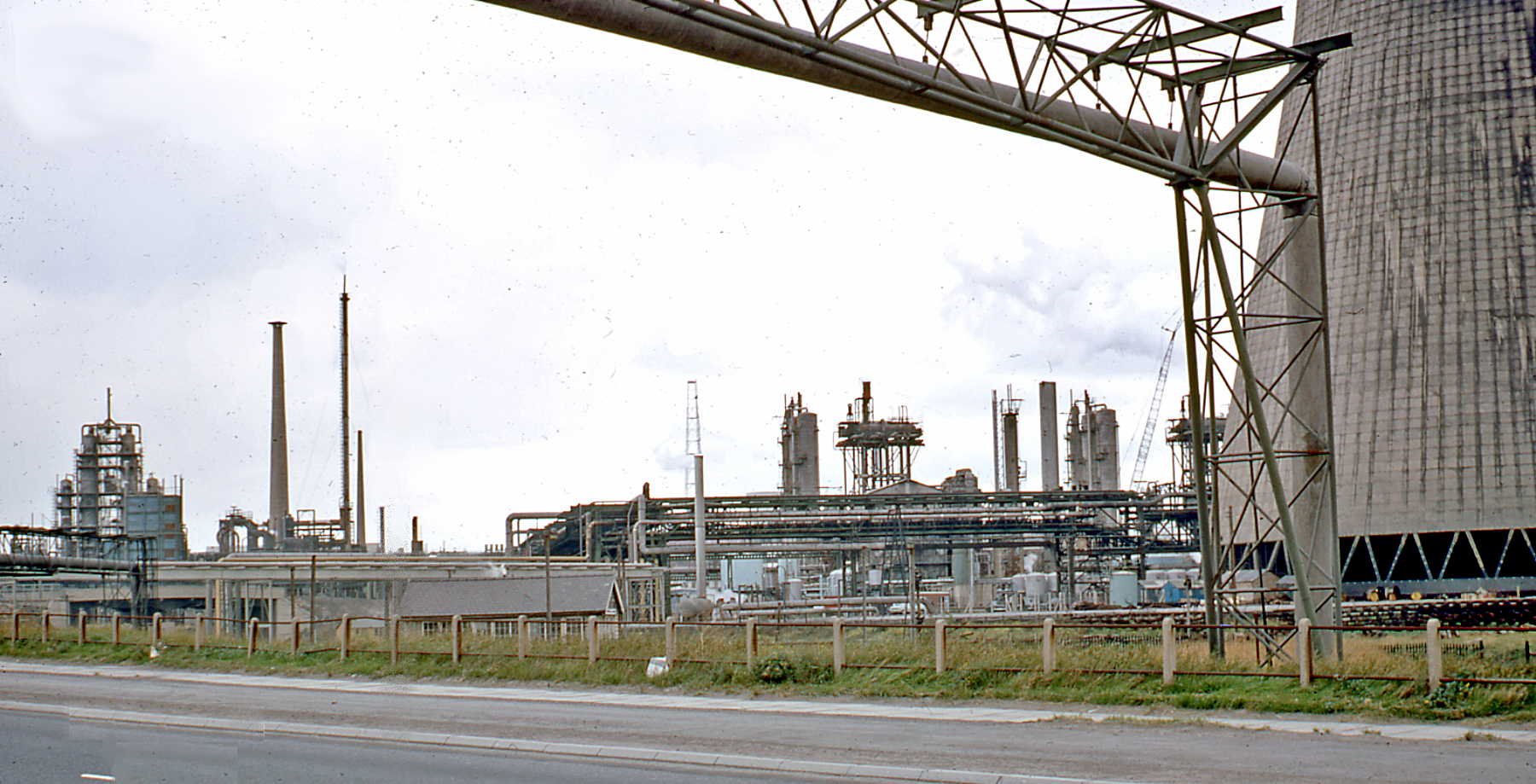
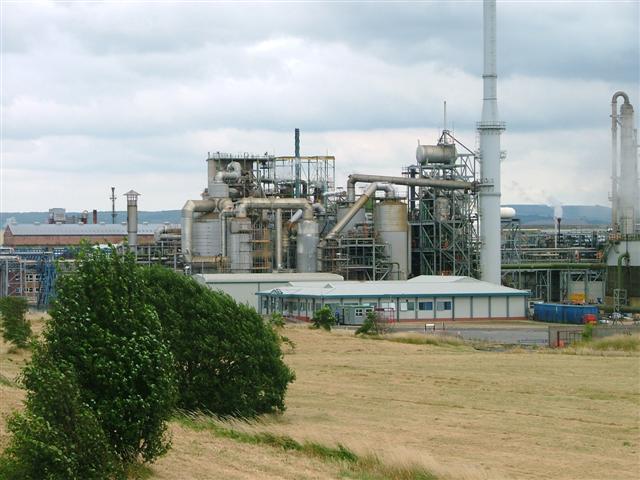
History
Drilling to prove the anhydrite began in 1924 and the sulphuric acid project was launched in 1926. Shaft sinking started that September and bottomed fourteen months later at about 850 feet; the mine went into production in November 1927. The acid plant's first kiln was lit in February 1930, though it took until May 1931 to get acceptable clinker out of it. The mine served the ICI Billingham works — a site of about a thousand acres which in the 1960s was the second largest chemical factory in the world — and by 1953 it had two hundred miles of underground roadways and a square mile of workings. Over forty-four years it yielded more than thirty-three million tons. Production ended in 1971, and the mine was sealed when the shaft was capped in 1978.
Geology
The mine worked a bed of anhydrite five to six metres thick, running 53 to 55 per cent SO3 — an evaporite laid down as the Permian Zechstein sea dried out, the same broad sequence that yields the potash at Boulby and the salt of Cheshire. Anhydrite is calcium sulphate without the water that makes gypsum, and that is exactly what ICI wanted: roasted with coke and clay it gives up sulphur dioxide for sulphuric acid, and leaves behind a calcium silicate clinker that can be ground into Portland cement. The mine's whole existence rested on that one chemical fact.
Geological setting: Evaporite Deposits (well documented example)
Workings
Pillar-and-stall working beneath the plant, over about five square kilometres, with the anhydrite brought up a single shaft of roughly 237 m and taken to the works by belt conveyor. The process used was the Müller-Kühne route, which made sulphuric acid and cement clinker together; the clinker went to the cement works alongside.
A consultants' study reported in 2007 put the worked ground at about 400 hectares, roughly 3 km north to south by up to 1.5 km east to west, with tunnels about 5 m high and pillars typically 15.2 m square. Only 55 per cent of the rock was ever taken out, which is what left 33 million tonnes raised and about 11 million cubic metres of void. Two-thirds of the workings lie under the Billingham chemical site itself and the remaining third under the Cowpen industrial estate.
Closure
The end came from a change of feedstock rather than exhaustion. Billingham moved to elemental sulphur and to natural gas as both fuel and raw material, and phased out ammonium sulphate as a fertiliser — which left the anhydrite mine with nothing to supply. Production stopped in 1971 and the shaft was capped in 1978.
What remains
Sealed and inaccessible. The workings run about 3 km north to south and up to 1.5 km east to west, between 130 and 280 m below ground — roughly eleven million cubic metres of void. They have been considered for various uses since closure, including at one point as a repository for nuclear waste.
A consultants' study completed in 2005 and reported in 2007 found the mine long-term stable, with no danger of subsidence or collapse: anhydrite has about four times the compressive strength of concrete. The shafts were inspected by remote camera and found sound, and the workings relatively dry, with a little water at the foot of the two shafts pumped out at intervals. The mine remains decommissioned and subject to the Mines and Quarries Act 1954, and further mining has not been a realistic proposition since it became unprofitable.
Nothing of the mine at surface; the shaft is capped. The chemical works it was dug to supply is still there in altered form.
Redevelopment
Built over by the continuing industrial estate; the void beneath remains.
The empty mine has attracted proposals ever since it closed. A scheme to store nine million tonnes of crude oil in it was dropped in 1973. In 1983 the Nuclear Industry Radioactive Waste Executive, Nirex, named the mine as its preferred site for the deep disposal of intermediate-level radioactive waste, and the proposal collapsed against local opposition: Billingham Against Nuclear Dumping gathered tens of thousands of signatures, and in January 1985 ICI, which owned the mine, refused the survey team access, after which the site was abandoned. Nirex did not formally drop Billingham from its list until February 2005. Storage of low-level hazardous industrial waste — incinerator fly ash, monitors, fluorescent tubes — was still being examined in the 2000s, with nuclear and medical waste explicitly ruled out.
Nearby mines
- Eston Ironstone Mines — 6.7 miles (10.7 km) SE, North Yorkshire
- Fishburn Colliery — 8.6 miles (13.9 km) NW, County Durham
- Langbaurgh Whinstone Mine — 8.6 miles (13.9 km) SE, North Yorkshire
- Kirkleatham Ironstone Mine — 9.0 miles (14.5 km) E, North Yorkshire
- Chaloner Ironstone Mine — 9.0 miles (14.6 km) E, North Yorkshire
Straight-line distance, within 9 miles (15 km). Show on the map.
Recorded claims
Individual factual claims, each attached to the source(s) that support it below. Where sources disagree, both are kept.
- Drilling to prove the anhydrite began in 1924; shaft sinking started in September 1926 and bottomed fourteen months later at about 850 ft, with the mine in production from November 1927. 1,2
- The mine worked a seam of anhydrite 5 to 6 m thick running 53 to 55 per cent SO3, by pillar-and-stall over about 5 km² beneath the plant, reached by a shaft of roughly 237 m. 1
- The works used the Müller-Kühne process, making sulphuric acid from the anhydrite and Portland cement clinker as a by-product, which went to the neighbouring cement plant by aerial ropeway; the acid kilns produced about 4.7 million tonnes of clinker over their life. 1
- By 1953 the mine had 200 miles of underground roadways and a square mile of workings; over 44 years more than 33 million tons of anhydrite were extracted. 2
- Production ceased in 1971 and the shaft was capped in 1978, the works having switched to elemental sulphur and natural gas and phased out ammonium sulphate. 1,2
- The workings run about 3 km north-south and up to 1.5 km east-west, 130 to 280 m below ground — some eleven million cubic metres of void. 2
- The mine covers about 400 hectares, roughly 3 km by up to 1.5 km, with tunnels about 5 m high and pillars typically 15.2 m square; only 55 per cent of the rock was extracted, giving 33 million tonnes raised and about 11 million cubic metres of void. 3
- Nirex proposed the disused mine as a deep repository for intermediate-level radioactive waste in 1983. The proposal was abandoned in January 1985 after ICI, under heavy local pressure, refused the survey team access; Billingham was not formally removed from the Nirex list until February 2005. 3,4
- A consultants' study found the mine long-term stable with no danger of subsidence or collapse, the shafts sound on camera inspection and the workings relatively dry. 3
- A scheme to store nine million tonnes of crude oil in the mine was considered and discarded in 1973. 3
Photographs & further reading
A 2007 report on the consultants' study of the sealed mine, with its dimensions, pillar sizes, extraction ratio, stability findings and the uses proposed for the void.
View sourceA campaigning history of Britain's search for radioactive waste sites, covering the 1983 Nirex proposal for the Billingham anhydrite mine and its collapse in January 1985.
View sourceSources
- (primary) Billingham — Cement Plants and Kilns in Britain and Ireland — cementkilns.co.uk
- (secondary) History of the Anhydrite Mine — Picture Stockton Archive
- (secondary) Extent of former ICI anhydrite mines revealed — Teesside Live (Evening Gazette)
- (secondary) History of nuclear waste disposal proposals in Britain — No2NuclearPower
- (primary) Mine plans SWR2577 and SW209: Hopewell, Wimberry, Cannop and associated gales — British Geological Survey / Mining Remediation Authority mine plans catalogue
Record created: 24 August 2026 · Last researched: 11 September 2026