 MineArchive
Kirkleatham Ironstone Mine
| Also known as | Dunsdale Ironstone Mine, Dunsdale Mine, Kirkleatham Mines |
|---|---|
| Location | Dunsdale, near Kirkleatham, 8½ miles east of Middlesbrough, North Yorkshire — 54.5577, -1.0621 (exact) |
| Commodity | Ironstone |
| Type | Ironstone |
| Worked | 1872–31 December 1886 |
| Operators | Edward Robinson & Co. (1872–1880, owner) Walker, Maynard & Co. (1880–1886, owner) |
Overview
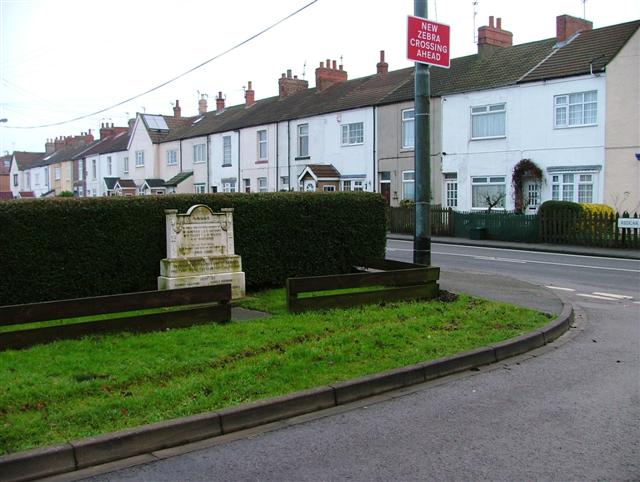
A drift mine at Dunsdale opened by the Newcomen family of Kirkleatham in 1872 to work two pockets of ironstone left by the ice. It was never much of a success and was abandoned at the end of 1886, but the two rows of cottages built for its men are still the village.
History
The Newcomen family, of nearby Kirkleatham, opened an ironstone mine at Dunsdale in 1872. It was a drift, and what it worked was unusual: two pockets of ironstone left isolated by glaciation rather than a continuous run of the Cleveland Main seam.
The two rows of cottages that make up most of Dunsdale today were built as part of the mine property. The official returns give the owners as Edward Robinson & Co. in the 1870s and Walker, Maynard & Co. in the 1880s, with eighty-three employed in 1883 and ironstone returned in 1873, 1882, 1883 and 1884.
It was not a particular success. The mine was abandoned on 31 December 1886, the returns noting that the Cleveland Main seam had been worked out. The village stayed.
Geology
The Cleveland Main seam, but not as a continuous bed: what was worked here was two pockets of ironstone isolated by glaciation, which is why the mine was short of stone so soon.
Workings
A drift, with a narrow-gauge railway running out of it through a tunnel under the road to the pit yard, and an incline down from the village. A powder magazine is shown on the old maps.
Closure
Abandoned on 31 December 1886. The official note against the mine says the Cleveland Main seam was abandoned because the minerals were worked out.
What remains
The entrance to the drift is open but the tunnel is filled or collapsed about ten metres in. Old maps show a second tunnel under the road slightly to the north, for the narrow-gauge railway, and a powder magazine; no trace of either can now be seen. The railbed can be followed from the village down to the top of the incline, where considerable earthworks were needed to hold the gradient.
The drift entrance, traces of buildings, the tunnel under the road and the railbed down to the incline top. The two rows of miners' cottages are still lived in.
Nearby mines
- Chaloner Ironstone Mine — 0.6 miles (1.0 km) SW
- Waterfall Mine — 1.4 miles (2.3 km) SE
- Upleatham Ironstone Mine — 1.7 miles (2.7 km) NE
- Spa Wood Mine — 2.5 miles (4.0 km) SE
- Spa Mine — 2.6 miles (4.1 km) SE
Straight-line distance, within 9 miles (15 km). Show on the map.
Recorded claims
Individual factual claims, each attached to the source(s) that support it below. Where sources disagree, both are kept.
- The Newcomen family, from nearby Kirkleatham, opened an ironstone mine in Dunsdale in 1872. It exploited two pockets of ironstone left by glaciation. The mine was not a particular success and was abandoned on 31 December 1886. 1
- The two rows of cottages forming the village of Dunsdale were part of the mine property and form the major part of the village as it is today. Traces of the drift and buildings remain, with parts of the railbed leading to the top of the incline. 1
- The entrance to the drift mine is open but the tunnel is filled or collapsed about ten metres in. Old maps also show a second tunnel running under the road slightly to the north, for the narrow-gauge railway, and a powder magazine, but no trace of either can now be seen. 2
- The official returns give ironstone in 1873, 1882, 1883 and 1884, eighty-three employed in 1883, and the owners as Edward Robinson & Co. in the 1870s and Walker, Maynard & Co. in the 1880s. The note against 1886 records the Cleveland Main seam abandoned, minerals worked out. 3
- Robert Hewson of Yearby died at Kirkleatham on 10 August 1882, aged 43. He was cutting a leg from under a piece of ironstone at the top of the place while another man prepared a shot to blast it, and the stone fell on him. His headstone is at St Cuthbert's, Kirkleatham, and names the mine. 3,4
Photographs & further reading
The returns, the owners, the note that the Cleveland Main seam was worked out, and three men and boys killed here between 1874 and 1882.
View sourceTwo headstones at St Cuthbert's that name the mine, with the census entries and the circumstances behind them.
View sourceThe drift entrance as it now is, the vanished second tunnel and powder magazine, and a discussion in the comments about where the tramway actually ran.
View sourceSources
- (secondary) Dunsdale — Wikipedia
- (observational) Dunsdale (Kirkleatham) Ironstone Mine — Hidden Teesside
- (primary) Kirkleatham (Ironstone) — Durham Mining Museum
- (secondary) Kirkleatham Miners Graves — East Cleveland's Industrial Heartland
Record created: 11 September 2026 · Last researched: 11 September 2026