 MineArchive
Blowing Mill
| Also known as | Blowing House (Alternative name for the same building and process) |
|---|---|
| Dialect | Cornish and Devon |
| Category | Ore Processing |
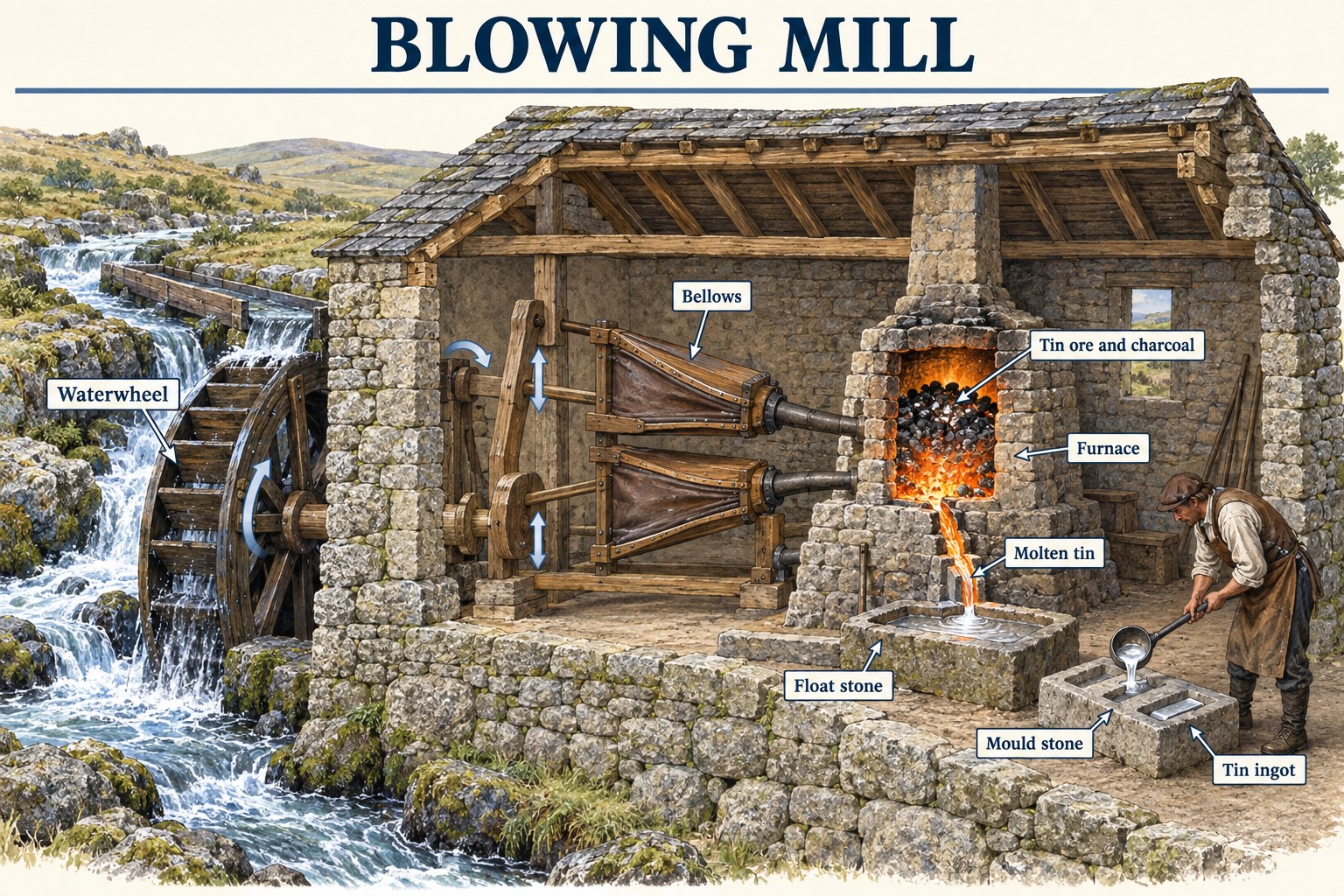
A small water-powered building used to smelt tin ore directly at or near the streamworks or mine that produced it — a furnace and a pair of bellows, driven by an adjacent waterwheel, that turned raw cassiterite into ingots of workable metal.
Historical usage
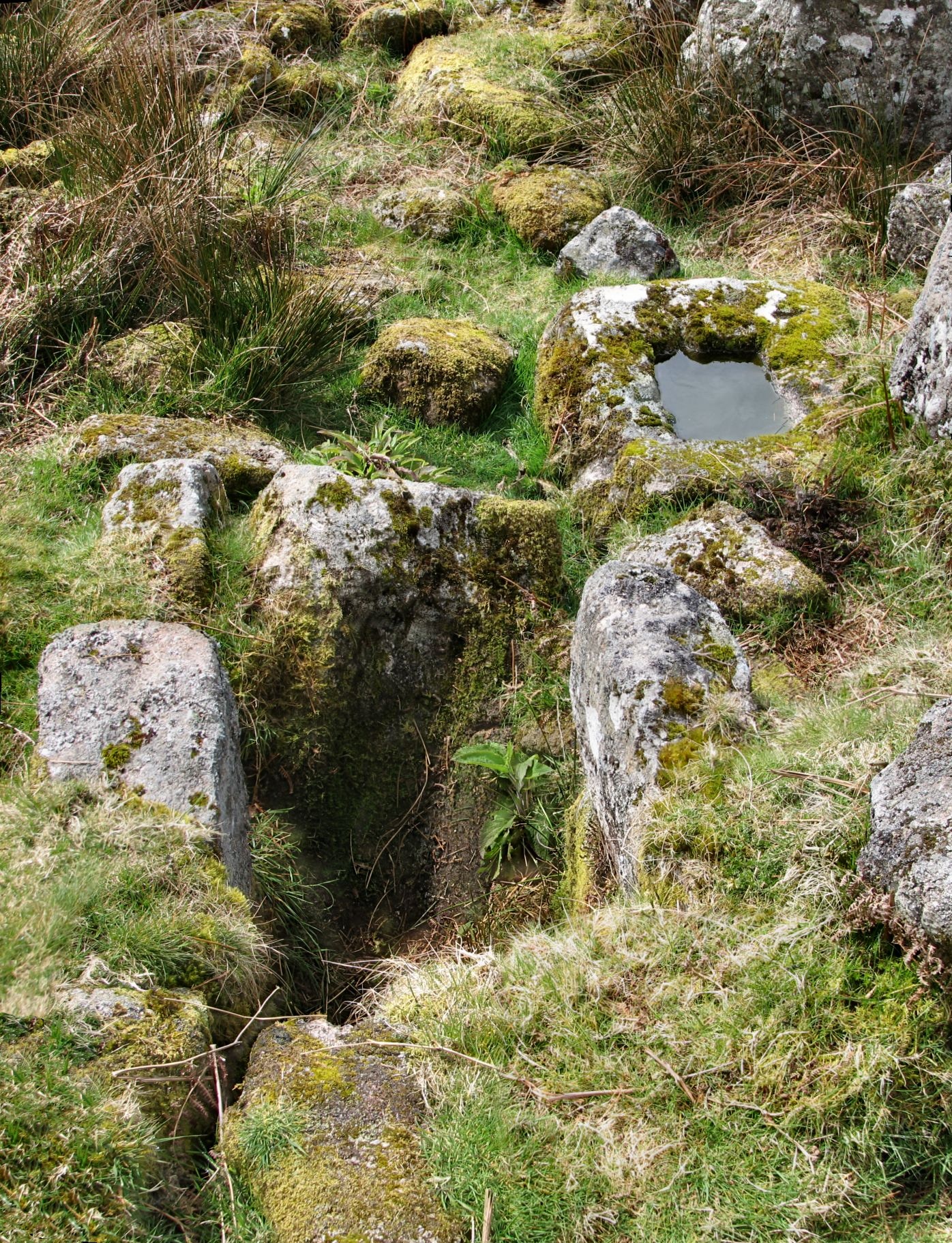
Blowing houses were in use in Cornwall and on Dartmoor from at least the early 14th century, and remained the standard method of tin smelting for several centuries — over 40 have been identified on Dartmoor alone, with around 26 believed to survive today in recognisable form. References to blowing mills throughout Devon are especially common in the 16th and 17th centuries, reflecting the boom years of Dartmoor tin streaming and mining; by 1730, as production declined and larger centralised smelting works took over, only two blowing mills remained working in the whole county, at Sheepstor and Plympton. The technology was gradually superseded during the 18th century by larger reverberatory furnaces, which could smelt at a greater scale away from the immediate vicinity of the mine.
How it worked
A waterwheel drove a pair of large bellows that forced air into a small furnace, raising it to a high enough temperature to melt tin ore mixed with charcoal. Once molten, the tin ran out of the furnace into a shallow stone basin called a float stone, from which it was ladled into a mould stone to cool and set as an ingot of white tin, ready for sale or further working.
Why it was used
Smelting tin close to where it was streamed or mined saved the cost and difficulty of hauling heavy, unrefined ore any distance, and let a relatively small-scale, local operation turn its own raw material directly into a saleable metal ingot without depending on a distant, centralised smelter.
Risks & limitations
A blowing house needed a reliable head of water to drive its bellows, tying it to a specific streamside location regardless of where the ore itself was found, and its small scale limited how much tin it could process at once compared with the larger reverberatory furnaces that eventually replaced it; by the 18th century, most surviving blowing houses simply could not compete on cost or output.
Regional variation
Overwhelmingly associated with Cornwall and Dartmoor, the two great historic centres of British tin streaming and mining; the term itself, and the float-stone-and-mould-stone method it describes, is specific to this South West England tin industry rather than being general British mining vocabulary.
Related terminology
Black Tin and White Tin, Tin Streaming
Sources
- (primary) Dartmoor's Past Tin Industry — Dartmoor National Park Authority
- (secondary) Blowing house — Wikipedia
Record created: 23 August 2026 · Last researched: 23 August 2026