 MineArchive
Westdown Mine
| Also known as | West Downs Consolidated, East Wheal Bedford, Sortridge and Bedford Mine, West Down Mine |
|---|---|
| Location | West Down, by the River Walkham below Grenofen Bridge, Whitchurch, Devon — 50.5151, -4.1342 (exact) |
| Commodities | Tin, Copper |
| Type | Metal |
| Worked | 1847–1858 |
| Maximum depth | 50 fathoms (91 m) at the West Down shaft |
Overview
A small tin and copper mine by the River Walkham below Grenofen Bridge, worked by three short-lived companies between 1847 and 1858, one of which had its property carried off by a rival mine.
History
Westdown Mine lies north-west of the River Walkham a short way downstream of Grenofen Bridge, and tried the lodes between Lower Grenofen and the River Tavy: the eastward continuations of the Virtuous Lady and Wheal Bedford lodes and the westward extension of the Wheal Poldice lode. Trial pits on West Down above it probably pre-date the mine. An anonymous report of 1847 found the lodes poor, but on 19 June that year the West Downs Consolidated Mining Company was formed to work a sett two miles by one. In 1849 its committee warned merchants not to give it credit, and in 1850 much of its property was forcibly removed to East Crowndale Mine on the orders of that company's Captain R. Williams, damaging the burning-house. A new shaft was sunk in 1850 and a Nicholls horizontal condensing engine set to work in January 1851, but the company had stopped reporting by August 1851, and in 1853 Nicholls sued the purser, James Diamond, for the unpaid engine.
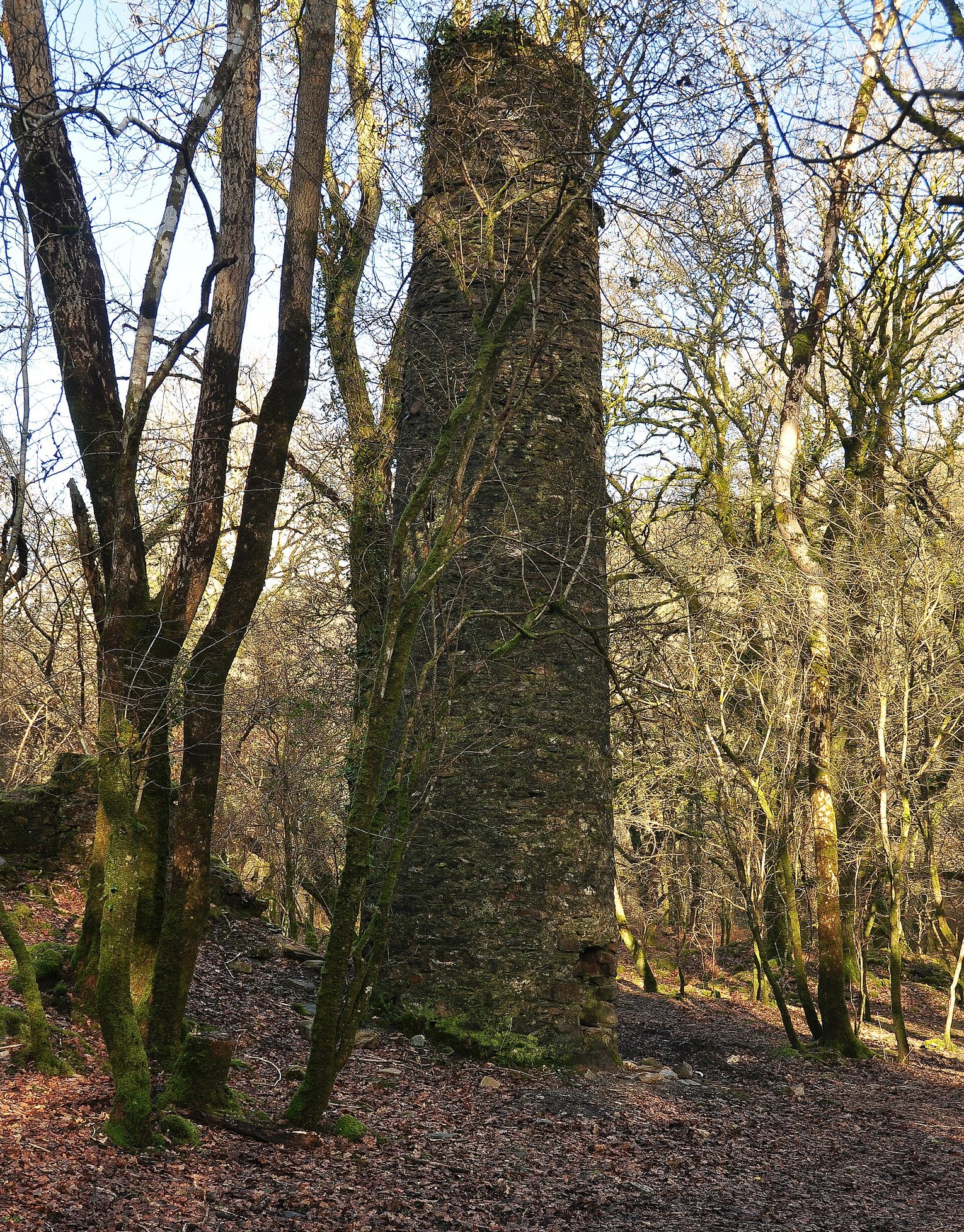
On 26 February 1853 the venture was refloated as the East Wheal Bedford Mining Company in 2,048 shares; it sank a new shaft on West Down to be pumped by a 30-foot waterwheel and flat-rods, auctioned the steam engine, and suspended work in February 1854. On 29 October 1854 the Sortridge and Bedford Mine took over, sinking the West Down shaft to 50 fathoms. In 1856 it held a 21-year lease at one-fifteenth from William Courtenay of Woodmancote, Hampshire, had 12,000 shares and was worked by a waterwheel for copper, with Thomas Treweek as captain. By July 1857 it had cost £7,000 for very little output; it was put up for sale in May 1858 and ceased on 26 May. In December 1858 Captain Treweeke was buried alive while making the shafts safe, and survived. A chimney stack with the remains of its engine or boiler house, an adit and a dressing floor marked by red tin slimes near Raven Rock survive.
Geology
Lodes in killas on the continuations of the Virtuous Lady, Wheal Bedford and Wheal Poldice lodes, with tin and copper.
Workings
Several shafts including one on West Down sunk to 50 fathoms, adits, a Nicholls horizontal steam engine (1851), a 30-ft waterwheel with flat-rods, stamps, a burning house and dressing floor.
Closure
Sortridge and Bedford Mine ceased on 26 May 1858 after costing £7,000 for little output.
What remains
Ruins in woodland by the River Walkham.
A chimney stack with building remains, an adit, and a tin dressing floor near Raven Rock.
Redevelopment
Woodland.
Nearby mines
- Great and East Sortridge Consols — 1.7 miles (2.8 km) NE
- North Wheal Robert — 1.9 miles (3.1 km) E
- Wheal Crebor — 2.0 miles (3.2 km) NW
- Wheal Betsy — 2.4 miles (3.8 km) N
- Gawton Mine — 2.4 miles (3.9 km) SW
Straight-line distance, within 9 miles (15 km). Show on the map.
What's uncertain
Points where sources disagree or the record could not be settled; both accounts are kept. All open questions in the archive.
- Field evidence, a spread of red tin slimes at the dressing floor, shows it was a tin mine rather than the copper mine marked on later maps. (disputed) 1
Recorded claims
Individual factual claims, each attached to the source(s) that support it below. Where sources disagree, both are kept.
- The West Downs Consolidated Mining Company, a cost-book company, was formed in June 1847 to work the sett. 1
- In 1850 much of the company's property was forcibly removed to East Crowndale Mine under the direction of its Captain R. Williams. 1
- On 26 February 1853 the company was reorganised as the East Wheal Bedford Mining Company in 2,048 shares. 1
- The mine was first opened by a London company under the name of West Down for tin and afterwards worked as Sortridge and Bedford. 2,1
- In 1856 Sortridge and Bedford was held under a 21-year lease at 1/15th from William Courtenay of Woodmancote, consisted of 12,000 shares and was worked by a waterwheel for copper. 2
- Field evidence, a spread of red tin slimes at the dressing floor, shows it was a tin mine rather than the copper mine marked on later maps. (disputed) 1
- Sortridge and Bedford Mine ceased on 26 May 1858, having cost £7,000 by July 1857 with very little output. 1
- In December 1858 Captain Thomas Treweeke was buried alive while making the shafts safe, but survived. 1
Sources
- (secondary) Westdown Mine (aka West Downs Consolidated Mining Company / East Wheal Bedford / Sortridge and Bedford) — Dartmoor Explorations
- (secondary) 1856 Mines in Devon and Cornwall — Grace's Guide
Record created: 18 October 2026 · Last researched: 18 October 2026