 MineArchive
Tanfield Moor Colliery
| Location | Tantobie, near Stanley, County Durham — 54.8854, -1.7342 (approximate) |
|---|---|
| Commodity | Coal |
| Type | Coal |
| Worked | 1768–October 1948 |
| Maximum depth | 360 feet (60 fathoms, 110 m), the single shaft in 1894 |
| Operators | Earl of Kerry (1768–?), Lambton, Hetton & Joicey Collieries Ltd (?–1947), National Coal Board (1947–1948), James Joicey & Co. |
Overview
An eighteenth-century colliery at Tantobie, on the Tanfield waggonway, whose first pits date from the 1760s; the Joiceys worked it from the 1850s, and it was abandoned in December 1947 and recorded closed in October 1948.
History
Boring was in progress on Tanfield Moor in 1762, the year the Willie Pit is said to have opened, and a Fortune Pit and a Cap Pit are mentioned in 1764. The colliery's opening is dated 1768, when the Earl of Kerry owned it; Stanley Town Council gives 1769 and believes it was the first deep mine of the Tanfield area. The Tanfield waggonway, rebuilt with iron rails from 1837, reached Tanfield Moor Colliery by 1840, and the Hobson Pit was sunk to the Brockwell seam in 1843.
James Joicey held the colliery from the 1850s and James Joicey and Co. Ltd from the 1860s. In 1894 it worked the Brass Thill and the Five Quarter from one shaft of 60 fathoms, had just sunk to the Hutton, and raised 131,619 tons with 298 hands. Employment stayed between about 330 and 365 until 1910; the Willey pit employed 312 in 1921.
The colliery closed in July 1925, was at work again with 212 men in 1930, was discontinued in March 1933, and employed 183 by 1940. Lambton, Hetton and Joicey Collieries Ltd held it in the 1940s and the National Coal Board from 1947. Its Brass Thill, Hutton, Main and Shield Row seams were abandoned on 4 December 1947 and the colliery is recorded as closed in October 1948; Coal Magazine marked the end in May 1948 with an article titled 'Goodbye Tanfield'. The museum's list of those killed holds 29 names.
Geology
Durham coalfield: the Shield Row, Five Quarter, Brass Thill, Main and Hutton seams, with the Brockwell reached by the Hobson Pit in 1843.
Workings
The Willie, Fortune, Cap, Conquest, Mount and Hobson pits; one working shaft of 60 fathoms in 1894.
Closure
Seams abandoned on 4 December 1947; recorded closed in October 1948 under the National Coal Board.
What remains
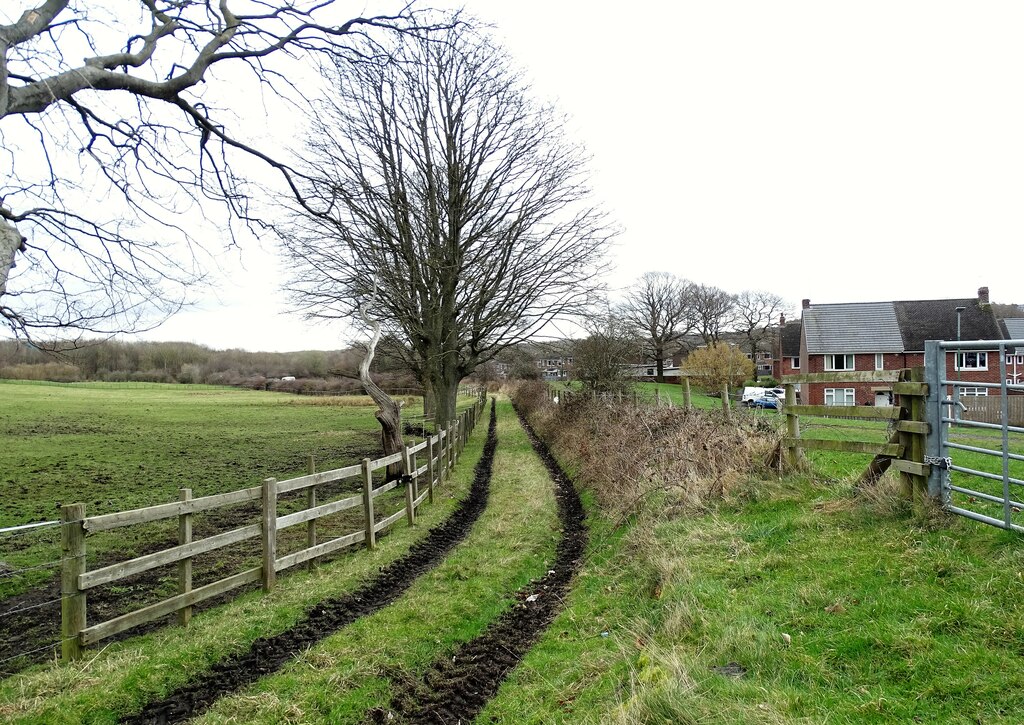
The trackbed of the Tanfield branch that carried its coal survives as a farm track west of Tanfield Lea.
Redevelopment
Unknown.
Related mines
- East Tanfield Colliery — Both were served by the Tanfield waggonway and its later Tanfield branch, which ran from Tanfield Moor down past East Tanfield towards the Tyne.
Nearby mines
- Burnopfield Colliery — 1.0 miles (1.7 km) N
- Tanfield Lea Colliery — 1.1 miles (1.7 km) E
- Dipton Colliery — 1.3 miles (2.0 km) SW
- Lintz Colliery — 1.2 miles (2.0 km) NW
- South Tanfield Colliery — 1.2 miles (2.0 km) SE
Straight-line distance, within 9 miles (15 km). Show on the map.
What's uncertain
Points where sources disagree or the record could not be settled; both accounts are kept. All open questions in the archive.
- Opened in 1769, the first deep mine in the Tanfield area. (disputed) 2
Recorded claims
Individual factual claims, each attached to the source(s) that support it below. Where sources disagree, both are kept.
- Opened in 1768 under the Earl of Kerry. 1
- Opened in 1769, the first deep mine in the Tanfield area. (disputed) 2
- The rebuilt Tanfield waggonway was complete as far as Tanfield Moor Colliery by 1840. 3
- In 1894 it raised 131,619 tons with 298 hands from one shaft of 60 fathoms. 1
- Its last seams were abandoned on 4 December 1947 and it closed in October 1948. 4,5,1
Photographs & further reading
Pits, owners, employment and seams from the 1760s to 1948, with Whellan's 1894 account.
View sourceSources
- (primary) Durham Mining Museum: Tanfield Moor Colliery — Durham Mining Museum
- (secondary) Stanley Town Council: History of Tanfield — Stanley Town Council
- (secondary) Wikipedia: Tanfield Railway — Wikipedia
- (secondary) Wikipedia: Tanfield, County Durham — Wikipedia
- (secondary) Co-Curate: Tanfield — Newcastle University (Co-Curate)
Record created: 6 October 2026 · Last researched: 6 October 2026