 MineArchive
Strafford Colliery
| Location | Stainborough Lowe, between Dodworth and Stainborough, west of Barnsley, South Yorkshire — 53.5330, -1.5149 (approximate) |
|---|---|
| Commodity | Coal |
| Type | Coal |
| Worked | 1855–August 1935 |
| Operators | Strafford Collieries Company (1855–1935) — Strafford Coal Co., later Strafford Collieries Co., Ltd (DMM s215; NMRS) |
A Dodworth colliery beside Stainborough's lake, west of Barnsley, worked by the Strafford Coal Company from 1855 in the Parkgate and Silkstone seams with up to a thousand men in the 1890s, discontinued in 1935 and later kept as a pumping station.
Location
Approximate location. The large pin is this mine; the small round markers are the nearest mines on record. Click one for its page. View on full map
History
Strafford, sometimes Strafford Main, was sunk in 1855 in the valley of the House Carr Dyke between Dodworth and Stainborough, beside Stainborough Lowe Lake, made about 1730 as part of the Wentworth Castle landscape. It was worked by the Strafford Coal Company, later Strafford Collieries Company Ltd, which also worked Rob Royd nearby.
In the 1890s it worked two seams as two units: the Parkgate, with 451 people in 1894, and the Silkstone, with 594 that year and 751 in 1896, producing gas, household, coking and steam coal. The Parkgate workings were abandoned at the end of 1897 and the pit was standing by 1910, while the Silkstone kept over seven hundred employed until about 1910. Numbers then collapsed, to 99 in 1915 and 39 in 1933.
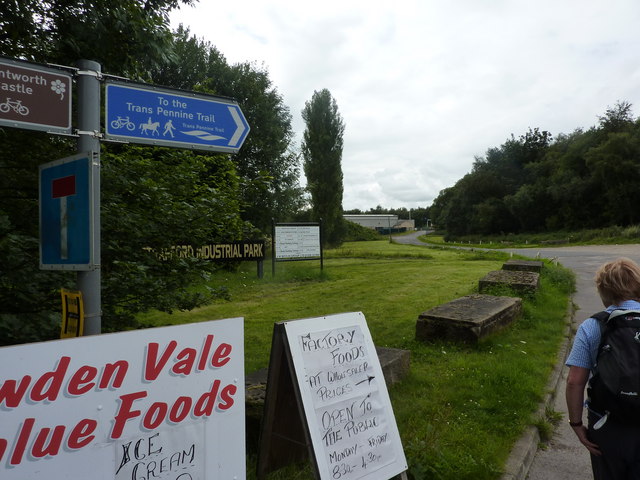
The colliery was discontinued in August 1935, and the Rob Royd and Strafford workings were abandoned at the end of 1938. Strafford was used as a pumping station in 1944 and 1945 and again from 1981 to 1988. A narrow-gauge line from the pit ran along an embankment of tipped colliery waste on the old dam of Stainborough Lowe Lake, and the site later became an engineering works, now the Strafford Industrial Park.
Geology
The Parkgate and Silkstone seams of the Barnsley district, worked as separate units in the 1890s; the Flockton and Fenton seams also appear on the Strafford and Rob Royd abandonment plans.
Workings
A shaft colliery worked in two units, Parkgate and Silkstone, with corves and tubs on engine planes and inclines; the Parkgate unit stood idle by 1910.
Closure
Discontinued in August 1935; the Rob Royd and Strafford workings in the Parkgate, Flockton, Fenton and Silkstone seams were abandoned on 31 December 1938. The shaft was used for pumping in 1944-45 and 1981-88.
What remains
The colliery site is now the Strafford Industrial Park.
Redevelopment
The site became an engineering works and is now the Strafford Industrial Park.
Related mines
- Rob Royd Colliery — Both worked by the Strafford Coal Company, later Strafford Collieries Co. Ltd; their workings were abandoned together as Rob Royd and Strafford in 1938.
Nearby mines
- Rob Royd Colliery — 0.6 miles (0.9 km) E
- Wentworth Silkstone Colliery — 0.8 miles (1.3 km) SW
- Dodworth Colliery — 1.2 miles (1.9 km) NW
- Huskar Pit — 1.8 miles (2.9 km) W
- Higham Colliery — 1.8 miles (3.0 km) N
Straight-line distance, within 9 miles (15 km). Show on the map.
Recorded claims
Individual factual claims, each attached to the source(s) that support it below. Where sources disagree, both are kept.
- Strafford Colliery at Dodworth was worked from 1855 and discontinued in August 1935. 1
- It was used as a pumping station from 1944 to 1945 and from 1981 to 1988. 1
- The colliery was worked by the Strafford Coal Co., later Strafford Collieries Co. Ltd. 2,3
- In 1894 the Parkgate unit employed 451 and the Silkstone unit 594. 2
- The Parkgate seam workings were abandoned on 31 December 1897. 4
- The Rob Royd and Strafford workings were abandoned on 31 December 1938. 5
- A narrow-gauge line from the pit ran on an embankment of colliery waste on the dam of Stainborough Lowe Lake, and the site later became an engineering works. 6
Photographs & further reading
The Northern Mine Research Society's list entry for Strafford Main, with its dates and later use for pumping.
View sourceSources
- (secondary) Coal Mines in Yorkshire 1854 onwards (S) - Northern Mine Research Society — Northern Mine Research Society
- (primary) Strafford Colliery (Durham Mining Museum) — Durham Mining Museum
- (secondary) NMRS deaths database record 751: Levi Allott, Strafford, 1911 — Northern Mine Research Society
- (primary) BGS mine plan: STRAFFORD, Parkgate seam, abandoned 31 December 1897 — British Geological Survey
- (primary) BGS mine plan: ROB ROYD AND STRAFFORD, Silkstone seam, abandoned 31 December 1938 — British Geological Survey
- (secondary) Dodworth Kronicle, April 2015 (Stainborough mills, hollow-ways and Strafford Colliery) — Dodworth Kronicle
Record created: 4 November 2026 · Last researched: 4 November 2026