 MineArchive
South Rhondda Colliery
| Also known as | Llanbad Colliery |
|---|---|
| Location | Cwm Llanbad, near Llanharan, Rhondda Cynon Taf — 51.5535, -3.4560 (approximate) |
| Commodities | Coal, Fireclay |
| Type | Coal |
| Worked | 1884–1927 or 1929 |
| Maximum depth | Unknown. |
| Operators | Llanbad Colliery Company (1884–?), Daniel Owen (1889–1892), South Rhondda Colliery Company (1892–1898), South Rhondda Colliery Company (1898) Limited (1898–?) |
Overview
A coal and fireclay colliery at the head of Cwm Llanbad near Llanharan, on the southern edge of the coalfield, started as Llanbad in 1884 and restarted as South Rhondda in 1889. It employed up to 600 men with a brickworks on site and closed in the late 1920s, when its water flooded part of Meiros Colliery.
History
The Llanbad Colliery Company started the pit at the head of Cwm Llanbad, near Llanharan at the extreme south of the coalfield, in 1884, but soon abandoned it. Daniel Owen restarted it as South Rhondda in May 1889 and sold it in 1892 to the South Rhondda Colliery Company, which became the South Rhondda Colliery Company (1898) Limited. One of its two shafts, the Rhondda Rider, produced fireclay and the other house coal, and a large brickworks on the site used both. The research society also notes that the colliery was hemmed in by the Meiros company's take.
Managed by William Williams, it employed 273 men in 1896 and 276 in 1908; in March 1910 the first sod was cut for a new pit within 200 yards of the old one. Under Dan Evans it employed 400 men in 1913 and 600 in 1916, producing house and gas coal, and drifts such as the Kimberley and Tynycoed were worked with it; two men died in the Tynycoed drift in 1916 (see Disasters, below). The No. 2 Rhondda was abandoned in 1904 and the No. 3 in 1911.
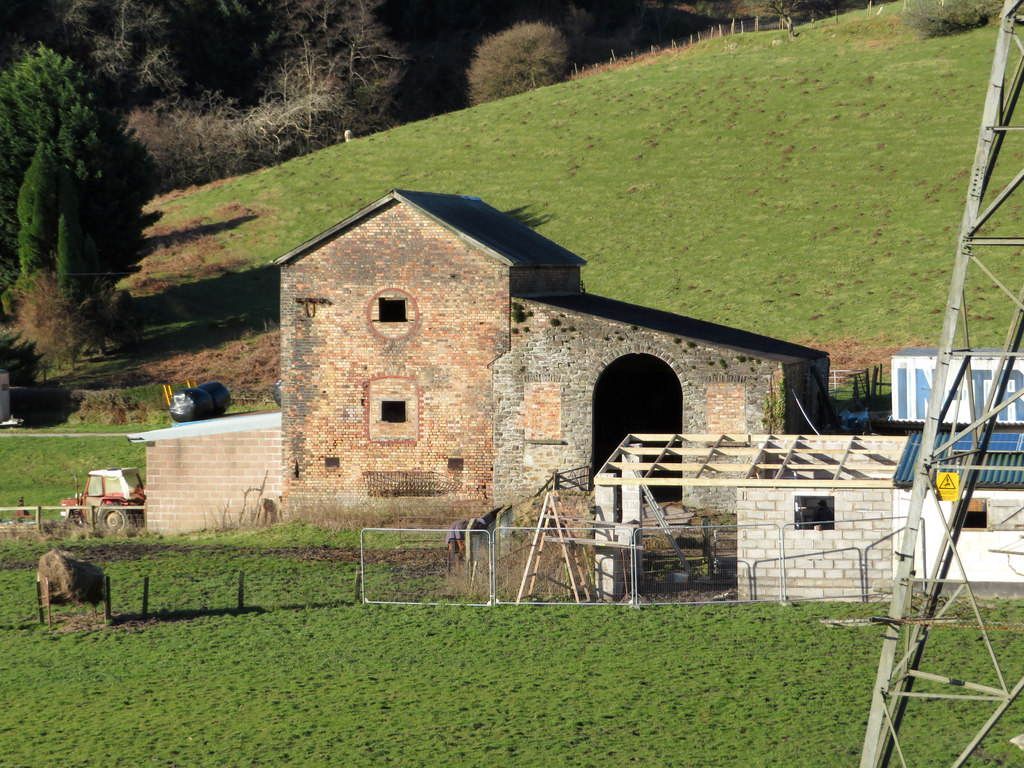
In 1923 it employed some 226 to 300 men, producing coal and fireclay. It closed with the brickworks in 1927 by Welsh Coal Mines' account, or in 1929 by the research society's, and when pumping stopped water from the abandoned mine partly flooded Meiros Colliery. Llanbad Fach drifts were opened nearby about 1955 and abandoned in 1966. The winding house and stables survive.
Geology
The No. 2 Rhondda (52 inches), No. 3 Rhondda (32 inches, struck at 294 feet in the downcast), Pentre (42 to 48 inches) and Hafod seams, with the Rhondda Rider fireclay; high-volatile coals of types 401 to 701 for gas-making and coking blends.
Workings
Two shafts, the downcast sunk just above the No. 2 Rhondda seam and the upcast just below it; associated drifts including the Kimberley and Tynycoed; a brickworks on site.
Closure
Closed with its brickworks in 1927 (Welsh Coal Mines) or 1929 (NMRS); when pumping ceased, water from the abandoned workings partly flooded Meiros Colliery.
What remains
The large winding house, the stables (still used for horses) and the footings of the pithead baths survive; some of the buildings are now a farm.
The winding house, the former colliery stables, other mine buildings now in farm use, and the lower walls of the miners' bath house.
Redevelopment
Part of the site is a farm.
Related mines
- Meiros Colliery — Neighbouring take; when South Rhondda's pumping stopped on closure, its water partly flooded Meiros Colliery.
Nearby mines
- Cwmciwc Colliery — 0.7 miles (1.1 km) SW
- Meiros Colliery — 0.9 miles (1.5 km) SE
- Glyn Colliery, Tonyrefail — 1.0 miles (1.6 km) E
- Brynna Colliery — 1.2 miles (1.9 km) S
- Llanharan Colliery — 1.4 miles (2.2 km) S
Straight-line distance, within 9 miles (15 km). Show on the map.
Disasters & major incidents
-
South Rhondda Colliery roof fall, 1916
4 November 1916 · Collapse / Roof Fall · 2 fatalities
On 4 November 1916 Thomas Perkins and Caleb Tomlin went back down the new Tynycoed drift of the South Rhondda Colliery at Llanharan to attend the pump and were buried by a fall of soft wet ground. So much debris filled the drift that their bodies were not recovered for three weeks.
What's uncertain
Points where sources disagree or the record could not be settled; both accounts are kept. All open questions in the archive.
- It closed, with its brickworks, in 1927, and water from it partly flooded Meiros Colliery. (disputed) 1
- It closed in 1929. (disputed) 2
Recorded claims
Individual factual claims, each attached to the source(s) that support it below. Where sources disagree, both are kept.
- Llanbad was started by the Llanbad Colliery Company in 1884 and restarted as South Rhondda by Daniel Owen in May 1889. 1
- It was worked by the South Rhondda Colliery Company (1898) Limited and was also called Llanbad. 2,1
- It employed 273 men in the mid-1890s under William Williams. 2,1
- It closed, with its brickworks, in 1927, and water from it partly flooded Meiros Colliery. (disputed) 1
- It closed in 1929. (disputed) 2
- The BGS catalogue holds a South Rhondda plan of the No. 3 Rhondda seam. 3
Photographs & further reading
Ray Lawrence's account of the colliery's seams, managers, abandonments and manpower to 1927.
View sourceA history with photographs of the colliery, its 1923 screens and the remains in 2007.
View sourceSources
- (secondary) Welsh Coal Mines: South Rhondda, Llanharan — Welsh Coal Mines
- (secondary) NMRS: South Rhondda Colliery — Northern Mine Research Society
- (primary) BGS / Mining Remediation Authority mine plan: SOUTH RHONDDA (No. 3 Rhondda) — British Geological Survey
- (secondary) 1916 fatalities — Welsh Coal Mines
Record created: 11 October 2026 · Last researched: 11 October 2026