 MineArchive
Silver Rake Mine
| Location | Holywell Common, between Gelli Fowler Farm and Waen-brodlas, Brynford, Flintshire — 53.2477, -3.2288 (exact) |
|---|---|
| Commodity | Lead |
| Type | Metal |
| Worked | Early 18th century–1871 |
| Operators | London Lead Company — Worked Silver Rake in the early 18th century as one of its Halkyn interests. |
A lead vein on Holywell Common in Flintshire, worked by the Quaker Company early in the 18th century and again in the 19th until 1871.
Location
Recorded location. The large pin is this mine; the small round markers are the nearest mines on record. Click one for its page. View on full map
History
Silver Rake is an east–west lead vein on Holywell Common, in Brynford parish, worked across the ground between Gelli Fowler Farm and Waen-brodlas. The London Lead Company, better known as the Quaker Company, worked it early in the eighteenth century. It was one of the company's Halkyn interests, with Maeslygan, Old Rake, Long Rake and Moel-y-crio, at a time when the company was sinking shafts up to about 60 yards deep and bringing in drainage adits and Newcomen engines.
Later working, which went on until 1871, has wiped out the Quaker Company's. In December 1868 a thirty-second share in the New Silver Rake Lead Mine on Halkyn Mountain was advertised for sale in the Flintshire Observer. In 1874 the prospectus of a new Holywell company named Old Silver Rake, with North Hendre, among the well-known dividend-paying mines of Halkyn Mountain.
The vein outlived the mine. In 1875 the neighbouring North Prince Patrick mine was driving a level west along the Silver Rake vein from its eastern shaft. By May the men had driven close to 38 yards since October, most of it through very hard ground, and were hoping to meet the Pwllygasey lode; in February the drivage had looked "most promising" without yet showing much lead.
Geology
An east–west lead vein, with silver, in the Carboniferous Limestone.
Workings
Shafts and opencuts along an east–west vein and its outcrops. The 19th-century workings have obliterated the Quaker Company's early 18th-century ones. In 1874-75 the neighbouring North Prince Patrick mine drove a level west along the Silver Rake vein from its eastern shaft.
Closure
The survey gives 1871 as the end of working. The vein itself was still being driven on from North Prince Patrick's eastern shaft in 1875.
What remains
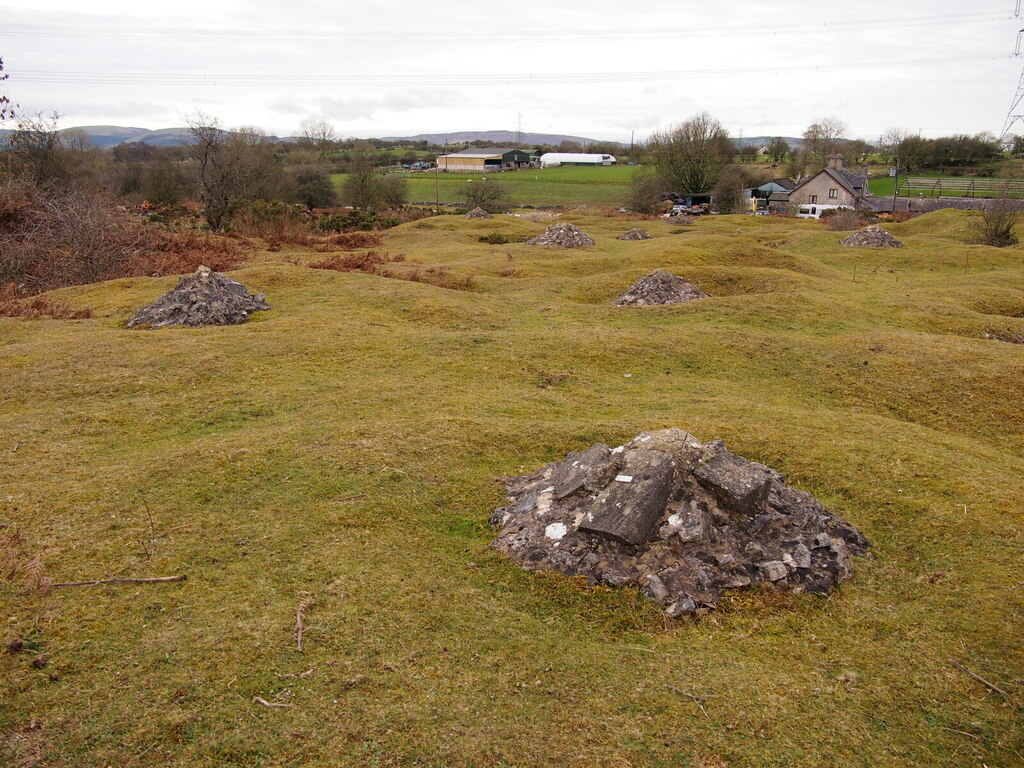
Grassed-over shaft mounds, spoil heaps and opencuts on Holywell Common.
Grassed-over shaft and spoil heaps along the line of the vein, and opencut workings on its outcrops.
Related mines
- North Prince Patrick Mine — North Prince Patrick drove a level west along the Silver Rake vein in 1875.
Nearby mines
- North Prince Patrick Mine — 0.2 miles (0.4 km) E
- Pen-yr-Henblas Mine — 0.6 miles (0.9 km) E
- Prince Patrick Mine — 0.8 miles (1.3 km) SE
- South Prince Patrick Mine — 0.8 miles (1.4 km) SE
- Pwllmelyn Mine — 1.0 miles (1.5 km) S
Straight-line distance, within 9 miles (15 km).
Further reading
The Clwyd-Powys Archaeological Trust's account of mining on Holywell Common and Halkyn Mountain, including the Quaker Company's early workings.
View sourceSources
- (secondary) Clwyd Metal Mines Survey: Silver Rake (HER 18197) — Clwyd-Powys Archaeological Trust, Clwyd Metal Mines Survey
- (secondary) Holywell Common and Halkyn Mountain historic landscape: industry — Clwyd-Powys Archaeological Trust
- (secondary) Advertisement: share in the New Silver Rake Lead Mine, Halkyn Mountain (Flintshire Observer, 24 December 1868) — Welsh Newspapers Online, National Library of Wales
- (secondary) Prospectus of the Holywell Silver-Lead Mining Company Limited (Western Mail, 18 April 1874) — Welsh Newspapers Online, National Library of Wales
- (secondary) Reports from local mines: North Prince Patrick (Flintshire Observer, 19 February 1875) — Welsh Newspapers Online, National Library of Wales
- (secondary) Reports of local lead mines: North Prince Patrick (Flintshire Observer, 14 May 1875) — Welsh Newspapers Online, National Library of Wales
Record created: 23 November 2026 · Last researched: 23 November 2026