 MineArchive
Rosebank Colliery, Dunfermline
| Also known as | Dixie Pit, Dixey Pit, Rosebank Colliery |
|---|---|
| Location | Rosebank, Baldridge and Parkneuk, north-west of Dunfermline, Fife — 56.0878, -3.4856 (approximate) |
| Commodity | Coal |
| Type | Coal |
| Worked | 1881 (earlier pits from the 18th century)–June 1918 |
| Operators | John Nimmo and Son Limited (1881–1918) |
Overview
John Nimmo and Son's colliery on the old Elgin coal ground north-west of Dunfermline, a string of six pits from Upper Rosebank to Parkneuk sunk or reworked from 1881 on land mined since the eighteenth century. The Dixie pits of 1881 and 1882 were its heart; it employed over three hundred in 1910 and was abandoned in May and June 1918.
History
The ground about Rosebank Mains and Nether Rosebank had been mined for centuries, and Rosebank pits numbered one to four and the Coney Holes are documented from the late eighteenth century, when the Earl of Elgin's successor built a waggonway from Limekilns to his newly acquired Baldridge and Rosebank mines in 1794. An early Rosebank pit went to fifty fathoms a quarter of a mile north of Rosebank Mains. John Nimmo and Son of Glasgow reworked the field from 1881: Rosebank No. 2, the first Dixie pit, was sunk that year to the Under Swallowdrum and Five Feet coals with shafts of 69 and 318 feet, No. 3 followed in 1882 for the Upper and Lower Swallowdrum, the old Hunter Pit east of Nether Rosebank became No. 4, the Drumtuthil pit that Thomas Spowart and Company had abandoned in 1878 was reopened as Drumtuthil No. 1, and No. 5 and the Wallsend No. 6 pit at Parkneuk, opened about 1902, completed the string. Two hundred men at three pits struck in February 1887. The Lists of Mines give 262 employed in 1894, 155 in 1896, 268 in 1905 and 342 in 1910 under John Clark, raising gas, household, manufacturing and steam coal from the Eight Feet, Swallowdrum, Five Feet, Two Feet, Silkstone, Six Feet, Seven Feet, Ell and Splint seams. Seven deaths are recorded from 1892 to 1915, among them an overman in 1898 who died of blood poisoning from a finger cut redding out a shaft abandoned twenty-five years before, and a bottomer in 1904 caught by the cage. The Wallsend No. 6 pit was abandoned on 24 June 1918 and the Dixie pits in May 1918, the abandonment plans running to that date; the museum closes the colliery in June 1918.
Geology
Fife coalfield, Dunfermline district. Seams in the nineteenth-century report: Upper and Under Eight Foot (each in two leaves), Upper and Lower Swallowdrum, Five Foot, Two Foot and Four Foot, the first four steam and coking coals; the Lists of Mines add Silkstone, Six Feet, Seven Feet, Ell and Splint.
Geological setting: Sedimentary Beds and Seams (historical documentary reference)
Workings
Six pits: Nos. 2 and 3 (Dixie, 1881-82; No. 2 downcast 318 feet, upcast 330 feet; No. 3 to the Swallowdrum at 78 feet), No. 4 (the old Hunter Pit, 29 fathoms to the Dunfermline Splint), No. 5, Wallsend No. 6 (about 1902) and Drumtuthil No. 1 (372 feet, reopened). Employment from the Lists of Mines: 262 in 1894, 155 in 1896, 140 in 1900, 268 in 1905, 342 in 1910, 300 at Nos. 1, 2, 3 and 6 in 1915, 118 at Nos. 2 and 3 in 1918.
Closure
Abandoned in 1918: the Dixie pits in May and Wallsend No. 6 on 24 June, with abandonment plans of 7 June 1916 and 14 May 1918; the reason is not given in the sources read.
What remains
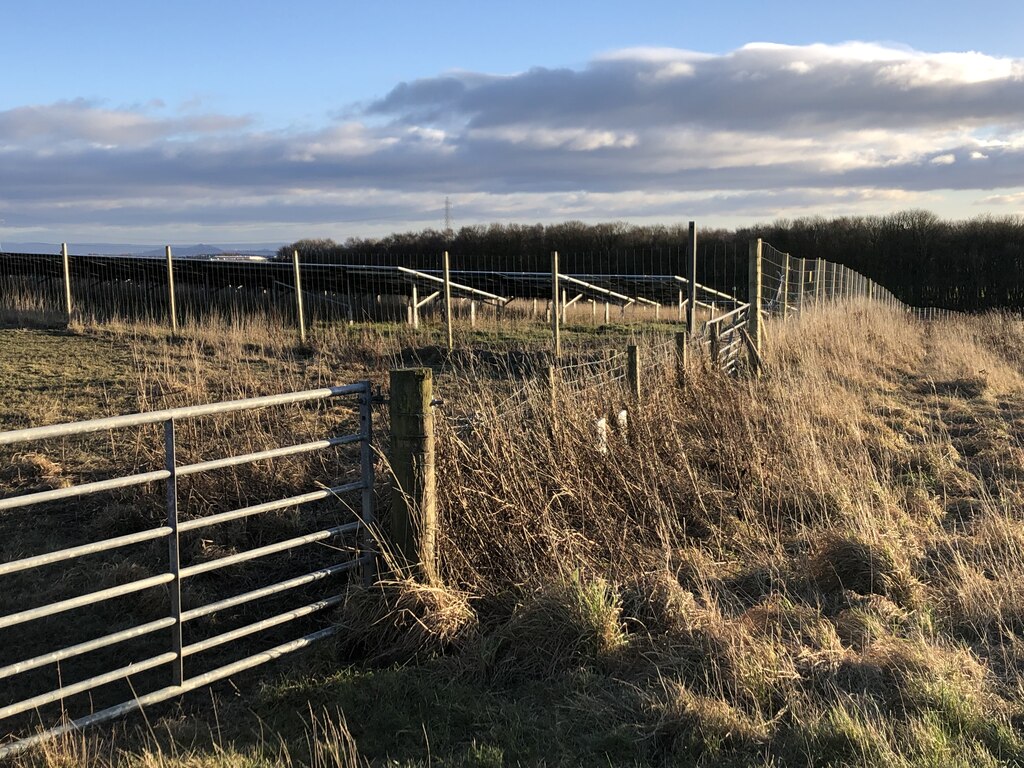
The Rosebank ground is farmland and the site of a solar power station and a gas installation overlooking Dunfermline; nothing of the pits is reported.
None reported in the sources read.
Nearby mines
- Oakley Colliery — 4.7 km W
- Kingseat Colliery — 4.9 km E
- North Steelend Colliery — 5.1 km NW
- Comrie Colliery — 5.3 km W
- Charlestown Limeworks — 5.8 km S
Straight-line distance, within 15 km. Show on the map.
Recorded claims
Individual factual claims, each attached to the source(s) that support it below. Where sources disagree, both are kept.
- Nimmo's Rosebank No. 2 was sunk in 1881 and the colliery was abandoned in May and June 1918; the museum gives 1890 to June 1918. 1,2,3
- John Nimmo and Son, Glasgow. 1,2
- 262 employed in 1894, 342 in 1910 and 300 across four pits in 1915. 1
- Six pits: Dixie Nos. 2 and 3, the Hunter Pit as No. 4, No. 5, Wallsend No. 6 and the reopened Drumtuthil No. 1. 4,5,6,3
- A waggonway from Limekilns to the Baldridge and Rosebank mines was built in 1794 for the Elgin estate. 7
Photographs & further reading
Owners, seams and employment by pit and Lists of Mines year and seven named deaths from 1892 to 1915.
View sourceThe West Fife index entry with managers, employment and the nineteenth-century seam report for the colliery.
View sourceShaft dimensions and seams of the 1881-82 sinkings, abandonment plans and 1880s newspaper accidents.
View sourceSources
- (primary) Rosebank Colliery — Durham Mining Museum — Durham Mining Museum
- (secondary) Dixie Nos. 2, 3 Pits, Rosebank — Fife Pits — Fife Pits
- (secondary) Wallsend No. 6 Pit, Dunfermline — Fife Pits — Fife Pits
- (secondary) Rosebank Pits and Mines, Dunfermline — Fife Pits — Fife Pits
- (secondary) Hunter Pit, Rosebank — Fife Pits — Fife Pits
- (secondary) Drumtuthil Pits, Rosebank — Fife Pits — Fife Pits
- (secondary) Mineral railways of Dunfermline — Wikipedia — Wikipedia
Record created: 12 September 2026 · Last researched: 12 September 2026