 MineArchive
Reedley Colliery
| Also known as | Barden Pit |
|---|---|
| Location | Barden Lane, Burnley, Lancashire — 53.8070, -2.2460 (approximate) |
| Commodity | Coal |
| Type | Coal |
| Worked | 1879–May 1960 |
| Maximum depth | 210 yards (to the Arley mine) |
| Operators | Executors of John Hargreaves (1879–?), Hargreaves Collieries Ltd (?–1947), National Coal Board (1947–1960) |
Overview
A Burnley colliery, known locally as Barden Pit, sunk in 1879 by the executors of John Hargreaves to the Arley at 210 yards. It had the first pithead baths in east Lancashire, opened in 1914, and closed in May 1960.
History
Reedley Colliery stood beside the Leeds and Liverpool Canal off Barden Lane, Burnley, and was known locally as Barden Pit after the nearby recreation ground. The executors of Colonel John Hargreaves sank its two shafts in 1879 to the Arley at 210 yards, and the Dandy and King were also worked after 1910. On 13 November 1891 its colliers brought out a four-foot cube of coal. By 1893 the pit was linked underground to Bank Hall and shared part of its ventilation. Wood End Colliery was built from 1910 as its downcast, and its coal later went by drift and a 558-yard steel band conveyor, climbing at 1 in 3 and weighing as it ran, to the Bank Hall washery.
Reedley's pithead baths, opened in November 1914 under the Coal Mines Act of 1911, were the first in east Lancashire and only the second in the country. Sir James Thursby paid the £2,000 for them; they held 180 men, with slate shower stalls and the men's clothes hoisted on pulleys. Employment was 248 in 1894, 440 in 1923 and 392 in 1940, under the Hargreaves companies until the National Coal Board took over in 1947. Under the board it became a testing ground for new equipment, among it shuttle cars and roof bolting on the American system, which the men disliked, and fluorescent lighting underground. From 1955 it included the Fence No. 2 Drift. Marked for closure in the 1959 review, it closed in May 1960, and a ready-mixed concrete plant now occupies the site.
Geology
Lancashire Coal Measures of the Burnley coalfield: the Arley at 210 yards, with the Arley Yard, Dandy and King.
Workings
Two shafts to the Arley, linked underground with Bank Hall and Wood End (its downcast from 1910) and from 1955 with Fence No. 2 Drift; coal carried by drift and a 558-yard steel band conveyor to the Bank Hall washery.
Closure
Marked for closure in the National Coal Board's 1959 review and closed in May 1960.
What remains
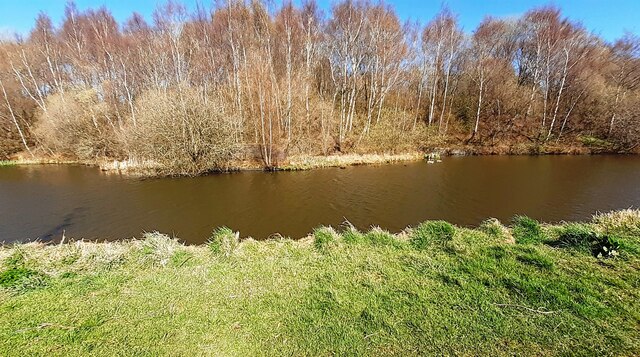
A ready-mixed concrete plant occupies the colliery site off Barden Lane, across the canal from the towpath.
Redevelopment
The site is a ready-mixed concrete plant.
Related mines
- Bank Hall Colliery — Linked underground before 1893; Reedley's coal went to the Bank Hall washery.
- Fence Colliery — Fence No. 2 Drift was worked with Reedley from 1955 and closed with it in 1960.
Nearby mines
- Bank Hall Colliery — 0.8 miles (1.2 km) SE
- Gannow Colliery — 1.8 miles (2.9 km) SW
- Habergham Colliery — 2.0 miles (3.2 km) W
- Towneley Colliery — 2.4 miles (3.8 km) S
- Hapton Valley Colliery — 2.7 miles (4.4 km) SW
Straight-line distance, within 9 miles (15 km). Show on the map.
Recorded claims
Individual factual claims, each attached to the source(s) that support it below. Where sources disagree, both are kept.
- Sunk in 1879 by the executors of John Hargreaves, two shafts to the Arley at 210 yards. 1,2
- Its pithead baths, opened in November 1914, were the first in east Lancashire and the second in the country. 1,2
- Its colliers extracted a four-foot cube of coal on 13 November 1891. 3
- Employed 248 in 1894, 440 in 1923 and 392 in 1940. 4
- Closed in May 1960, with Fence No. 2 Drift. 1,2
- Its Arley and Yard workings, planned with Wood End, are dated 1951. 5
Photographs & further reading
Sinking, the 1914 pithead baths, the NCB's trials of new equipment and closure.
View sourceOwners, seams and employment 1894-1954, and those killed.
View sourceReedley among the collieries of the Burnley coalfield, with Wood End and the Fence drifts.
View sourceSources
- (secondary) Burnley Coalfield — Wikipedia — Wikipedia
- (secondary) Reedley Colliery — Northern Mine Research Society
- (secondary) Reedley Pit — Burnley Civic Trust Heritage Image Collection
- (primary) Reedley Colliery — Durham Mining Museum
- (primary) Mine plan: Reedley, Wood End, Arley and Yard — British Geological Survey
Record created: 2 October 2026 · Last researched: 2 October 2026