 MineArchive
Plessey Colliery
| Location | Plessey, west of Blyth, near Cramlington, Northumberland |
|---|---|
| Commodity | Coal |
| Type | Coal |
| Worked | By 1709–c. 1812 |
| Maximum depth | 170 ft (52 m), a sinking near the Wheat Pit recorded in 1752. |
Overview
An early Northumberland colliery at Plessey, near Cramlington, whose coal ran to Blyth on one of the first long waggonways in the county, from about 1709 until the colliery was given up around 1812.
History
Plessey Colliery lay at Plessey, west of Blyth near Cramlington, in the early coalfield of south-east Northumberland. Its coal was carried to the harbour at Blyth on the Plessey waggonway, one of the earliest and longest in the county: running by 1709, it went five and a half miles from Plessey Hall Farm to Blyth on a double line of beech rails laid on oak sleepers. Each waggon needed a horse and a man, and three journeys, or 'gaits', made a day's work; the wooden waggon wheels were studded with nails against wear. In 1723 Plessy colliery was in the hands of Richard Ridley, a man of wealth and enterprise who probably made the waggonway.
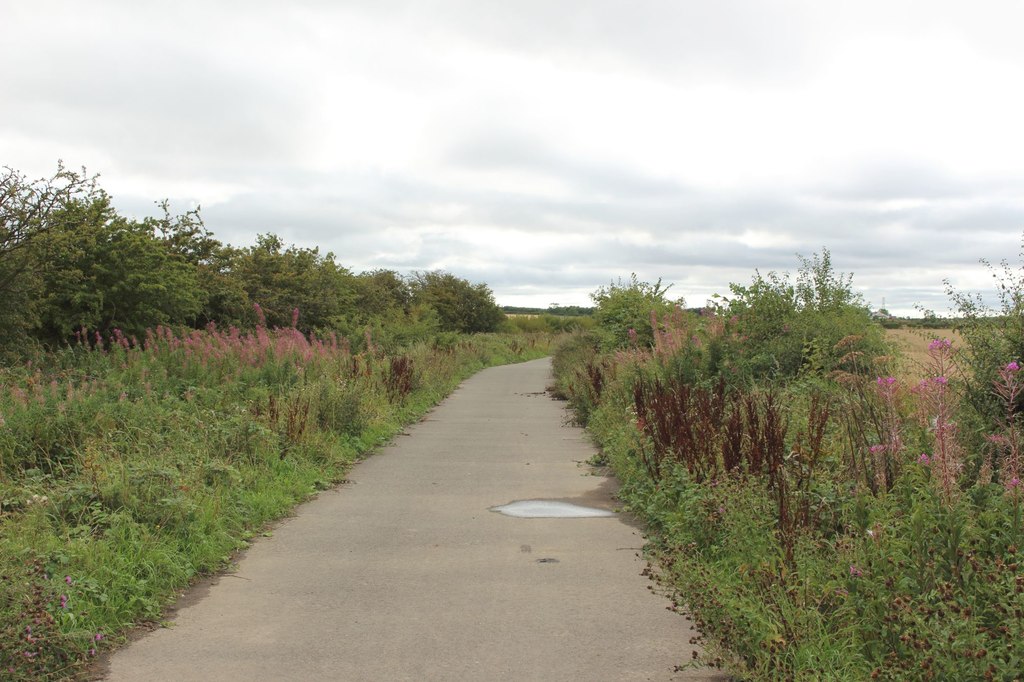
A record of the strata passed in a pit about two hundred yards from the Wheat Pit, dated 6 August 1752, shows a sinking of 170 feet through clays, posts, metals and thills, with several thin coals and a seam of four feet five inches at 167 feet. The colliery was discontinued about 1812, when the waggonway too was given up and a new line was made from Cowpen Colliery to Blyth. Parts of the waggonway still survive as an earthwork over two metres high.
Geology
Coal measures with several thin coals and a 4 ft 5 in seam at 167 ft, recorded in 1752.
Workings
Pits including the Wheat Pit; the Plessey waggonway, 5½ miles of wooden track to Blyth.
Closure
Discontinued about 1812, when the waggonway was given up.
What remains
Parts of the Plessey waggonway survive as an earthwork over 2 m high.
Related mines
- Barmoor Colliery — Collieries of south-east Northumberland west of Blyth.
- Cowpen Colliery — When Plessey Colliery was discontinued about 1812, a railroad was made to connect Cowpen Colliery with Blyth in place of the Plessey waggonway.
Recorded claims
Individual factual claims, each attached to the source(s) that support it below. Where sources disagree, both are kept.
- The Plessey waggonway, running by 1709 and in use until 1812, carried coal five and a half miles from Plessey Hall Farm to Blyth. 1
- In 1723 Plessy colliery was in the hands of Richard Ridley, who probably made the waggonway to Blyth. 2
- Plessy Colliery was discontinued about 1812, and the waggonway with it. 2
- A record of 6 August 1752 gives the strata in Plessey Colliery about 200 yards from the Wheat Pit, to 170 feet. 3
- The Plessey waggonway was built of beech rails on oak sleepers, and its waggons had wooden wheels studded with nails. 2,1
Sources
- (secondary) Plessey Waggonway (Cramlington), N11491 — Keys to the Past (Durham and Northumberland HER)
- (secondary) Blyth and Tyne Railway — Wikipedia
- (primary) Plessey Colliery shaft details (Account of stones and metals, 1752) — Durham Mining Museum
Record created: 21 October 2026 · Last researched: 21 October 2026