 MineArchive
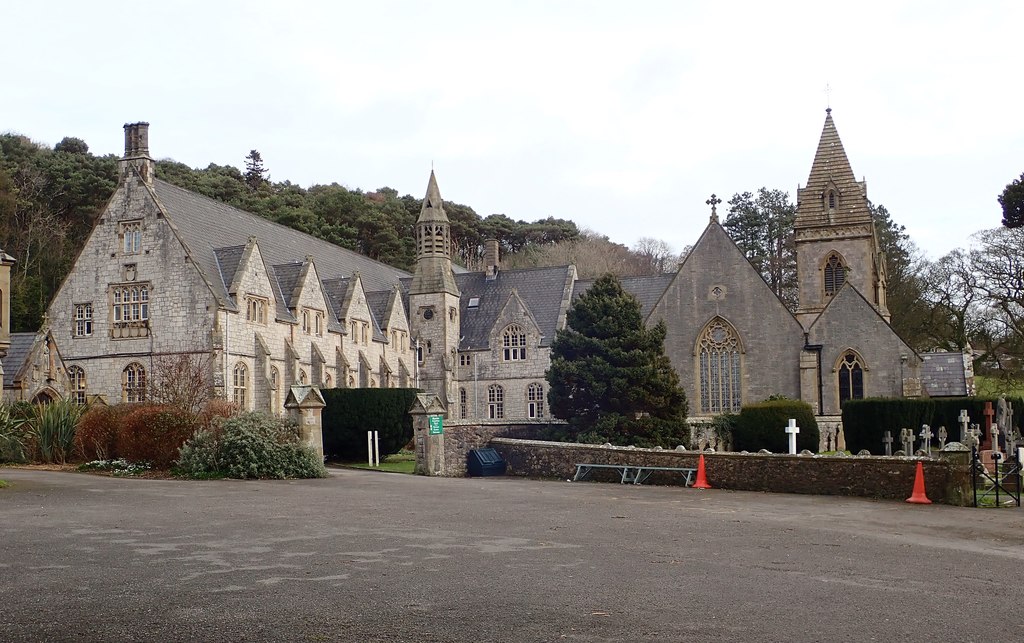
Pantasaph Mine
| Also known as | St David's Mine, Lord Hill Mine, Hopewell Mine, Prince David Mine |
|---|---|
| Location | Around St David's friary and St Clare's Convent, Pantasaph, near Holywell, Flintshire — 53.2744, -3.2566 (exact) |
| Commodity | Lead |
| Type | Metal |
| Worked | By 1853–1903 |
| Operators | Lord Hill Mining Company (1853–1853) — Returns for 1853 from the Lord Hill sett. Hopewell Mining Company (1855–1865) — Worked the Hopewell sett. St David's Mining Company (1874–1882) — Worked the Milwr Vein on the St David's sett. Prince David Mining Company (1891–1903) — Partnership; returns 1891-1903 for the sett south-west of the friary. |
Lead workings around the Franciscan friary and St Clare's Convent at Pantasaph near Holywell, worked by a run of small companies from 1853 to 1903.
Location
Recorded location. The large pin is this mine; the small round markers are the nearest mines on record. Click one for its page. View on full map
History
Pantasaph, near Holywell, is the name that covers the lead workings around St David's friary and St Clare's Convent, in Carboniferous Limestone with beds of chert. Several small companies worked them. The Lord Hill Mining Company made returns for 1853, and the Hopewell Mining Company worked from 1855 to 1865, both on setts to the north of what became the friary grounds.
The Milwr Vein cuts the northern edge of the friary grounds, and the St David's Mining Company worked it from 1874 to 1882. The Capuchin friars had first settled at Pantasaph in 1865, on lands of Lord Fielding, and their landscaped gardens and buildings probably hide earlier mining.
The last of them, the Prince David, made returns for its sett south-west of the friary from 1891 to 1903. It was a small partnership. In June 1892 two of its miners, Robert Lloyd and William Davies, sued one of the partners, Absolom Redfern of Holywell, at Holywell County Court for £10 4s. in unpaid wages. The mine's secretary, Robert Thomas, produced the agreement forming the company, which showed Redfern holding two-fifteenths of the shares; every other partner but one had paid up their share. The court found for the miners.
Geology
Carboniferous Limestone with beds of chert, cut along the northern edge of the friary grounds by the Milwr Vein.
Workings
Shafts on several setts: Hopewell and Lord Hill to the north of the friary grounds, towards Carmel, and St David's and Prince David to the west and south-west of the friary. The St David's company worked the Milwr Vein.
Closure
The Prince David company's returns end in 1903.
What remains
Little remains of the shafts around the northern edge of the friary grounds or of those further north and west of Mwdwl-eithin Farm, in the fields south of Carmel. Earlier workings are probably masked by the friary's landscaped gardens and buildings.
Larger shaft mounds north of the friary grounds, on the Hopewell and Lord Hill setts, and west of the friary on the St David's and Prince David setts.
Redevelopment
The friary, founded in 1865, and its landscaped gardens probably cover earlier workings.
Nearby mines
- West Holway Mine — 0.4 miles (0.7 km) NE
- Plantation Mine — 0.7 miles (1.1 km) NW
- Clwt Militia Mine — 0.8 miles (1.2 km) SE
- Picton Mine — 0.8 miles (1.3 km) E
- Gorsedd Mine — 0.9 miles (1.4 km) NW
Straight-line distance, within 9 miles (15 km).
Sources
- (secondary) Clwyd Metal Mines Survey: Pantasaph (HER 18151) — Clwyd-Powys Archaeological Trust, Clwyd Metal Mines Survey
- (secondary) Holywell County Court: non-payment of mine wages, Prince David Mine (Flintshire Observer, 23 June 1892) — Welsh Newspapers Online, National Library of Wales
Record created: 23 November 2026 · Last researched: 23 November 2026