 MineArchive
Page Bank Colliery
| Also known as | Pagebank Colliery |
|---|---|
| Location | Page Bank, on the north bank of the Wear, two miles east of Willington, County Durham — 54.7131, -1.6461 (approximate) |
| Commodity | Coal |
| Type | Coal |
| Worked | 1850s (sinking from 1853)–July 1931 |
| Maximum depth | The Brockwell seam at 45 fathoms (270 feet); the 1858 shaft was 45 fathoms deep. |
| Operators | West Hartlepool Dock and Railway Company (1855–?), Bell Brothers (?–1923), Dorman, Long and Company (1923–1931) |
Overview
A coking colliery on the north bank of the Wear near Willington, sunk in the 1850s, where in 1858 the timber brattice of its single divided shaft caught fire and ten men and boys died below; it worked under Bell Brothers until 1931.
History
A borehole was put down on the Page Bank estate in 1839, and a sinking from the surface near its east boundary began on 14 April 1853 and reached the Brockwell seam; an 1894 directory says the colliery was first sunk in 1851 by a West Hartlepool company, and the Durham Mining Museum records the West Hartlepool Dock and Railway Company as owner from 1855. Gas blowers met at 12 and 28 fathoms during the sinking killed the master sinker, and were piped away through plank tubbing. In 1858 the colliery, then the property of R. W. Jackson, had a single shaft 12 feet 6 inches across, divided by timber brattice into a downcast and two upcasts, with a furnace near the bottom. About 8 a.m. on 30 September 1858 the back overman, Thomas Kellett, smelt burning timber in the shaft. As he and the principal overman, John Mould, rode up to douse the brattice, burning material fell and knocked Kellett to his death; the fire spread to the surface and burnt through the pump rods (see Disasters, below). It took twenty-six hours to bring out the men and boys below, nine of whom had died of smoke, and the fire was finally put out on the Sunday evening by lowering and firing five and a quarter barrels of gunpowder in the shaft. The jury found the brattice had been fired by a spark of unknown origin and blamed no one. By the 1890s, under Bell Brothers, the colliery worked the Busty and Brockwell seams from two pairs of shafts, raising 850 tons a day, of which 600 were made into coke in 312 ovens, and employed 700; the owners built a school and a Miners' Institute with over 1,000 books. Dorman Long took over in 1923, and the Brockwell and Busty seams were abandoned in June 1931.
Geology
The Busty (5 feet, at 22 fathoms) and Brockwell (3 feet, at 45 fathoms) seams; gas blowers were met at 12 and 28 fathoms in the sinking.
Workings
In 1858 a single 12-foot 6-inch shaft divided by timber brattice into a downcast and two upcasts, lined with plank and metal tubbing and ventilated by a furnace; a second shaft was sunk after the fire. By the 1890s the Busty and Brockwell were each worked by two shafts, with 312 coke ovens at the surface.
Closure
Closed in July 1931; the Brockwell and Busty seams were abandoned on 27 June 1931.
What remains
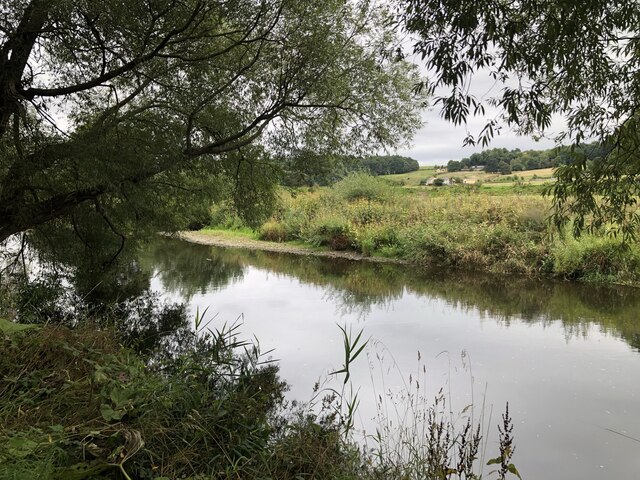
The riverside at Page Bank is a rural scene today.
Unknown.
Nearby mines
- Brancepeth Colliery — 2.3 km W
- Willington Colliery — 3.4 km W
- Tudhoe Colliery — 4.0 km E
- Tudhoe Whinstone Mine — 4.6 km E
- Brandon Colliery — 4.9 km N
Straight-line distance, within 15 km. Show on the map.
People
- David Bolam · survivor, 1858 — Deputy who led men back from the smoke-filled shaft bottom and survived below until the rescue in 1858.
- Thomas Kellett · victim, 1858 — Back overman in charge of the shaft, who found the fire on 30 September 1858 and was killed when burning material knocked him off the cage.
- John Mould · survivor, 1858 — Principal overman, drawn to the surface in the cage as the shaft fire took hold in 1858, who then helped turn the pumped water back into the shaft.
What's uncertain
Points where sources disagree or the record could not be settled; both accounts are kept. All open questions in the archive.
- DMM records a sinking begun on 14 April 1853 and an opening in 1855; the 1894 directory it reproduces says the colliery was first sunk in 1851 by a West Hartlepool company. (disputed) 1
Recorded claims
Individual factual claims, each attached to the source(s) that support it below. Where sources disagree, both are kept.
- DMM records a sinking begun on 14 April 1853 and an opening in 1855; the 1894 directory it reproduces says the colliery was first sunk in 1851 by a West Hartlepool company. (disputed) 1
- In 1858 the colliery had one shaft, 12 feet 6 inches in diameter, divided by brattice into a downcast and two upcasts; gas blowers in the sinking had killed the master sinker. 2
- On 30 September 1858 the shaft brattice caught fire; Thomas Kellett was killed falling down the shaft and the other men below died of smoke, ten in all. 1,3,2
- The jury found the brattice was fired by a spark of unknown origin and blamed no one; the fire was put out on the Sunday by firing gunpowder in the shaft. 2
- In the 1890s Bell Brothers raised 850 tons a day at Page Bank, 600 of them coked in 312 ovens, with 700 men and boys employed. 1
- The Brockwell and Busty seams were abandoned on 27 June 1931 and the colliery closed in July 1931. 1
- A recent Geograph photograph describes Page Bank as a rural scene today where a colliery and coke works once stood. 4
Photographs & further reading
Owners, seams, employment and the 1894 description of the colliery and village.
View sourceThe shaft, the fire, the rescue, the names of the dead and the verdict.
View sourceSources
- (secondary) Page Bank Colliery (Durham Mining Museum) — Durham Mining Museum
- (secondary) Page Bank Colliery Explosion – Brancepeth – 1858 — Northern Mine Research Society
- (secondary) Page Bank Colliery Inquest (1858 Mines Inspector's report) (Durham Mining Museum) — Durham Mining Museum
- (observational) River Wear at Page Bank (Geograph photo 6961285) — Geograph Britain and Ireland
Record created: 17 September 2026 · Last researched: 17 September 2026