 MineArchive
Brancepeth Colliery
| Location | Willington, on the boundary of Willington and Stockley townships, west Durham, County Durham — 54.7158, -1.6817 (approximate) |
|---|---|
| Commodity | Coal |
| Type | Coal |
| Worked | 1840–22 July 1967 |
| Maximum depth | The A Pit was 240 feet deep in 1896; the Brockwell seam lay at 48 fathoms at the B and C pits. |
| Operators | Straker & Love (1840–1947), National Coal Board (1947–1967) |
Overview
Straker and Love's great colliery at Willington in west Durham, opened in 1840, famous for 'Brancepeth coke', with its own brickworks and gasworks, struck by a coal-dust explosion in the A Pit in 1896, and closed in 1967 with the loss of over a thousand jobs.
History
Brancepeth Colliery, despite its name, stood at Willington, on the boundary of the Willington and Stockley townships between Bishop Auckland and Durham. Opened in 1840 by Straker and Love, it was one of a group of seven pits the firm worked at Willington, Sunnybrow, Oakenshaw and Brandon. The B Pit was sunk first, the A Pit around 1850 and the C Pit in 1865, and a drift was added. The pits worked the Busty at 26 fathoms and the Brockwell at 48 fathoms, with the Jet, Seggar and Hutton seams, and nearly all the coal was turned into coke — the celebrated 'Brancepeth coke'. The colliery also made firebrick and sanitary ware and supplied gas to Willington and Oakenshaw, and its works, coke ovens and pits employed over 1,200 men and boys, the mainstay of the district, in a late 19th-century description. At about 10 p.m. on 13 April 1896, when fewest men were below ground, an explosion of coal dust set off by shotfiring tore through the A Pit and killed twenty men and boys (see Disasters, below). The colliery grew into the 20th century, employing 2,354 in 1921, 1,601 of them underground. It passed to the National Coal Board in 1947, raising 500,000 tons that year, and D and Z pits appear in its later records. It closed on 22 July 1967 with the loss of over 1,000 jobs.
Geology
Shallow seams of the west Durham coalfield: the Busty (at 26 fathoms, very variable in thickness), Brockwell (3 feet, at 48 fathoms), Jet, Seggar and Hutton, with fireclay and plateclay; later the Harvey and Victoria.
Workings
The A, B and C pits and a drift, later D and Z pits; the B and C pits were ventilated by a 35-foot Waddle fan in the late 19th century. Coke ovens, brick and sanitary ware works and a gasworks stood alongside.
Closure
Closed on 22 July 1967 with the loss of over 1,000 jobs; the linked Oakenshaw Colliery closed the same year.
What remains
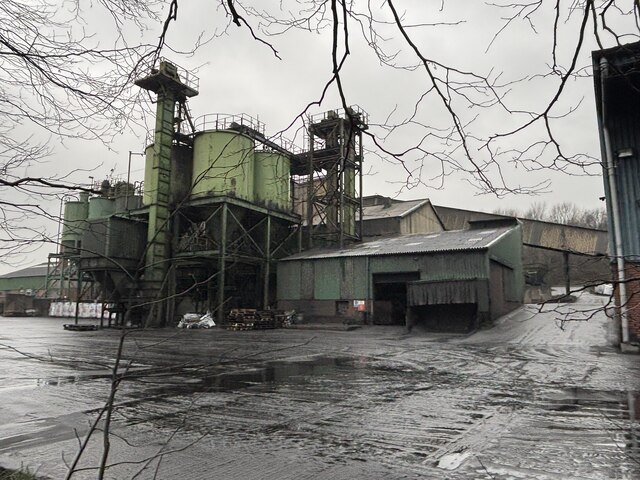
The colliery site on the north side of Willington is occupied by the James Durrans group's carbon-products works.
No colliery structures are recorded as surviving; the site is covered by industrial buildings.
Related mines
- Brandon Colliery — Both Strakers and Love collieries; NMRS names Brandon among the firm's group of west Durham pits in 1896.
- Willington Colliery — Both worked by Straker and Love at Willington, among the firm's group of west Durham pits.
Nearby mines
- Willington Colliery — 1.7 km SW
- Page Bank Colliery — 2.3 km E
- Roddymoor Colliery — 5.1 km W
- Brandon Colliery — 5.9 km NE
- Littleburn Colliery — 6.2 km NE
Straight-line distance, within 15 km. Show on the map.
Recorded claims
Individual factual claims, each attached to the source(s) that support it below. Where sources disagree, both are kept.
- Brancepeth Colliery opened in 1840 and was owned by Straker and Love until 1947, with A, B and C pits (C sunk 1865) and a drift; it closed on 22 July 1967. 1,2
- The B and C pits worked the Busty at 26 fathoms and the Brockwell at 48; the output was almost all made into 'Brancepeth coke', with firebrick, sanitary ware and gas for Willington and Oakenshaw, and the works employed over 1,200 men and boys. 2
- At about 10 p.m. on 13 April 1896 a coal-dust explosion caused by shotfiring in the A Pit, 240 feet deep and one of seven Straker and Love pits, killed twenty. 1,3
- Employment peaked at 2,354 in 1921 (1,601 below ground); in 1947 the colliery raised 500,000 tons. 1,2
- The James Durrans group's Brancepeth works on the edge of Willington stands on the site of Brancepeth Colliery (2025). 4
Photographs & further reading
Pits, owners, outputs and employment from 1855 to 1967.
View sourceSummary of the colliery, its coke and brick works, and closure.
View sourceSources
- (secondary) Brancepeth Colliery (Durham Mining Museum) — Durham Mining Museum
- (secondary) Brancepeth Colliery (1840 - 1967) — Co-Curate, Newcastle University
- (secondary) Brancepeth Colliery “A” Pit Explosion – Willington – 1896 — Northern Mine Research Society
- (observational) James Durrans Group manufacturing facility (Geograph photo 7994358, 2025) — Geograph Britain and Ireland
Record created: 17 September 2026 · Last researched: 17 September 2026