 MineArchive
Old Roundwood Colliery
| Also known as | Roundwood Colliery, Ossett |
|---|---|
| Location | Flushdyke, between Ossett and Wakefield, West Yorkshire |
| Commodity | Coal |
| Type | Coal |
| Worked | 1853–April 1966 |
| Maximum depth | Unknown. |
| Operators | National Coal Board (1947–1966), Terry, Greaves and Co. |
Overview
Ossett's largest colliery, at Flushdyke on the Wakefield road, sunk in the early 1850s as Roundwood and worked until April 1966, when it still raised over 160,000 tons a year of Silkstone coal.
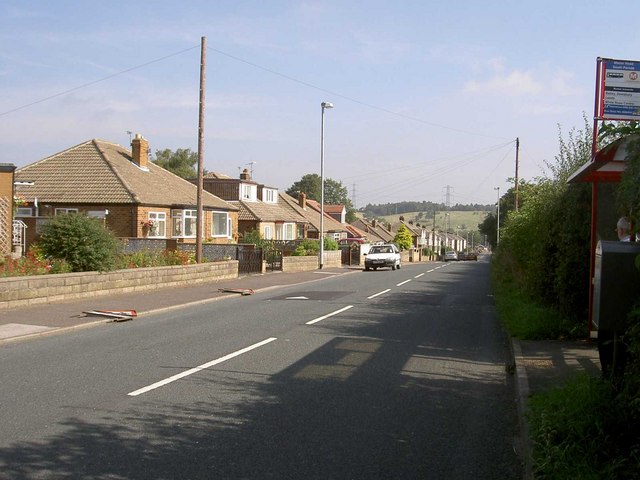
History
Old Roundwood Colliery stood at Flushdyke, on the boundary between Ossett and Alverthorpe, at the junction of Haggs Lane and the old Wakefield turnpike. Coal had been worked around it for centuries: a small colliery at nearby Ossett Lights is recorded in 1709. The pit was sunk in the early 1850s, in 1853 by one account and in 1851 by another, to work the Gawthorpe seam. It was called Roundwood Colliery until 1901 and Old Roundwood thereafter; Terry, Greaves and Company were among its owners.
It grew to be the largest pit in Ossett. Its hard-burning coal, sold as Silkstone Best, was loaded by hoppers into railway trucks of 8 to 12 tons, which crossed the main A638 road over a weighbridge on a mineral line linking the pit with the LNER Bradford to Wakefield line at Low Laithes. In the years of rationing after the Second World War local coal merchants drew their allocations there. Under the National Coal Board it produced over 166,000 tons in 1960.
Old Roundwood closed in April 1966 and its men were taken on at other pits in the Yorkshire coalfield; its Beeston (Lupset) workings were abandoned on 8 April 1967.
Geology
West Yorkshire coal measures: the Gawthorpe seam at first, the Silkstone (sold as Silkstone Best) and later the Beeston (Lupset) seam.
Workings
Shafts at Flushdyke with hopper loading into railway trucks, a weighbridge, a mineral line across the A638 to the main line at Low Laithes, and pithead baths beside the road.
Closure
Closed in April 1966; its men transferred to other Yorkshire pits; the Beeston (Lupset) workings were abandoned on 8 April 1967.
What remains
The pit site is an industrial estate on the Wakefield side of Queen's Drive, with a hotel beside the M1 on the colliery site; a hill of its spoil stands above the motorway.
The spoil heap, now a grassed hill above the M1.
What's uncertain
Points where sources disagree or the record could not be settled; both accounts are kept. All open questions in the archive.
- Roundwood Colliery was sunk in 1853. (disputed) 1,2
- Old Roundwood opened in 1851, mining the Gawthorpe seam. (disputed) 3
Recorded claims
Individual factual claims, each attached to the source(s) that support it below. Where sources disagree, both are kept.
- Roundwood Colliery was sunk in 1853. (disputed) 1,2
- Old Roundwood opened in 1851, mining the Gawthorpe seam. (disputed) 3
- It was called Roundwood Colliery before 1901 and Old Roundwood thereafter. 2,4
- Old Roundwood was the largest pit in Ossett and produced over 166,000 tons of coal in 1960. 5
- Its coal, sold as Silkstone Best, went out by a mineral line across the A638 from the main line at Low Laithes. 6
- The colliery closed in April 1966 and its Beeston (Lupset) workings were abandoned on 8 April 1967. 1,3,2,7
Sources
- (secondary) NCB Collieries - England (Northern Mine Research Society) — Northern Mine Research Society
- (secondary) Coal Mines in Yorkshire 1854: O — Northern Mine Research Society
- (secondary) Ossett — Wikipedia
- (secondary) Old Roundwood and Manor Haigh Moor Collieries, Ossett near Wakefield (John Goodchild, British Mining No. 100, NMRS look-inside extract) — Northern Mine Research Society
- (secondary) Ossett Pictures - Roundwood Colliery (ossett.net) — ossett.net
- (secondary) Roundwood Colliery, Ossett (ossett.net) — ossett.net
- (primary) BGS mine plan NE532: OLD ROUNDWOOD, Beeston (Lupset), abandoned 8 April 1967 — British Geological Survey / Mining Remediation Authority
Record created: 24 October 2026 · Last researched: 24 October 2026