 MineArchive
Oatlands Colliery
| Also known as | Oatlands Pit |
|---|---|
| Location | Pica, above Distington, near Whitehaven, Cumbria — 54.5793, -3.5100 (approximate) |
| Commodities | Coal, Fireclay |
| Type | Coal |
| Worked | 1880–1932 (last coal) |
| Maximum depth | Unknown. The Main Band the company was after was proved six feet six inches thick at Walkmill and Fairfield in 1877. |
| Operators | Moresby Coal Co., Ltd. (1880–1924), United Steel Companies (1924–?) |
Overview
The Moresby Coal Company's second pit, sunk near Fairfield in 1880 above the village of Pica, which the company built for it. It worked the Bannock Band and Main Band with the China Band, Four Foot and Six Quarter beside them, raised coking, gas, household and steam coal and fireclay, and employed 476 men and boys at its peak in 1921. A single-platform station on the Cleator and Workington Junction Railway's Rowrah branch stood next to it, and the branch's second reason for existing was Oatlands coal: when the pit stopped winding in 1932 the line lost the only traffic that could not be sent another way, and it closed in 1938. The seams were abandoned between 1930 and April 1934.
History
The Moresby Coal Company Limited was incorporated on 22 September 1877 with £100,000 of capital in a hundred thousand-pound shares, to take up a lease made that March between the Earl of Lonsdale and William Fletcher and J. S. Simpson for mines in the townships of Distington, Moresby, Hensingham and Weddicar — a coal royalty of four thousand acres, leased for sixty years, with seams suitable for coking. The Main Band was proved six and a half feet thick at Walkmill and Fairfield in 1877. Walkmill was sunk and raising coal by the end of 1878 and went by both that name and Moresby Colliery; in 1880 a second pit was sunk near Fairfield and named Oatlands.
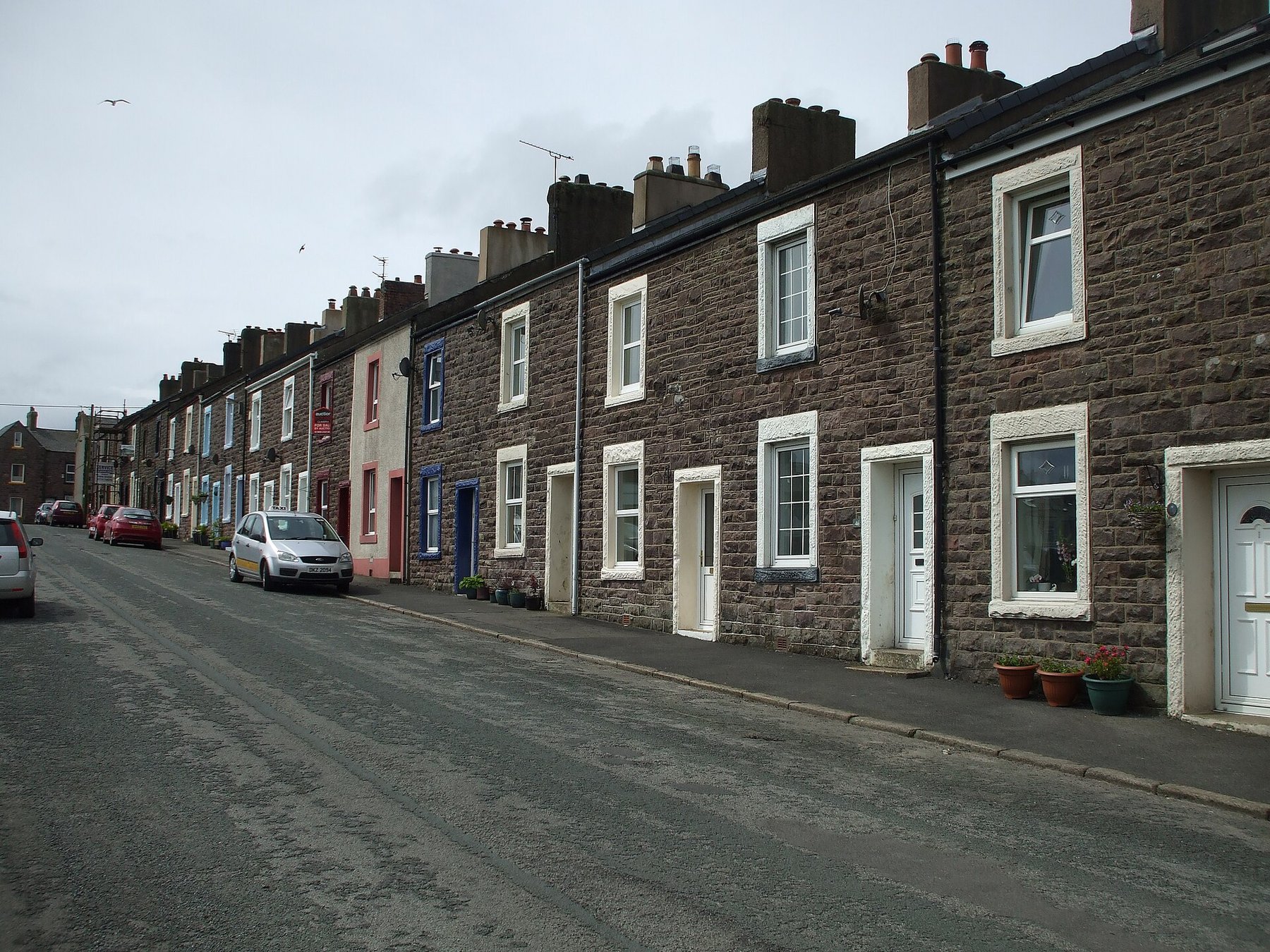
The company built the village for it. Pica's pit terraces were put up by the Moresby Coal Company, seventy houses at first and twenty more in the early 1900s, on the moor above Distington, three and a half miles east-north-east of Whitehaven. Oatlands was managed in the 1890s by Archibald Thom, with 118 men below ground and 84 above in 1894 and 156 below and 68 above two years later. It grew steadily through the 1900s — 327 in 1902, 422 in 1905, 439 in 1910 — and reached its maximum of 476 in 1921. The returns list coking, gas, household and steam coal from 1894 and fireclay as well from 1902, and the seams worked as the Bannock Band and Main Band, with the China Band, Four Foot and Six Quarter appearing in the 1915 and 1921 lists.
Its railway was the Cleator and Workington Junction Railway's Rowrah branch, a six and a half mile single line off the Workington Central to Cleator Moor West main line south of Distington, opened for mineral traffic on 1 May 1882 and known locally as Baird's Line. The branch existed chiefly to reach the limestone quarries at Rowrah and the iron mines of the Rowrah and Kelton Fell Railway; carrying Oatlands coal was its second purpose, and general goods, workmen and ordinary passengers came a distant third, fourth and last. The station at Oatlands, next to the colliery, had one platform and a strange career: daily services from 3 July 1883 for five months, then Saturdays only from 1888 to 1892 and again from 1909, closed to passengers in 1922 and to workmen's trains on 1 January 1927.
The Moresby Coal Company was bought out in 1924 and Oatlands passed to United Steel. Employment fell away sharply after the 1925 return — 402 that year, 145 in 1927, 130 in 1930 — and production was suspended in 1930 and stopped altogether in 1932. The Four Feet seam was abandoned on 1 August 1930, the Little Main and Six Quarter that June, the Bannock in March 1933, and the Main, Bannock and Six Quarters together on 30 April 1934. Losing the coal killed the branch: Oatlands was the only source of business on it that could not be dealt with by another route, and the line and both its stations closed completely on 8 August 1938. The company itself was nationalised with the iron and steel industry in 1951, returned to private hands in 1954, and wound up voluntarily that August.
The museum's list of those killed at the pit runs to thirty names and reads as a fair sample of West Cumberland colliery work. Two men died in explosions of firedamp and air in 1887, Robert Holliday a deputy overman of sixty-six and John Pritt a hewer of twenty, and James Canavan, a stoneman of twenty-three, in an explosion of gas in December 1900. John Atkinson, a labourer, was suffocated in 1899 after falling among the small coal in the washed coal hopper, and standing inside the hopper was prohibited afterwards. John Armstrong, a screen boy of thirteen, left his work in 1895, crossed the Cleator and Workington Railway and was run over.
Geology
Coal Measures on the West Cumberland coalfield above Distington. The seams the returns name are the Bannock Band and Main Band throughout, with the China Band, Four Foot and Six Quarter added in the lists of 1915 to 1925 and the Little Main in the abandonment notices. The Main Band was the seam the company's sinkings were aimed at, proved six feet six inches thick at Walkmill and Fairfield in 1877, and it carried coking coal, which is what the four-thousand-acre Lonsdale royalty was taken for. Fireclay was raised alongside the coal from 1902 to 1925.
Geological setting: Sedimentary Beds and Seams (well documented example)
Workings
A pit sunk near Fairfield in 1880 on the moor above Distington, with its own station and sidings on the Rowrah branch alongside. The museum's accident notes show endless-rope haulage on inclines underground, with men killed by runaway tubs at the bottom of an incline in 1892 and 1898 and by tubs let down against standing ones in 1919, longwall faces with packs set four feet from the coal, shaft scaffolding for repairs — a foreman joiner died in 1910 when a scaffold in the shaft gave way — and a surface washery with a washed coal hopper and screens.
Closure
Production was suspended in 1930 in a marked slump and stopped altogether in 1932. The abandonment notices run on behind the stoppage: the Little Main and Six Quarter seams were abandoned in June 1930, the Four Feet on 1 August 1930, the Bannock in March 1933, and the Main, Bannock and Six Quarters on 30 April 1934, which is the date the museum gives for the closure of the colliery. Employment tells the same story more plainly: 402 men in 1925, 145 in 1927, 130 in 1930.
What remains
Pica survives as a village on the moor, its terraces still standing. The colliery site is beside it, north of the line of the old railway; by 2013 the course of the branch north of Pica and south of the station site could be traced on satellite imagery, though its route through the station itself had grown faint and no station buildings appeared to remain.
Unknown. Nothing of the colliery buildings is recorded standing; the company's pit terraces at Pica are what is left of it above ground.
Redevelopment
Unknown. The railway was lifted — the last of the lines serving Rowrah went in 1980 — and the ground has gone back to moor and farmland.
Related mines
- Moresby Colliery — Walkmill, sunk in 1878, and Oatlands, sunk in 1880, were the Moresby Coal Company's two pits, worked together on the same four-thousand-acre royalty leased from the Earl of Lonsdale, and the Main Band was proved at Walkmill and Fairfield in the same 1877 trials.
Nearby mines
- Moresby Colliery — 3.0 km W
- Crossgill Mine — 3.4 km S
- Branthwaite Colliery — 4.8 km NE
- Frizington Iron Mines — 5.1 km SE
- Mowbray Mine — 5.3 km S
Straight-line distance, within 15 km. Show on the map.
None
Recorded claims
Individual factual claims, each attached to the source(s) that support it below. Where sources disagree, both are kept.
- A second pit was sunk near Fairfield in 1880 and named Oatlands Colliery. 1
- The Moresby Coal Company Limited was incorporated on 22 September 1877 with £100,000 of capital, to work a four-thousand-acre coal royalty leased from the Earl of Lonsdale for sixty years across Distington, Moresby, Hensingham and Weddicar. 1
- Oatlands employed 118 men below ground and 84 above in 1894 under the manager Archibald Thom, and reached its maximum of 476 in 1921. 2,3
- The returns give the seams worked as the Bannock Band and Main Band, with the China Band, Four Foot and Six Quarter in the lists from 1915 to 1925. 2
- The colliery raised coking, gas, household and steam coal from 1894, and fireclay as well from 1902 to 1925. 2
- The Main, Bannock and Six Quarters seams were abandoned on 30 April 1934, and the Four Feet on 1 August 1930. 2
- Oatlands Colliery ceased winding coal in 1932. 4
- Carrying coal from Oatlands, which stood next to the station, was the second purpose of the Cleator and Workington Junction Railway's Rowrah branch, opened for mineral traffic on 1 May 1882. 4
- When Oatlands stopped winding it deprived the Rowrah branch of the only source of business that could not be dealt with by other routes, and the branch and its two stations closed completely on 8 August 1938. 4
- Two men were killed at the colliery by explosions of firedamp and air in 1887, Robert Holliday, a deputy overman of sixty-six, and John Pritt, a hewer of twenty. 2
- John Atkinson, a labourer of forty-five, was suffocated in April 1899 after falling among the small coal inside the washed coal hopper, and the practice of standing on the coal inside the hopper was prohibited afterwards. 2
- The terraces the Moresby Coal Company built at Pica for the colliery are still standing on the moor above Distington. 5
Photographs & further reading
The colliery's own page: location and grid reference, the April 1934 closure, the output and employment returns from 1888 to 1930, the seams worked, the abandonment notices and thirty named fatalities with the circumstances of each.
View sourceThe company behind the pit: its incorporation in 1877, the Lonsdale lease, the thickness of the Main Band proved at Walkmill and Fairfield, the sinking of Oatlands in 1880, and the company's nationalisation and winding up in the 1950s, each referenced to a newspaper or gazette.
View sourceThe single-platform station beside the pit and the Rowrah branch it stood on, with the dates of the branch, the part Oatlands coal played in its traffic, and the effect of the colliery stopping in 1932 on the line's closure in 1938.
View sourceSources
- (secondary) Moresby Coal Co — Grace's Guide to British Industrial History
- (primary) Oatlands Colliery — Durham Mining Museum
- (primary) Moresby Coal Co., Ltd. — Durham Mining Museum
- (secondary) Oatlands railway station — Wikipedia
- (observational) Pica village, Cumberland — Matthew Hatton, via Wikimedia Commons and Geograph

Record created: 23 September 2026 · Last researched: 25 September 2026