 MineArchive
Mayshill Colliery
| Location | Mayshill, Westerleigh, Gloucestershire — 51.5350, -2.4480 (approximate) |
|---|---|
| Commodity | Coal |
| Type | Coal |
| Worked | Before 1832–By 1949 |
| Maximum depth | Unknown. |
| Operators | National Coal Board (1947–1949), Coalpit Heath Coal Co. |
Overview
One of three collieries -- with Frog Lane and Nibley -- run by the Coalpit Heath Coal Co. north of Bristol, giving its name to the hamlet of Mayshill and worked from before 1832 until the district's coal ran out by 1949.
History
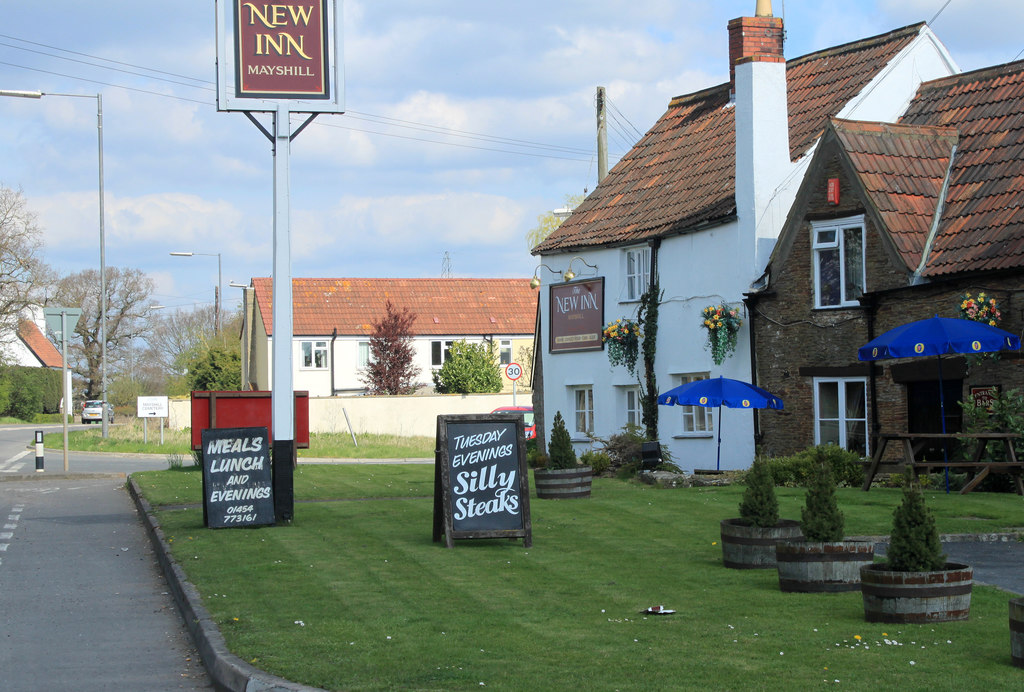
Mayshill Colliery, worked from before 1832, was one of three collieries -- alongside Frog Lane and Nibley -- run by the Coalpit Heath Coal Co. in the small mining district north of Bristol. It gave its name to the hamlet of Mayshill (or Mays Hill) itself, in the parish of Westerleigh just off the Badminton Road between Coalpit Heath and Nibley, home to the New Inn, dating from 1580 and one of at least nine public houses once found across the parish. Coal in the wider district was exhausted by 1949, when the National Coal Board closed both Mayshill Colliery and the neighbouring Frog Lane pit; the area has since become a sought-after place to live. The pit's working life is otherwise recorded mainly through the mines inspectors' reports. By 1909 the colliers were working out the pillars in the 'broken' ground, and in 1914 the High Vein district was still at work; three men died at Mayshill in falls of ground in those years: William Eaves, an examiner, in October 1908; James Mart, a hewer, in April 1909; and Bertram Edgar Cook, a day lad of fifteen, in August 1914. The abandonment plan lodged for the group -- Frog Lane, Mayshill, Nibley and Parkfield together -- covers the High, Hollybush and Hard seams and is dated 31 January 1950.
Geology
Coal of the Bristol and Somerset field: the High, Hollybush and Hard seams, recorded on the group's abandonment plan.
Workings
Worked as one of the Coalpit Heath Coal Co.'s group of pits, alongside Frog Lane and Nibley, in the High, Hollybush and Hard seams; by 1909 the pillars were being worked out, and the High Vein district was still at work in 1914.
Closure
Closed by 1949 when the National Coal Board closed both Mayshill and the neighbouring Frog Lane pit as the district's coal reserves ran out. The group's abandonment plan for the High, Hollybush and Hard seams is dated 31 January 1950.
What remains
Unknown.
Related mines
- Coalpit Heath Colliery — Frog Lane, the Coalpit Heath Coal Co.'s main pit, worked with Mayshill and Nibley as one group and closed with them in 1949.
- Nibley Colliery — Worked together with Frog Lane as the Coalpit Heath Coal Co.'s northern group of pits, and closed with it by 1949.
Nearby mines
- Nibley Colliery — 0.4 miles (0.6 km) N
- Serridge Pit — 0.9 miles (1.4 km) S
- Coalpit Heath Colliery — 1.1 miles (1.8 km) SW, South Gloucestershire
- Yate Celestine Mines — 1.2 miles (1.9 km) E, South Gloucestershire
- Ram Hill Colliery — 1.2 miles (2.0 km) SW
Straight-line distance, within 9 miles (15 km). Show on the map.
Recorded claims
Individual factual claims, each attached to the source(s) that support it below. Where sources disagree, both are kept.
- Mayshill was worked from before 1832 as one of three collieries -- with Frog Lane and Nibley -- run by the Coalpit Heath Coal Co. 1
- The colliery gave its name to the hamlet of Mayshill (or Mays Hill) in the parish of Westerleigh, home to the New Inn, dating from 1580 and one of at least nine public houses once found across the parish. 2
- The National Coal Board closed Mayshill Colliery along with the neighbouring Frog Lane pit by 1949, as the district's coal reserves ran out. 2
- The northern group of Coalpit Heath pits -- Frog Lane, Mayshill and Nibley -- were small-scale workings before the Bristol and Gloucestershire Railway reached them; the line was extended to serve the group after 1852 once they had been enlarged. 2
- The abandonment plan lodged for the group -- Frog Lane, Mayshill, Nibley and Parkfield together -- covers the High, Hollybush and Hard seams and is dated 31 January 1950. 3
- Three men died at the Mayshill pit in falls of ground: William Eaves, an examiner aged 42, drawing props in the waste on 9 October 1908; James Mart, a hewer aged 54, under a roof fall while the pillars were being worked out on 26 April 1909; and Bertram Edgar Cook, a day lad of 15, buried by a fall of side beside a roadway in the High Vein district on 18 August 1914. 4,5,6
Photographs & further reading
Inspector's report on the death of Bertram Edgar Cook in the High Vein district of the Mayshill pit, one of three fatal falls of ground recorded there between 1908 and 1914.
View sourceSources
- (secondary) Coalpit Heath — Wikishire
- (secondary) Mayshill — Wikipedia
- (primary) Abandonment plan SW39: Coal Pit Heath (Froglane) / Mayshill / Nibley / Parkfield, High seam — British Geological Survey / Mining Remediation Authority
- (primary) Fatal accident at Coalpit Heath (Mayshill), 18 August 1914: Bertram Edgar Cook — Northern Mine Research Society
- (primary) Fatal accident at Coalpit Heath (Mayshill), 26 April 1909: James Mart — Northern Mine Research Society
- (primary) Fatal accident at Coalpit Heath (Mayshill), 9 October 1908: William Eaves — Northern Mine Research Society
Record created: 31 August 2026 · Last researched: 9 October 2026