 MineArchive
Llantrisant Colliery
| Also known as | Ynysmaerdy Colliery, New Duffryn Colliery |
|---|---|
| Location | Ynysmaerdy, near Llanharan and Llantrisant, Rhondda Cynon Taf — 51.5475, -3.3956 (approximate) |
| Commodity | Coal |
| Type | Coal |
| Worked | 1922–1928 (sinking)–2 June 1941 |
| Maximum depth | 2,100 feet (No. 1 Pit, to just below the Bute seam) |
| Operators | Powell Duffryn Steam Coal Company (1922–1947), National Coal Board (1947–?) |
Overview
A Powell Duffryn colliery at Ynysmaerdy, near Llanharan, sunk from 1922 to around 2,100 feet and built on a grand scale. Bad ground held it to the No. 3 Rhondda seam, and a surface explosion in 1941 ended mining. Its engine hall and winding house survive as listed buildings.
History
Llantrisant Colliery, also called Ynysmaerdy or New Duffryn, was sunk between 1922 and 1928 by the Powell Duffryn Steam Coal Company to reach the steam coals of the southern outcrop. 216 men were employed on the sinking in 1923. It was laid out on Powell Duffryn's 'efficient modern model', with a single engine hall holding the winders, fans, compressors and generators, and a planned housing estate at Ynysmaerdy.
The southern outcrop proved treacherous. The seams were steeply tilted or vertical along the anticline, broken and of unpredictable thickness. Towards the end of 1927 work in the deeper seams was suspended, and from 1930 only the No. 3 Rhondda was worked, for gas coal. In 1935 the colliery employed 230 and raised 50,000 tons of house coal, under W. Thomas, who also managed Llanharan.
After an explosion in the No. 2 shaft on 2 June 1941 killed the manager and three surface men (see Disasters, below), all mining stopped. At nationalisation in 1947 the colliery was kept on a maintenance basis with five men.
Geology
South Wales Coal Measures on the southern outcrop, where the seams turn steeply or vertically along an anticline and are badly broken. The Two-Feet-Nine was worked at 83 inches and the Upper Four Feet at 35. The Six Feet was eleven feet of dirty coal, and the No. 2 Rhondda about 54 inches.
Workings
Three shafts within 50 yards: No. 1 to just below the Bute seam at 2,100 feet, No. 2 to just below the Two-Feet-Nine at 1,876 feet 8 inches, and No. 3 to the No. 2 Rhondda at 613 feet 10 inches. Two shafts were wound from the main engine hall and one from a separate winding house to the south.
Closure
All mining stopped after the explosion of 2 June 1941. The colliery never reopened and at nationalisation in 1947 was on care and maintenance with five surface men. Plans of the workings were deposited as abandoned in 1945.
What remains
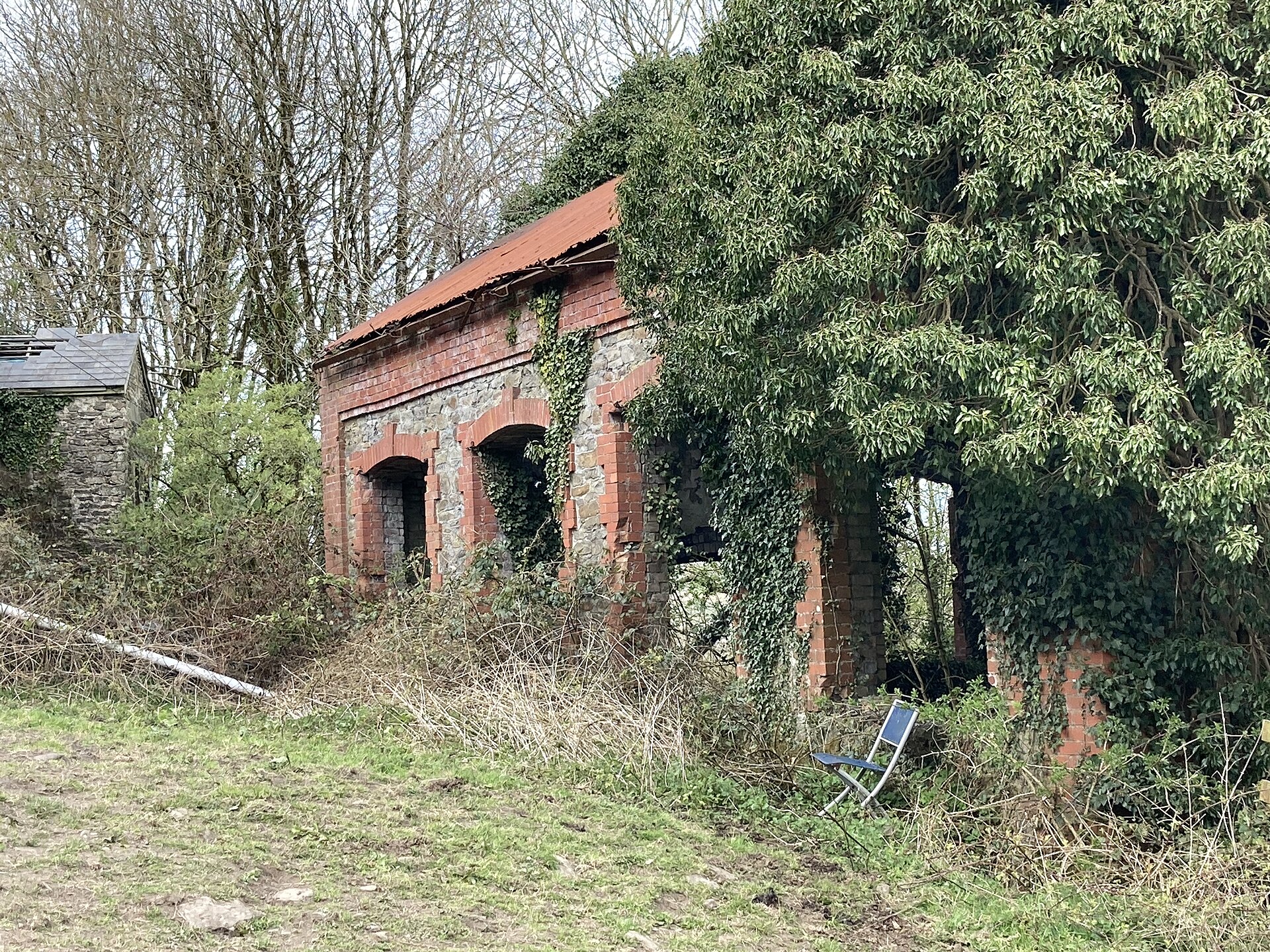
An August 2026 report shows the engine hall standing empty with its gantry crane, alongside the southern winding house and the northern stores. The fan house at the end of the hall is reduced to fallen masonry and beams. Several buildings are used as farm buildings at Ynysmaerdy Farm.
The Grade II listed engine hall: two storeys, twelve bays, rendered brick with red-brick dressings and a glazed roof band, in Powell Duffryn house style. The separate winding engine house, the stores, the explosives store, ruined offices, railway lines, tips, a long revetment wall and a reservoir also survive.
Redevelopment
Parts of the surface buildings are in use as farm buildings at Ynysmaerdy Farm.
Related mines
- Llanharan Colliery — Neighbouring Powell Duffryn colliery under the same manager in the 1930s.
Nearby mines
- Coedely Colliery — 1.6 miles (2.6 km) NW
- Glyn Colliery, Tonyrefail — 1.6 miles (2.6 km) W
- Tylechafach Colliery — 2.0 miles (3.1 km) NW
- Llanharan Colliery — 2.5 miles (3.9 km) W
- Cwm Colliery — 2.5 miles (4.0 km) NE
Straight-line distance, within 9 miles (15 km). Show on the map.
Disasters & major incidents
-
Llantrisant Colliery explosion, 1941
2 June 1941 · Explosion · 4 fatalities
On the Whit Monday bank holiday, 2 June 1941, methane that had built up in the No. 2 shaft of Powell Duffryn's Llantrisant (Ynysmaerdy) Colliery exploded at the surface. It wrecked most of the pithead buildings and killed four men, among them the manager. The pit never reopened.
Recorded claims
Individual factual claims, each attached to the source(s) that support it below. Where sources disagree, both are kept.
- Sunk between 1922 and 1928 by Powell Duffryn; 216 men were employed on the sinking in 1923. 1,2
- No. 1 Pit was sunk to just below the Bute seam at 2,100 feet, No. 2 to 1,876 feet 8 inches and No. 3 to 613 feet 10 inches. 1
- Difficult geology stopped work in the deeper seams late in 1927; from 1930 only the No. 3 Rhondda was worked. 1,2
- All mining stopped after the explosion of 2 June 1941 and the colliery never reopened. 1,2
- The engine hall is a listed building and the site keeps workshops, stores, offices, a winding house, tips, a reservoir and an explosives store. 3,4
- Plans of the workings in seams A to G were deposited as abandoned in 1945. 5
Photographs & further reading
Photographs of the engine hall, winding house and stores.
View sourceShafts, seams, workforce and the 1941 explosion.
View sourceThe colliery with a photograph of the scene after the 1941 explosion.
View sourceThe listing description of the engine hall and the reasons it is protected.
View sourceSources
- (secondary) Llantrisant Colliery — Northern Mine Research Society
- (secondary) Ynysmaerdy — Welsh Coal Mines
- (primary) Engine Hall of former Llantrisant Colliery, Llanharan — British Listed Buildings (Cadw listing)
- (observational) Llantrisant or Ynysmaerdy Colliery Remains (Wales, Aug, 2026) — 28DaysLater
- (primary) Mine plan: Llantrisant or Ynysmaerdy, seams A-G (abandoned 1945) — British Geological Survey
Record created: 1 October 2026 · Last researched: 2 October 2026