 MineArchive
Lecht Mine
| Also known as | Lecht Ironstone Mine, Well of the Lecht Mine |
|---|---|
| Location | Well of the Lecht, five miles south-east of Tomintoul, Moray — 57.2274, -3.2654 (approximate) |
| Commodities | Manganese, Iron |
| Type | Metal |
| Worked | From 1730–1846 |
| Maximum depth | Unknown. |
| Operators | York Buildings Company (1730–1737), Duke of Richmond (1841–1846) |
Overview
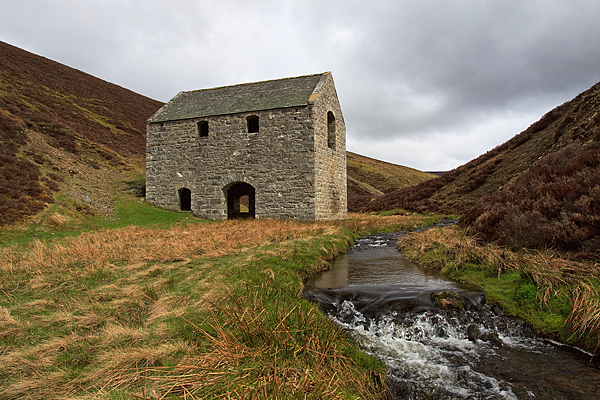
A two-storey stone building alone on an exposed hillside at 1,400 feet, on the road over the Lecht — all that is left of the largest manganese mine ever worked in Scotland, and before that of an iron venture that lasted seven years and carted its ore twenty miles to be smelted.
History
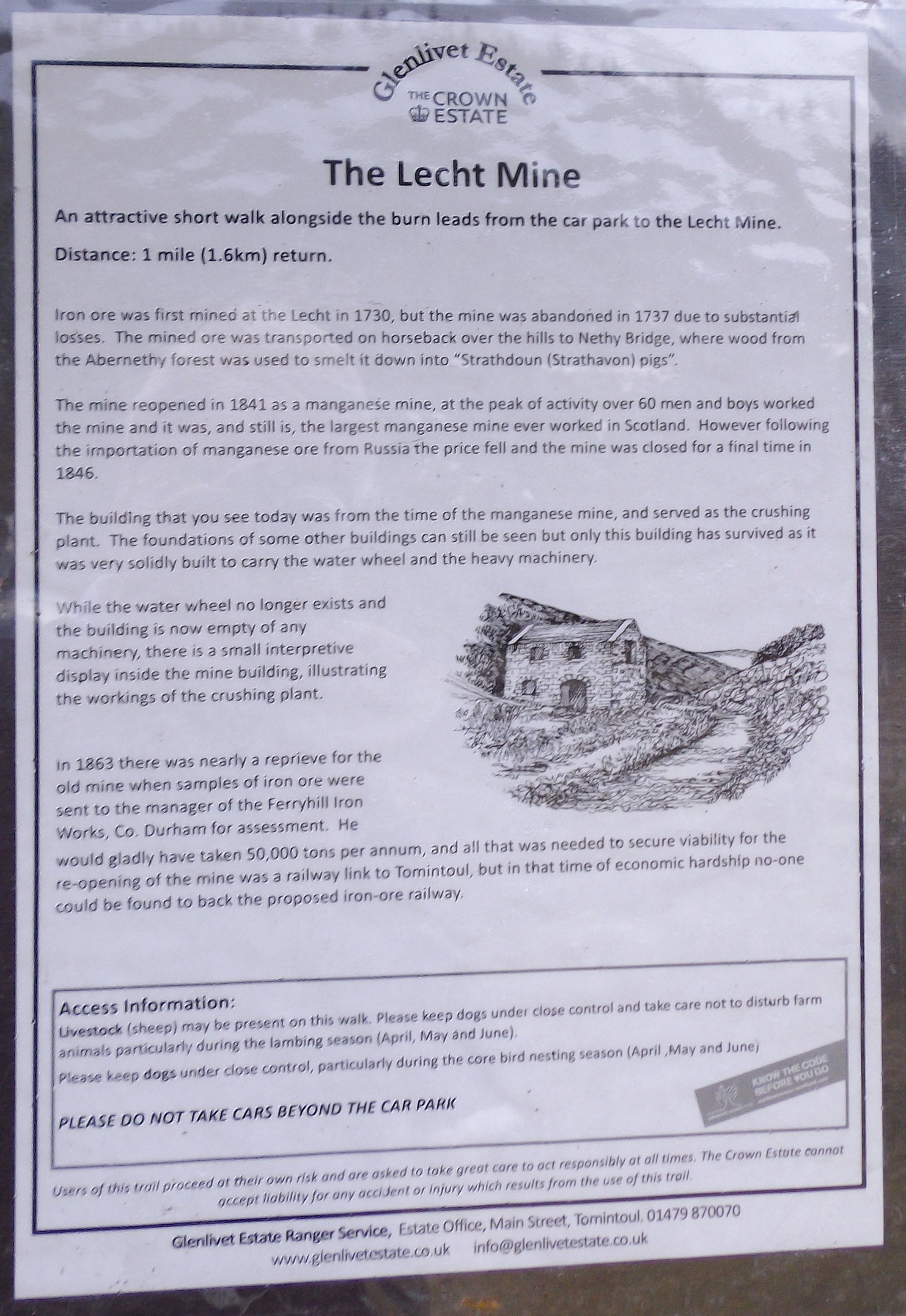
The York Buildings Company of London opened the Lecht as an iron ore mine in 1730. It was a thoroughly awkward proposition: there was no fuel on the bare hill to smelt with, so the ore was carted some twenty miles west to Nethy Bridge, where the Abernethy woods provided charcoal. The venture lasted seven years and closed in 1737. The mine was reopened in 1841 by the Duke of Richmond, this time for the more valuable manganese in the same ground, and in that second phase it became the largest manganese mine in Scotland, employing over sixty men at its peak. It closed again in 1846, after only five or six years. The crushing mill built for that phase is the building that survives; it was restored by Moray District Council in 1983.
Geology
The Lecht ore body carried both iron and manganese, and it was the manganese — worth considerably more per ton, and used in glassmaking, bleaching and later in steel — that made the second phase of working worthwhile where the iron alone had not. The form of the deposit is not recorded.
Workings
The mine's surviving structure is its crushing mill, a two-storey building of the post-1841 manganese phase. Ore was crushed there between a pair of Cornish rolls driven by a waterwheel just under eight metres across; anything not fine enough went through a second time. The resulting powder was washed and dried on site, then carted to Buckie on the Moray coast for shipment onward to Newcastle. Everything about the arrangement reflects the isolation of the place: the power had to be taken from the burn because nothing else was available, and the product had to be reduced to a powder before it was worth moving at all.
Closure
The iron phase closed in 1737 after seven years; the manganese phase closed in 1846 after five. Neither could carry the cost of moving material this far from anywhere.
What remains
Only the crushing mill building remains, standing alone and roofless-looking on the open hillside near the Well of the Lecht, a short walk from the A939. It was restored by Moray District Council in 1983 and is a well-known landmark for travellers on the Lecht road, which is one of the highest and most weather-exposed public roads in Britain.
The two-storey stone crushing mill, restored in 1983; the wheelpit and lade for the waterwheel that drove it.
Redevelopment
None — the site is open hill ground on the Glenlivet Estate, with the mill maintained as a heritage feature and interpreted for visitors.
Recorded claims
Individual factual claims, each attached to the source(s) that support it below. Where sources disagree, both are kept.
- The York Buildings Company of London opened the Lecht as an iron ore mine in 1730; the ore was carted about twenty miles west to Nethy Bridge to be smelted, and the mine closed seven years later in 1737. 1,2
- The mine was reopened in 1841 by the Duke of Richmond for manganese, became the largest manganese mine in Scotland with over sixty men at its peak, and closed again in 1846. 1,2
- The surviving two-storey building of the post-1841 phase was a crushing mill, powered by a waterwheel almost 8 m in diameter driving a pair of Cornish rolls; ore too coarse after the first pass was crushed again, then washed and dried before being carted to Buckie for shipment to Newcastle. 1,2
- Only the crushing mill building remains; it was restored by Moray District Council in 1983. 1,2
Sources
- (primary) Lecht, Ironstone Mine — trove.scot — Historic Environment Scotland / trove.scot
- (secondary) Lecht Mine — Wikipedia
Record created: 25 August 2026 · Last researched: 25 August 2026