 MineArchive
Grosmont Ironstone Mines
| Location | Grosmont, Esk Valley, North Yorkshire — 54.3540, -0.7255 (approximate) |
|---|---|
| Commodity | Iron |
| Type | Ironstone |
| Worked | 1836–1891/92 |
| Operators | Whitby Stone Company (1836–1862), Charles and Thomas Bagnall (1862–1891) |
Overview
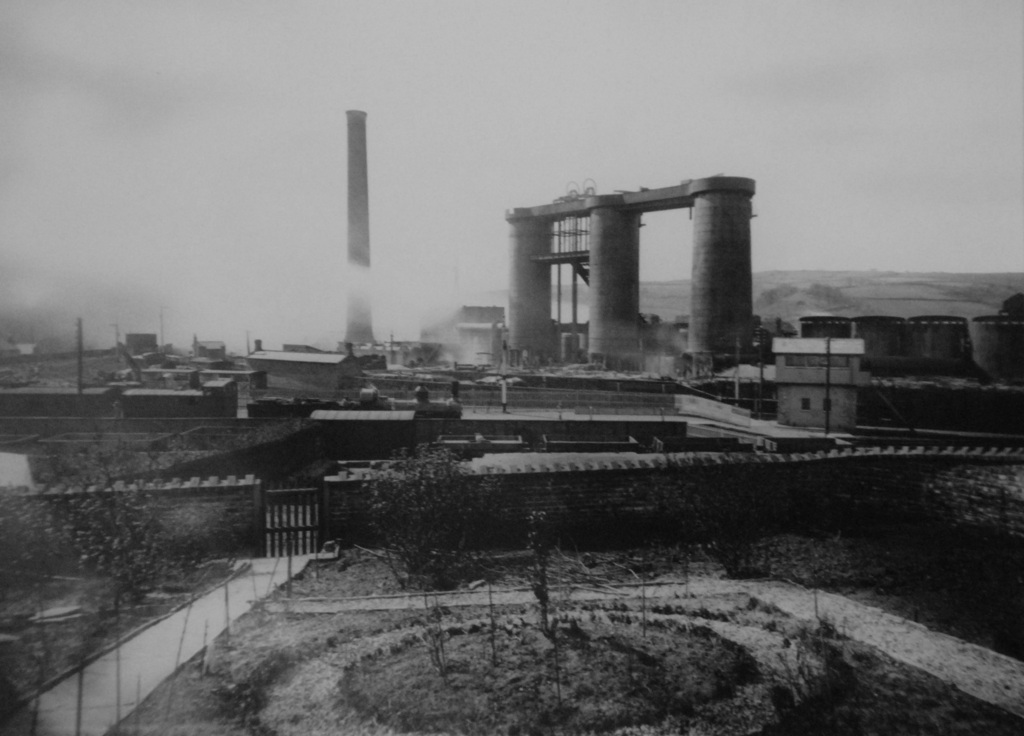
A group of ironstone mines around Grosmont in the Esk Valley, North Yorkshire, whose ore, first found in 1836 during construction of George Stephenson's Whitby and Pickering Railway, fed a substantial local ironworks and turned an isolated hamlet into a mining and manufacturing village. At its peak between 1865 and 1875 the ironworks alone employed around 500 people and produced some 40,000 tons of iron a year from three blast furnaces, before closing in 1891 and leaving Grosmont's population to fall by nearly half within a decade.
History
Small-scale ironworking on the banks of the Esk near Grosmont Priory dates back to at least the 15th or 16th century, but the district's industrial ironstone mining began in 1836, when workmen cutting the new Whitby and Pickering Railway through Grosmont discovered the ironstone-bearing Pecten seam. The newly formed Whitby Stone Company sent a trial cargo to the Birtley Iron Company that same year; the ore was at first rejected as poor quality, but the two companies settled on a sales contract by 1837. A second mine was opened in 1839 by a Mr Berwick on behalf of the local landowner Mrs Clark. Output grew steadily: by 1861 the Whitby Stone Company, the Birtley Iron Company and Mrs Clark's mine were between them raising around 70,000 tons of ore a year (30,000, 10,000 and 30,000 tons respectively). Charles and Thomas Bagnall took over as ironworks proprietors from 1862, building two blast furnaces — each 18 feet in diameter, 63 feet high and capable of 250 tons a week — by 1863, and bought out the Whitby Stone Company's mines and, in 1864, Mrs Clark's mine as well, bringing the district's ore supply under their own control. A third furnace followed in 1876. The Bagnalls' ironworks reached its peak between 1865 and 1875, employing around 500 people and producing roughly 40,000 tons of iron a year, and built back-to-back workers' cottages in the village to house its growing workforce; Grosmont's population reached some 1,600 by 1880. Mining continued under difficult and increasingly extensive workings — one section, recorded only as 'West Side', was abandoned on 15 May 1886 — before the whole operation closed in 1891, with the ironworks buildings put up for sale and largely demolished in the early 1890s. The closure hit Grosmont hard: its population had fallen to 872 by 1901, little more than half its 1880 peak.
Geology
Ore was worked from the Pecten seam of the Cleveland ironstone measures, exposed locally during the cutting of the Whitby and Pickering Railway through Grosmont in 1836.
Geological setting: Sedimentary Ironstones (well documented example)
Workings
Worked from several separate mines feeding the shared Grosmont ironworks: the Whitby Stone Company's and Birtley Iron Company's mines and Mrs Clark's mine were all raising ore by 1861, later consolidated under Bagnall ownership. Individual working sections were abandoned piecemeal as they were exhausted — the 'West Side' working is recorded as abandoned on 15 May 1886.
Closure
The ironworks and its associated mines closed in 1891; the ironworks buildings were offered for sale and largely demolished in the early 1890s.
What remains
The ironworks site itself is now occupied by the North York Moors National Park's car park in Grosmont. The works are estimated to have produced around a million tons of slag over their life, and it took a further fifty years for all of it to be cleared, much of it recycled for road building and slag wool through the 1930s.
Related mines
- Glaisdale Ironstone Mine — Glaisdale was sunk on the assumption that the seams worked near the surface at Grosmont ran under Glaisdale too. They did, seventy metres down, and that difference ruined the venture.
Nearby mines
- Goathland Whinstone Mine — 2.7 miles (4.4 km) N
- Sil Howe Whinstone Mine — 4.2 miles (6.7 km) N
- Rosedale Ironstone Mines — 4.7 miles (7.6 km) W
- Egton Quarry — 5.8 miles (9.3 km) N
- Glaisdale Ironstone Mine — 6.5 miles (10.5 km) NW
Straight-line distance, within 9 miles (15 km). Show on the map.
Recorded claims
Individual factual claims, each attached to the source(s) that support it below. Where sources disagree, both are kept.
- Ironstone (the Pecten seam) was discovered at Grosmont in 1836 during construction of the Whitby and Pickering Railway; the Whitby Stone Company's first trial cargo to the Birtley Iron Company was initially rejected for poor quality, with a sales contract following by 1837. 1,2
- A second mine was opened in 1839 by Mr Berwick for landowner Mrs Clark; by 1861 the Whitby Stone Company, the Birtley Iron Company and Mrs Clark's mine were raising 30,000, 10,000 and 30,000 tons of ore a year respectively. 1
- Charles and Thomas Bagnall took over the ironworks from 1862, built two 18-foot-diameter, 63-foot blast furnaces (250 tons/week capacity each) by 1863 and a third in 1876, and bought out the Whitby Stone Company's mines and Mrs Clark's mine (1864); the works employed around 500 people and produced about 40,000 tons of iron a year at its peak between 1865 and 1875. 1
- The works closed in 1891 and were demolished in the early 1890s; Grosmont's population fell from around 1,600 in 1880 to 872 by 1901. 1
- The works produced an estimated one million tons of slag over their operating life, which took a further fifty years to fully clear, much of it recycled for road stone and slag wool into the 1930s. 1
- One working section, recorded as 'Grosmont Mine' (Eskdaleside cum Ugglesbarnby) operating 1858-1892, had its 'West Side' section abandoned on 15 May 1886. 2
Sources
- (secondary) Grosmont Iron Works — Wikipedia
- (secondary) Cleveland & North Yorkshire Moors Iron Mining — Northern Mine Research Society
Record created: 26 August 2026 · Last researched: 26 August 2026