 MineArchive
Gosforth Colliery
| Also known as | Mary Pit, Fanny Pit |
|---|---|
| Location | Gosforth, Newcastle, Tyne and Wear — 55.0094, -1.6028 (approximate) |
| Commodity | Coal |
| Type | Coal |
| Worked | 1825–1884 |
| Maximum depth | 181 fathoms (331 m) |
| Operators | Rev. R. H. Brandling (1825–?), Bowes, Hutt & Co., John Bowes & Partners Ltd (?–1884) |
Overview
A Newcastle colliery of 1825, sunk by the Rev. R. H. Brandling 181 fathoms through a great dyke to win the High Main coal, sold as 'Gosforth Wallsend'; abandoned in 1884.
History
Gosforth Colliery stood about three miles north of Newcastle, on the west bank of the dean through which the Ouse Burn runs to the Tyne. The sinking was begun in 1825 for the Rev. R. H. Brandling, and coal was won on Saturday 31 January 1829 after unusual difficulty and great expense. The difficulty was one dyke. The High Main coal was reached at twenty-five fathoms, but close by, the seam had been thrown down in an inclined direction to a depth of eleven or twelve hundred feet, and the coal where it was first met with was so spoiled by the proximity of the dyke as to be worthless. The shaft therefore had to be carried on perpendicularly to 181 fathoms to reach the lower range of the seam, passing on the way through seams that the dyke had shattered and left lying above a coal they should geologically have underlain. At that depth a horizontal drift seven hundred yards long was driven through the face of the dyke to the seam, a great part of it cut through solid rock. By 1827 the winning had reached 188 fathoms through a hundred and forty alternations of strata, forty-three of them seams of coal. This was the Main Dyke, so called in contradistinction to every other dyke in the district: a downcast of upwards of a hundred fathoms, first found at Stella Grand Lease Colliery and traced through Denton, West Kenton, Gosforth, Killingworth and Backworth before splitting into branches and running out under the sea. It is because of that dyke that the High Main seam is present at all in the collieries of Gosforth, Coxlodge, Fawdon and Wideopen. The winning was celebrated in a way nothing else in the district matched. On 6 February 1829 a grand subterranean ball was given for the workmen and others in a ballroom nearly eleven hundred feet below the surface, cut in the shape of an L fifteen feet wide, with a flagged floor, seats along the sides and the whole place lit by lamps and candles. The company began to descend at half past nine in the morning and were still going down at one in the afternoon; on reaching the bottom each person walked out to the face at the end of the drift and hewed a piece of coal to keep. Dancing went on without a break until three, to the Coxlodge band, with cold punch, malt liquor and biscuits in abundance. Between two and three hundred people were there, and nearly half of them were women. The pit settled into ordinary work. The seam, four to four and a half feet thick and of the first quality of Tyne coals, rose nearly twelve inches in a yard where it was first met, so the corves were let down self-acting inclined planes; further in, the workings levelled out, and they were not much troubled with foul air. The coal on the south side had already been worked out at an earlier period. There were two winding shafts side by side, each with a fifty-horsepower machine, and a pumping engine of a hundred and fifty horsepower; the waggonway to the Tyne ran about three and a half miles and the waggons were drawn along it chiefly by fixed engines. The coal was sold on the London market as 'Gosforth Wallsend'. The pits were the Mary and the Fanny, with a West Pit and a Brandling Pit besides. Gosforth was sold in the 1850s when the Brandling family fell into financial difficulty and had to part with much of their estate; it passed to Bowes, Hutt & Co. and then to John Bowes & Partners, and was abandoned in 1884. Both Gosforth and neighbouring Coxlodge are marked disused on the second edition Ordnance Survey, so both were out of use by 1895.
Geology
Worked the High Main and the seams below it in the Northumberland coalfield, on the south or rise side of the Main Dyke - a downcast of upwards of a hundred fathoms traced from Stella Grand Lease through Denton, West Kenton, Gosforth, Killingworth and Backworth and out under the sea. The dyke had thrown the High Main down eleven or twelve hundred feet and spoiled the coal beside it, so the shaft was sunk to 181 fathoms and a seven-hundred-yard drift driven through the dyke face to reach the seam; it is to the same dyke that Gosforth, Coxlodge, Fawdon and Wideopen owe the presence of the High Main at all. The seam was four to four and a half feet thick and rose nearly twelve inches in a yard where it was first cut.
Workings
Two winding shafts side by side, each with a fifty-horsepower machine, and a pumping engine of a hundred and fifty horsepower. The coal was reached through a seven-hundred-yard drift cut through the face of the dyke, much of it in solid rock. Corves came off the steeper workings down self-acting inclined planes, and a waggonway of about three and a half miles took the coal to the Tyne, worked chiefly by fixed engines. The pits were the Mary and the Fanny, with a West Pit and a Brandling Pit as well.
Closure
The colliery passed from the Brandling family to Bowes, Hutt & Co. and then John Bowes & Partners, and was abandoned in 1884.
What remains
Built over. The colliery ground lies under the suburbs of south Gosforth, and the pit was already marked disused on the second edition Ordnance Survey.
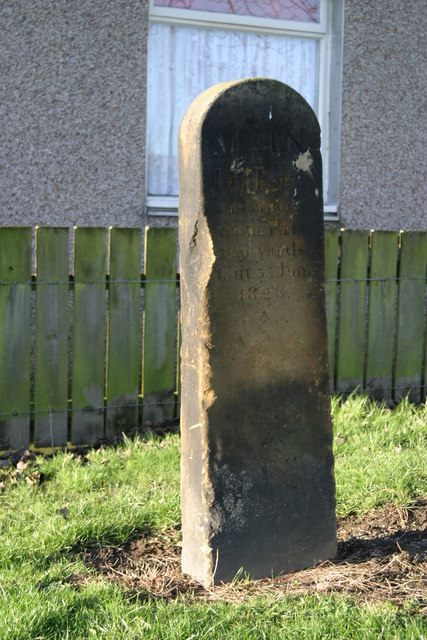
The Dyke Stone, at the eastern end of Aidan Walk, inscribed 'Main Dyke distance from Pit 349 yards Cut 3d June 1828' - a marker of the dyke that shaped the whole undertaking.
Redevelopment
Unknown.
Nearby mines
- Coxlodge Colliery — 1.3 km W
- West Moor Colliery — 2.8 km NE
- Heaton Main Colliery — 3.1 km S
- Weetslade Colliery — 3.8 km N
- Hazlerigg Colliery — 4.4 km NW
Straight-line distance, within 15 km. Show on the map.
Recorded claims
Individual factual claims, each attached to the source(s) that support it below. Where sources disagree, both are kept.
- The sinking began in 1825 for the Rev. R. H. Brandling, and coal was won on 31 January 1829. 1
- The High Main was reached at twenty-five fathoms but thrown down by a dyke, so the shaft was sunk to 181 fathoms and a seven-hundred-yard drift driven through the dyke. 1
- The coal, of the first quality of Tyne coals, was sold on the London market as 'Gosforth Wallsend' and taken to the Tyne by a three-and-a-half-mile waggonway. 1
- Worked by the Rev. R. H. Brandling and later by Bowes, Hutt & Co. and John Bowes & Partners, and abandoned in 1884. 1
- The colliery's abandonment plans are held in the mine-plans catalogue of the British Geological Survey. 2
- The colliery was sunk on the rise side of the Main Dyke, a downcast of upwards of a hundred fathoms first discovered at Stella Grand Lease Colliery and traced through Denton, West Kenton, Gosforth, Killingworth and Backworth before splitting into branches and running out under the sea. It is owing to that dyke that the High Main seam is found at all in the collieries of Gosforth, Coxlodge, Fawdon and Wideopen. 3
- By 1827 the Gosforth winning had been carried to a depth of 188 fathoms, passing through a hundred and forty alternations of strata of which forty-three were seams of coal. 3
- On 6 February 1829 a grand subterranean ball was given for the workmen in an L-shaped room nearly eleven hundred feet below the surface, fifteen feet wide, flagged and lit by lamps and candles. Guests descended from half past nine until one, each hewing a piece of coal at the drift face as a memento, and danced until three to the Coxlodge band; between two and three hundred attended, nearly half of them women. 3,4
- The seam was four to four and a half feet thick, of the first quality of Tyne coals, and rose nearly twelve inches in a yard where first met, so corves were let down self-acting inclined planes; the workings were not much incommoded with foul air, and the coal on the south side had been worked out at an earlier period. 3
- The colliery's pits were the Mary and the Fanny, with a West Pit and a Brandling Pit besides. It was sold in the 1850s when the Brandling family fell into financial difficulty and had to sell off much of their estates, and both Gosforth and Coxlodge are marked disused on the second edition Ordnance Survey, so were out of use by 1895. 4
Photographs & further reading
Owners, the sinking through the dyke, output and the roll of those killed at the colliery.
View sourceSources
- (primary) Gosforth Colliery (DMM g009) — Durham Mining Museum
- (primary) Shotton Colliery abandonment plans (BGS mine-plans catalogue) — British Geological Survey
- (secondary) Gosforth Colliery (1825-1884), quoting Pattison and Ross, A Historical, Geological and Descriptive View of the Coal Trade of the North of England (1844) and T. H. Hair, A Series of Views of the Collieries of Northumberland and Durham (1844) — Co-Curate, Newcastle University
- (primary) Gosforth Colliery, Mary and Fanny Pits (Tyne and Wear HER 4024) — Tyne and Wear Historic Environment Record
- (primary) Gosforth (Estate) and associated pits: abandonment plans (BGS mine-plans catalogue) — British Geological Survey
Record created: 23 September 2026 · Last researched: 23 September 2026