 MineArchive
Duxbury Park Colliery
| Also known as | Farnworth House Colliery |
|---|---|
| Location | Duxbury, Chorley, Lancashire — 53.6213, -2.6296 (approximate) |
| Commodity | Coal |
| Type | Coal |
| Worked | c. 1876–29 December 1917 |
| Maximum depth | About 200 yards (shaft) |
| Operators | Thomas Whittle (1876–1883), Duxbury Park Colliery Co. Ltd (1883–1917), Ellerbeck Collieries Ltd (1917–?) |
Overview
A colliery at Duxbury, south of Chorley, begun about 1876 as Farnworth House and worked by the Duxbury Park Colliery Co. Ltd from 1883. It employed up to 475 people, closed on 29 December 1917 and was kept on by Ellerbeck as a pumping pit.
History
Duxbury Park Colliery lay at Duxbury, south of Chorley, about half a mile north of Ellerbeck Colliery and close to Wigan Lane. Thomas Whittle started it about 1876, when it was known as Farnworth House, and from 1883 the Duxbury Park Colliery Co. Ltd worked it. It raised gas, household, manufacturing and steam coal from the Arley, Bone, Cannel, King, Smith and Yard seams, adding the Wigan Six Feet by 1915. It employed 326 people in 1894, 475 in 1900 and 460 in 1910, falling to 273 in 1915.
In 1893 the engineman James Alker missed his footing getting out of the cage at the top and fell 200 yards to the bottom of the shaft. In 1900 the manager, James Halliwell, was crushed by the cage as he tried to enter it at an intermediate mouthing. A Chorley woman, later Mrs P. Holden, worked on its pit brow for ten years from the age of 13. She walked three miles each morning from Tinklers Barracks by the canal to start at 5 o'clock, and picked dirt and shale from the coal on the screen belts for 7 shillings a week.
The colliery closed on 29 December 1917 and passed to the neighbouring Ellerbeck Collieries as a pumping pit to keep water out of their workings. Seven men were employed there in 1923. Two pitmen, Frederick Coyle and Edward Pennington, fell down its shaft on 27 January 1919.
Geology
Lancashire Coal Measures: the Arley, Bone, Cannel, King, Smith, Yard and Wigan Six Feet (Trencherbone) seams.
Workings
A wound shaft with an intermediate mouthing. On the surface, tipplers fed three chutes with shakers and two picking belts, and a branch railway shared with Ellerbeck carried the coal away.
Closure
Closed on 29 December 1917 and taken over by Ellerbeck Collieries as a pumping pit for their workings; seven men were employed there in 1923.
What remains
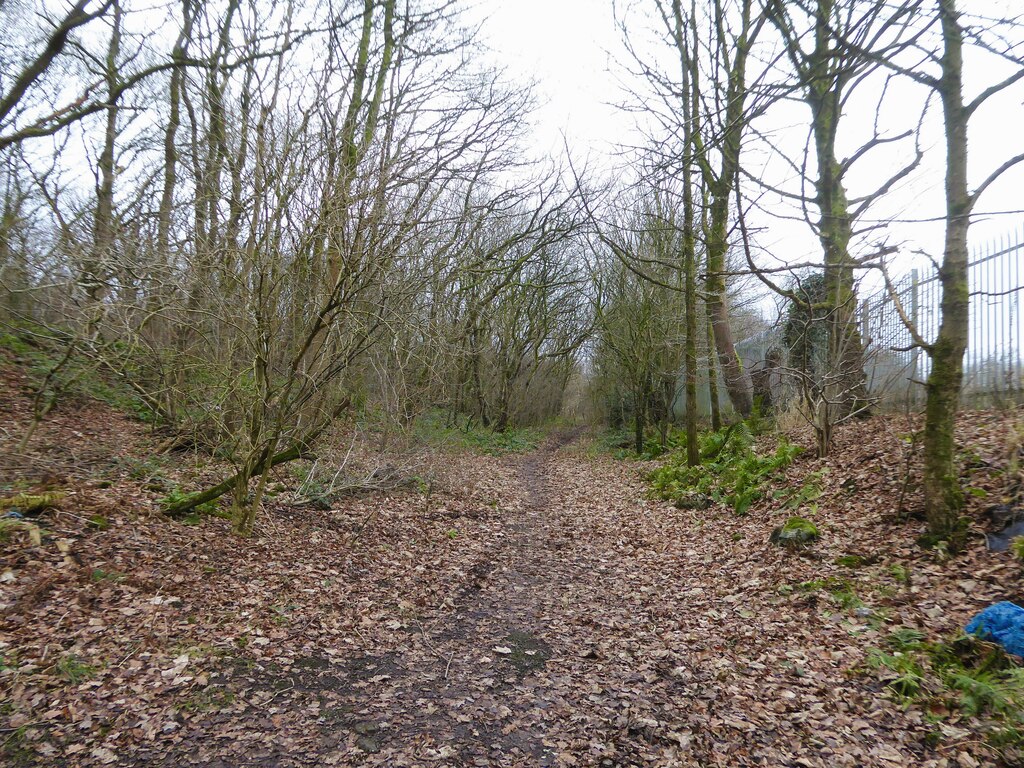
A private track off Wigan Lane leads to the former Duxbury Park and Ellerbeck colliery sites, beside the line of the branch railway that served them.
Redevelopment
Unknown.
Related mines
- Ellerbeck Colliery — Neighbouring colliery half a mile south; Ellerbeck took Duxbury Park over as a pumping pit in 1917.
Nearby mines
- Ellerbeck Colliery — 0.2 miles (0.3 km) S
- Blainscough Colliery — 1.4 miles (2.3 km) W
- Langtree Colliery — 2.3 miles (3.7 km) SW, Greater Manchester
- Broomfield Colliery — 2.4 miles (3.8 km) SW, Greater Manchester
- Chisnall Hall Colliery — 2.4 miles (3.8 km) SW
Straight-line distance, within 9 miles (15 km). Show on the map.
Recorded claims
Individual factual claims, each attached to the source(s) that support it below. Where sources disagree, both are kept.
- Started about 1876 by Thomas Whittle as Farnworth House, and worked by the Duxbury Park Colliery Co. Ltd from 1883. 1,2
- Closed on 29 December 1917 and acquired by Ellerbeck Collieries as a pumping pit. 1,2
- Employed 326 in 1894, 475 in 1900, 460 in 1910 and 273 in 1915; seven in 1923. 3
- Worked the Arley, Bone, King, Smith, Yard and Wigan Six Feet, which were abandoned in 1917. 3,4
- A pit brow lass worked its screens for ten years from the age of 13, for 7 shillings a week. 2
- A private track off Wigan Lane leads to the former Duxbury Park and Ellerbeck colliery sites. 5
Photographs & further reading
Owners from Thomas Whittle's Farnworth House to closure in 1917, from the G. Hayes collection.
View sourceSeams, employment 1894-1923 and those killed at the colliery.
View sourceA woman's own account of ten years on the colliery's pit brow and screens.
View sourceSources
- (secondary) Duxbury Park Colliery — Northern Mine Research Society
- (secondary) Duxbury Park Colliery: The Story of a Pit Brow Lass — Chorley Historical and Archaeological Society
- (primary) Duxbury Park Colliery — Durham Mining Museum
- (primary) Mine plan: Duxbury Park, Wigan Six Feet, King, Yard, Bone, Smith, Arley — British Geological Survey
- (observational) Private track to former collieries off Wigan Lane (photograph) — Geograph
Record created: 2 October 2026 · Last researched: 2 October 2026