 MineArchive
Doulting Quarry
| Also known as | Doulting Stone Quarry |
|---|---|
| Location | Doulting, on the Mendip Hills near Shepton Mallet, Somerset — 51.1902, -2.5016 (approximate) |
| Commodity | Limestone |
| Type | Quarry |
| Worked | Roman–Still active |
| Maximum depth | The worked bed is about 2 metres of oolite |
| Operators | Keevil family, Ham & Doulting Stone Co. Ltd |
Overview
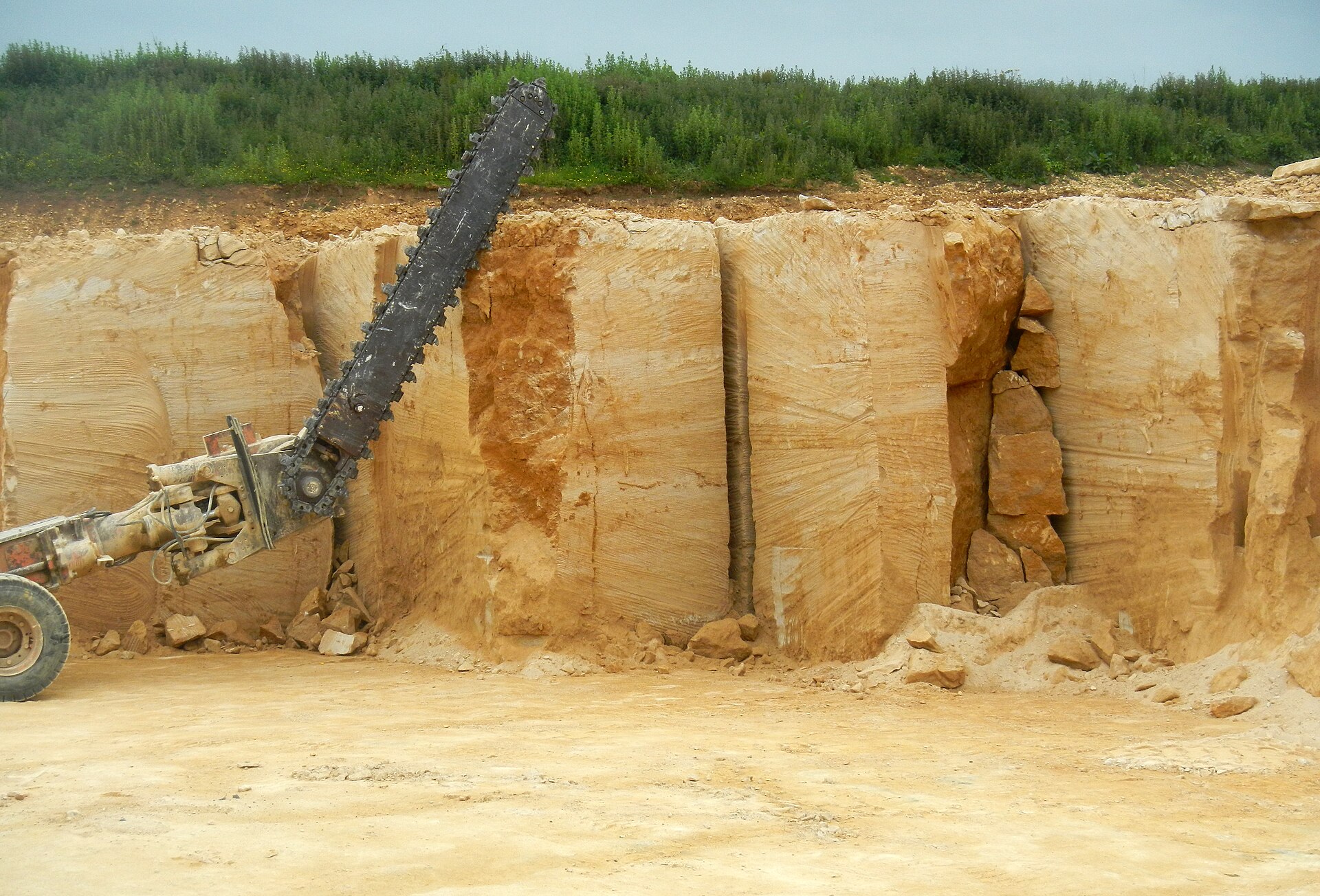
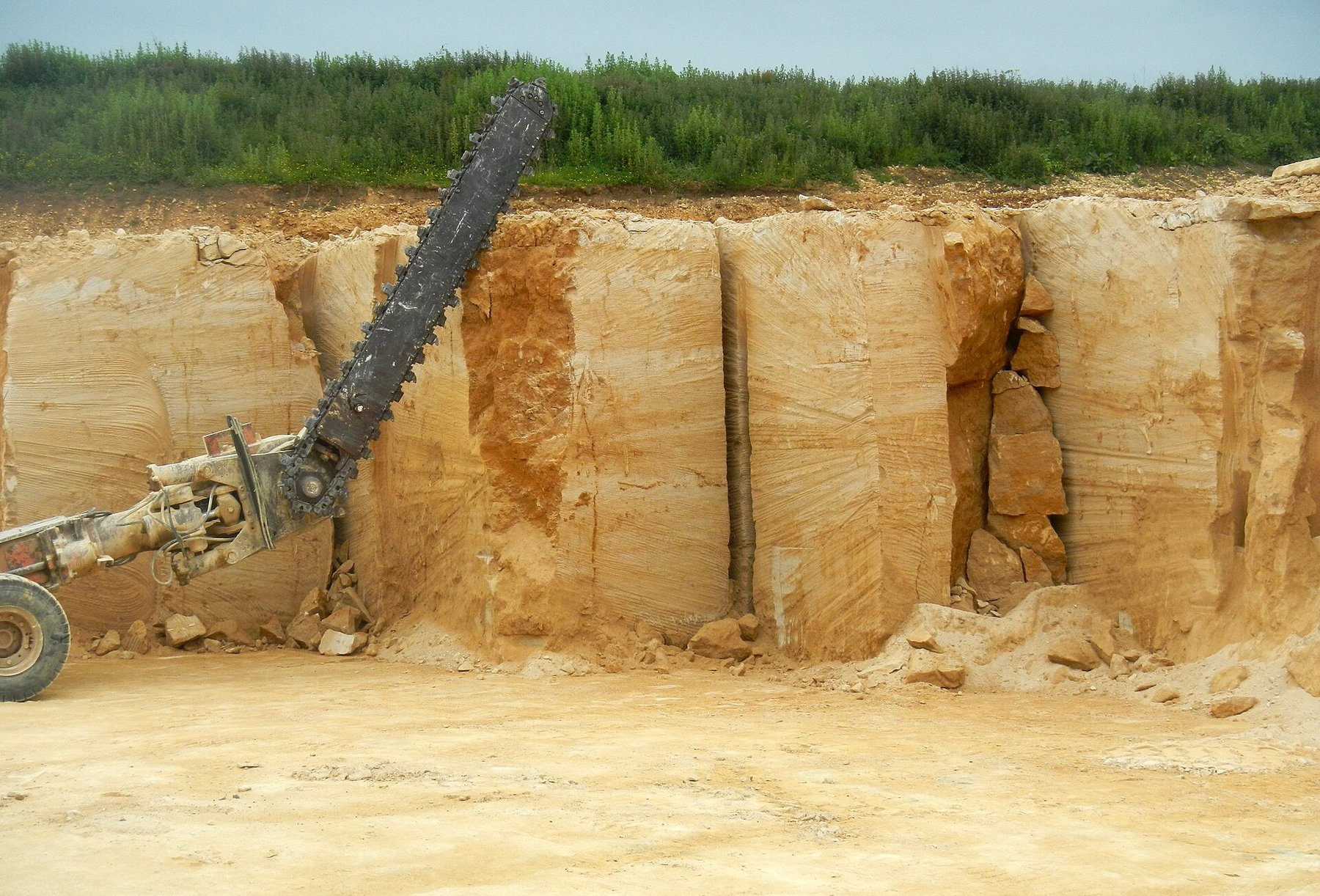
A limestone quarry on the Mendip Hills that was producing building stone in Roman times and is working still. Doulting stone built Glastonbury Abbey and the west façade of Wells Cathedral, and the structures of the cathedral close including the fortified gate called the Bishop’s Eye. The worked bed is only about two metres of Middle Jurassic oolite, and it sits directly on Carboniferous limestone — an unconformity with millions of years of missing sediment between the two.
History
The Doulting Stone Quarry, the largest of the three quarries still working Doulting stone, was producing building stone in Roman times. In the twentieth century it was operated by the Keevil family, and until 1994 by the Amalgamated Roadstone Corporation — now part of Hanson — after which it was bought out as a stand-alone business. Ham & Doulting Stone Co. Ltd own the east quarry, which was in use for centuries, then lay inactive, and has since been reopened. What the stone did is better recorded than who quarried it. It was used for Glastonbury Abbey and for the west façade of Wells Cathedral, and for other structures in the cathedral close, among them the fortified gate known as the Bishop’s Eye. The older quarries lay at Brambleditch and Chelynch, worked from Roman times; the stone taken in early medieval times was finer-grained than the later product. The working quarry on Chelynch Road takes stone from two faces.
Geology
A two-metre bed of oolite of Middle Jurassic age, deposited as sediment in fairly shallow coastal seas. The stone is unusual for what lies beneath it: at Doulting the oolite rests directly on Carboniferous limestone, an unconformity representing two rock types laid down millions of years apart, the intervening sediments having been eroded away before the Jurassic strata were laid down. The stone has a high level of water absorption and porosity.
Workings
Open quarrying of a thin worked bed. Three quarries currently work Doulting stone; the largest is the Doulting Stone Quarry itself, and Ham & Doulting Stone Co. Ltd hold the east quarry. The quarry also offers primary and secondary cutting and profiling, so the stone is worked to shape on site rather than only won from the face.
Closure
The quarry has not closed. Doulting stone is still produced from three quarries, and the east quarry — inactive for a period after centuries of use — was reopened.
What remains
A working quarry, one of three producing Doulting stone, with cutting and profiling plant on site.
Not applicable to a working quarry. The stone’s own monuments are elsewhere: Glastonbury Abbey, the west front of Wells Cathedral and the Bishop’s Eye.
Nearby mines
- Fairy Cave Quarry — 2.5 miles (4.0 km) N
- Torr Works — 2.8 miles (4.6 km) E
- Gurney Slade Quarry — 4.1 miles (6.6 km) N
- New Rock Colliery — 4.4 miles (7.1 km) N
- Vobster Breach Colliery — 4.4 miles (7.1 km) NE
Straight-line distance, within 9 miles (15 km). Show on the map.
Recorded claims
Individual factual claims, each attached to the source(s) that support it below. Where sources disagree, both are kept.
- At present there are only three quarries working Doulting stone. The largest, the Doulting Stone Quarry, was producing building stone in Roman times. 1
- In the 20th century the quarry was operated by the Keevil family, and until 1994 by the Amalgamated Roadstone Corporation, now part of Hanson plc, after which it was bought out as a stand-alone business. Ham & Doulting Stone Co. Ltd own the east quarry, which was originally in use for centuries, followed by a period of inactivity, and has since been reopened. 1
- The stone quarried at Doulting is a 2-metre-thick layer of oolite of Middle Jurassic age, deposited as sediments in fairly shallow coastal seas. It has a high level of water absorption and porosity. 1
- The stone is unusual in showing an unconformity at the division between the oolite and the Carboniferous limestone beneath — two types of rock laid down millions of years apart, the intervening sediments having been eroded away before the Jurassic strata were laid down. 1
- The stone is used for building purposes including Glastonbury Abbey and the west façade of Wells Cathedral, and other structures in the cathedral close such as the fortified gate called the Bishop’s Eye. 1
- Doulting Stone is an informal unit about two metres thick in the Middle Jurassic Inferior Oolite Group, an orange-buff cross-bedded crinoidal limestone rich in fossils, restricted to a small area near Shepton Mallet; older quarries at Brambleditch and Chelynch were worked from Roman times, and the early medieval stone was finer-grained than the later. 2
- The Doulting Stone Quarry on Chelynch Road works two separate faces, and its stone has been worked since Roman times. 3
Photographs & further reading
The quarry and the stone: Roman working, the twentieth-century operators, the two-metre oolite bed and the unconformity beneath it, and the buildings the stone is in.
View sourceA building-stone survey's account of the Doulting bed, its quarries and its use.
View sourceSources
- (secondary) Doulting Stone Quarry — Wikipedia
- (secondary) Doulting Stone, Somerset (Dorset Building Stone) — Dorset Building Stone
- (secondary) Doulting Stone: technical data sheet (BRE) — Building Research Establishment
- (secondary) Doulting — Wikipedia
Record created: 8 September 2026 · Last researched: 24 September 2026