 MineArchive
Derry Colliery, Coalisland
| Also known as | Derry Pit, Rectory Pit |
|---|---|
| Location | Derry townland, on the western edge of Coalisland, County Tyrone — 54.5400, -6.7150 (approximate) |
| Commodities | Coal, Fireclay |
| Type | Coal |
| Worked | By 1834–1970 |
| Maximum depth | 70 yards in the 1830s; the fireclay beds worked from the same townland in the 1950s lay over 60 metres down. |
| Operators | F. McKenna and Co. (1880–?) |
Overview
The coal workings of Derry townland, on the western edge of Coalisland in the East Tyrone coalfield. The Ordnance Survey Memoirs found a coalfield here in 1834 worked by a gin turned by horses, its shaft 70 yards deep on a seam three and a half feet thick, supplying the neighbourhood and sending coal by lighter down the Coalisland canal to Newry and Belfast. It was returned as at work under F. McKenna and Co. in 1880. The name came round again in the 1950s, when a shaft sunk for fireclay at Gortnaskea struck a narrow coal seam that geologists called the Derry seam: the pit that took its name, also called the Rectory Pit, worked until 1970 and was the last coal mine in Ulster.
History
Coal mining in East Tyrone was first reported in 1654, and in 1723 Francis Seymour, under a lease from the Archbishop of Armagh, began working from an engine pit 156 feet deep at Brackaville — the place that became Coalisland. Over the next three centuries the field was worked at Annagher, Annaghone, Congo, Creenagh, Derraghadoan, Derry, Drumglass and Lurgaboy; the Derry workings are listed as the Derry Engine Pit and the Rectory Shaft. Lieutenant G. Dalton, surveying the parish of Tullyniskan for the Ordnance Survey Memoirs in July 1834, recorded the townland’s coalfield in a few lines: it supplied the immediate neighbourhood, quantities were sent by water to Newry and Belfast, shipped by lighters from Coalisland; the mine was worked by a gin turned by horses, the shaft 70 yards deep; the coal sold at the same rate as the Drumglass collieries and was considered equally good; and the seam was three and a half feet thick. The canal that carried it, the Tyrone Navigation, admitted barges of seventy tons and connected the town to Lough Neagh. By the official return of collieries at work in 1880 the Derry colliery was in the hands of F. McKenna and Co. The Tyrone field never became what its owners hoped: severe faulting made the coal hard to follow, and deep working had all but ended by 1920, though Sir Samuel Kelly bought the coalfield in January 1923 and tried again at Annagher. Fireclay outlasted coal. In the 1950s over 150 men worked at the Ulster Fireclay Works at Gortnaskea, one of the biggest employers in Coalisland, mining beds of fireclay more than sixty metres down and making sewer pipes, firebricks and chimney pots from them. In 1956 a shaft sunk in search of more fireclay struck a narrow bed of coal, identified by geologists as the Derry seam; the new pit was named for it, though it was also called the Rectory Pit from the Church of Ireland rectory nearby. It sold coal at £10 a tonne over the counter to anyone who came to the pit and supplied factories across East Tyrone, raising 80 to 90 tonnes a week. By 1970 those factories had gone over to oil and the Derry Pit closed — the last coal mine in Ulster. Fireclay mining carried on there for several years more.
Geology
The East Tyrone or Coalisland coalfield, a small Carboniferous field on the south-western shore of Lough Neagh. The seam worked in Derry townland in the 1830s was three and a half feet thick; the seam struck in 1956 was a narrow bed that geologists named the Derry seam. Fireclay beds lay more than sixty metres below the surface in the same ground. Severe faulting is the reason usually given for the field never yielding what was expected of it: the coal is there, and millions of tons are believed to remain, but it is broken up and hard to follow.
Workings
In the 1830s a single shaft 70 yards deep, wound by a gin turned by horses, with the coal carted to the canal basin at Coalisland and taken from there by lighter. The workings of the townland are recorded as the Derry Engine Pit and the Rectory Shaft. In the twentieth century the ground was worked from the Ulster Fireclay Works at Gortnaskea, whose shafts reached fireclay beds over sixty metres down and, from 1956, the coal of the Derry seam alongside them.
Closure
The Derry Pit closed in 1970 when the East Tyrone factories that bought its coal changed over to oil. It was the last coal mine working in Ulster. Fireclay mining at Gortnaskea continued for several years afterwards. Deep coal working across the wider Tyrone field had already all but ended by 1920.
What remains
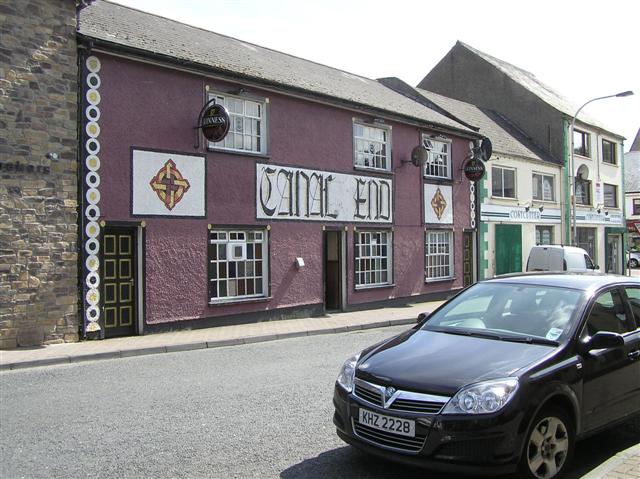
The pits are gone. Coalisland’s canal, the route by which Derry coal reached Newry and Belfast, survives in part: its terminal basin at The Square is now a landscaped canal end, and the town’s Harbour Arcade is named for the wharf. The Lough Neagh Partnership has since published an exhibition and resource pack on the coalfield, and the townlands are ordinary farmland and housing.
None identified at the pit sites; the canal basin at Coalisland survives.
Nearby mines
- Coalisland Collieries — 0.4 miles (0.7 km) E
Straight-line distance, within 9 miles (15 km). Show on the map.
Recorded claims
Individual factual claims, each attached to the source(s) that support it below. Where sources disagree, both are kept.
- The Ordnance Survey Memoir for the parish of Tullyniskan, written in July 1834, records a coalfield in the townland of Derry supplying the immediate neighbourhood and sending coal by water to Newry and Belfast by lighter from Coalisland; the mine was worked by a gin turned by horses, the shaft 70 yards deep, the seam three and a half feet thick, and the coal sold at the same rate as the Drumglass collieries and considered equally good. 1
- The workings recorded in Derry townland are the Derry Engine Pit and the Rectory Shaft. 2
- The Derry colliery at Coalisland was returned to F. McKenna and Co. in the official list of collieries at work in 1880. 3
- In 1956 a seam of coal was struck while sinking a deep shaft for fireclay at Gortnaskea; geologists identified the narrow bed as the Derry seam, and the new pit took its name from it, though it was also called the Rectory Pit after the nearby Church of Ireland rectory. 2
- The Derry Pit regularly produced 80 to 90 tonnes of coal a week, sold locally at £10 a tonne and supplied to East Tyrone factories; when those factories changed to oil it closed in 1970, the last coal mine in Ulster, though fireclay mining continued for several years. 2
- Coal mining in East Tyrone was first reported in 1654 and worked at Annagher, Annaghone, Congo, Creenagh, Derraghadoan, Derry, Drumglass and Lurgaboy, but severe faulting made the coal hard to work and deep mining had all but ended by 1920. 4,2
Photographs & further reading
The fullest account of the East Tyrone pits townland by townland, including the Derry Pit and how a search for fireclay turned up the seam that named it.
View sourceA compilation of contemporary sources for the Tyrone field, including the Ordnance Survey Memoir passage describing the Derry townland coalfield in 1834.
View sourceSources
- (primary) Coal mining in County Tyrone in the eighteenth and nineteenth centuries (with the Ordnance Survey Memoirs of Ireland, vol. 20, p. 140) — Hugh McGough
- (secondary) The Story of Coal Mining in Coalisland & District — resource notes — Lough Neagh Partnership
- (secondary) List of coal mines UK 1880 — Coalmining History Resource Centre
- (primary) Digging Deep: A History of the East Tyrone Coalfields — Lough Neagh Partnership
Record created: 6 September 2026 · Last researched: 6 September 2026