 MineArchive
Denend Colliery
| Location | Cardenden, Auchterderran parish, Fife — 56.1418, -3.2530 (approximate) |
|---|---|
| Commodity | Coal |
| Type | Coal |
| Worked | Probably 1860s–1895 |
| Maximum depth | 72 fathoms at its deepest workings; the Cardenden Smithy coal was reached at 23 fathoms. |
| Operators | Denend Coal Company (?–1895) |
Overview
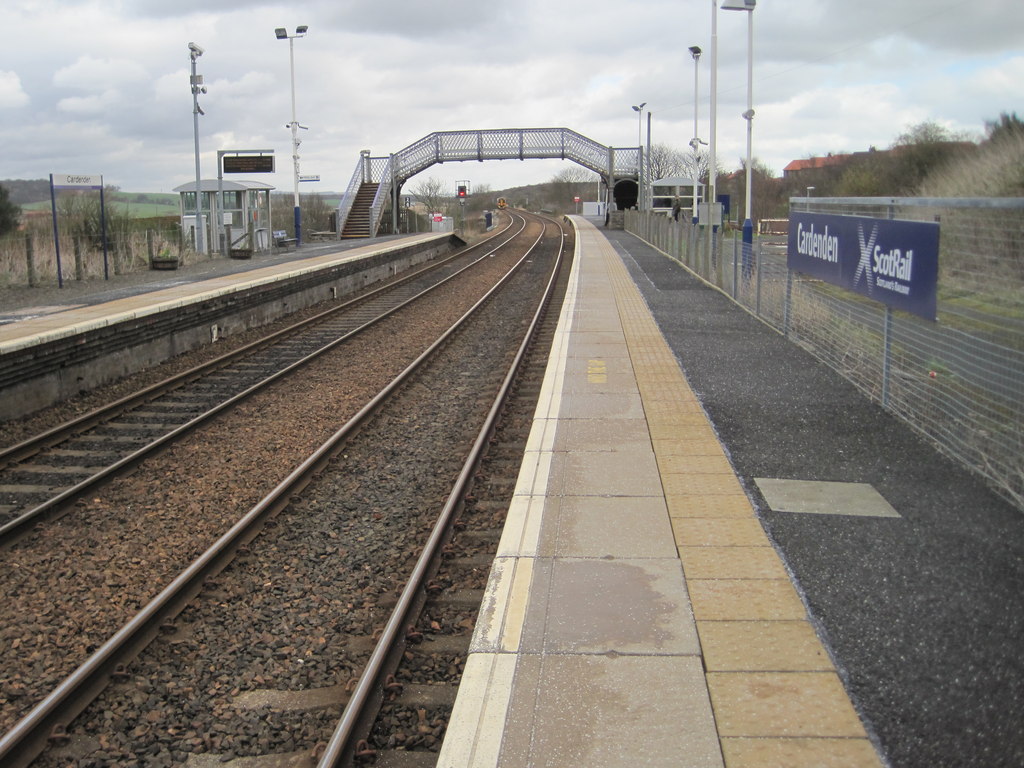
A small Fife colliery close by Cardenden railway station at the north end of Carden Den, worked by the Denend Coal Company through two shafts and, unusually for so crowded a district, run quite independently of its immediate neighbours at Dundonald and Cardenden. Probably sunk in the 1860s, it took the Lochgelly Splint, Little Splint, Duddie Davie and Smithy coals of the Lochgelly field and reached 72 fathoms before it stopped coaling, it is believed, in 1895.
History
Auchterderran parish was worked over by a scatter of small pits in the middle of the nineteenth century — the Cardenden colliery’s Big Pit and Wee Pit, the Brandies Pit named for the burn that ran past it, the Den Mine, the Adam James Pit, the Jane Pit and others — most of them shallow and short-lived, their coal drawn to the surface and then hauled along iron rails by horses in small waggons or tubs. Denend was one of these, and one of the few worked as a concern of its own: the Denend Coal Company ran its two shafts, Nos. 1 and 2, quite independently of the Dundonald and Cardenden collieries on either side. The official return of collieries at work in 1880 lists it at Auchterderran under the Denend Coal Co. It wrought mainly the Lochgelly Splint, Little Splint, Duddie Davie and Smithy coals, reaching the Cardenden Smithy coal at 23 fathoms and eventually working at 72. It is believed to have ceased coaling in 1895 — before the arrival of the Bowhill Coal Company, which took over the neighbouring Carden coalfield with its plant, machinery and workers’ houses in February 1906 after the Carden Coal Company went into liquidation the previous November, and which turned Cardenden into a much larger place than the one Denend had worked in.
Geology
Coal Measures of the Lochgelly field in central Fife. The colliery worked the Lochgelly Splint, Little Splint, Duddie Davie and Smithy coals; the Cardenden Smithy coal, which runs northward through this ground, was reached at 23 fathoms, and the deepest workings were at 72 fathoms.
Workings
Two shafts, Nos. 1 and 2, at the north end of Carden Den beside the railway station. Underground haulage in the small pits of this district was by horse, coal being loaded into small waggons or tubs and drawn along iron rails.
Closure
The colliery is believed to have ceased coaling in 1895. Nothing is recorded of why; it was a small, independently worked pit in a district that was about to be reorganised on a much larger scale by the Bowhill Coal Company from 1906.
What remains
Nothing of the colliery survives. The ground at the north end of Carden Den beside Cardenden station is now part of the village, which grew far beyond anything Denend knew after the Bowhill Coal Company took over the field.
None identified.
Nearby mines
- Bowhill Colliery — 0.8 miles (1.2 km) NW
- Dundonald Colliery — 0.9 miles (1.5 km) S
- Minto Pit — 1.1 miles (1.7 km) W
- Jenny Gray Colliery — 2.2 miles (3.5 km) SW
- Kinglassie Colliery — 2.2 miles (3.6 km) NE
Straight-line distance, within 9 miles (15 km). Show on the map.
What's uncertain
Points where sources disagree or the record could not be settled; both accounts are kept. All open questions in the archive.
- The colliery was probably sunk in the 1860s and is believed to have ceased coaling in 1895. (uncertain) 1
Recorded claims
Individual factual claims, each attached to the source(s) that support it below. Where sources disagree, both are kept.
- Denend Colliery lay close by Cardenden railway station at the north end of Carden Den, was operated by the Denend Coal Company, and worked its two shafts quite independently of its two close neighbours, Dundonald and Cardenden collieries. 1
- The colliery was probably sunk in the 1860s and is believed to have ceased coaling in 1895. (uncertain) 1
- It wrought mainly the Lochgelly Splint, Little Splint, Duddie Davie and Smithy coals of the Lochgelly field, reached the Cardenden Smithy coal at 23 fathoms, and eventually worked seams at a depth of 72 fathoms. 1
- The colliery was returned at Auchterderran to the Denend Coal Co. in the official list of collieries at work in 1880. 2
- Coal from the small Cardenden pits was loaded into small waggons, or tubs, drawn along iron rails by horses; the neighbouring Carden Coal Company went into liquidation in November 1905 and the coalfield, with its plant, machinery and workers’ houses, was acquired by the Bowhill Coal Company by February 1906. 3,1
- The BGS mine-plans catalogue holds a Mining Remediation Authority abandonment plan titled 'Denend' (catalogue 9147, Little Splint, dated 1895). 4
Photographs & further reading
The local paper’s account of the pits around Carden Den, with Denend’s shafts, seams, depths and closure among them.
View sourceA pit-by-pit walk through the small Cardenden workings that surrounded Denend, including the 1867 flooding that drowned four miners in the Big Pit next door.
View sourceSources
- (secondary) Early mining in the Cardenden area — Central Fife Times
- (secondary) List of coal mines UK 1880 — Coalmining History Resource Centre
- (secondary) Some early pits of Cardenden — Central Fife Times
- (primary) BGS / Mining Remediation Authority mine plans: DENEND — British Geological Survey / Mining Remediation Authority
Record created: 6 September 2026 · Last researched: 6 September 2026