 MineArchive
Dark Lane Colliery
| Location | Stafford Park, Telford (Dark Lane, Priorslee), Shropshire — 52.6817, -2.4310 (approximate) |
|---|---|
| Commodities | Coal, Ironstone |
| Type | Coal |
| Worked | 1850–c.1900 (pumping until 1911) |
| Maximum depth | 810 feet (No. 2 shaft); workings to about 900 feet |
| Operators | Lilleshall Company |
Overview
A Lilleshall Company colliery at Dark Lane, east Telford, sunk in 1850 and known as the Cage Pit or Flies Pit, among the first in the coalfield to wind in cages. In 1862 a coupling broke and twelve men and boys fell to their deaths, the worst loss of life in Shropshire mining.
History
Dark Lane Colliery belonged to the Lilleshall Company and was sunk in 1850; by 1853 it had two shafts, each eight feet across. The No. 1 shaft worked the Top Coal, at about 711 feet, and the No. 2 shaft went down 810 feet to the Pennystone ironstone, with the lower Clod and Little Flint coals at around 900 feet. It was probably the first pit in the coalfield to wind men in cages rather than on chains, and was called the Cage Pit, or the Flies Pit for the speed of its winding. Over 4,600 feet of airways were ventilated by steam jet and furnace.
At 5.40 a.m. on 29 December 1862 nine men and three boys stepped into the second cage of No. 1 shaft. The pin of the coupling box between the cage's bridle chains and the winding rope failed, and the cage fell to the bottom. All twelve died. The colliery rules allowed eight on the cage. In 1884 candles fired gas in the ironstone workings and killed two; the survivors escaped up a 180-foot chain ladder into Stafford Colliery. Dark Lane, Lawn and Stafford collieries were linked underground to pump their water into the pools now called The Flash. Dark Lane stopped producing around 1900, but pumping went on until 1911 to protect its neighbours.
Geology
Shropshire Coal Measures: the Top Coal at about 711 feet, the Pennystone ironstone at 745 feet, and the Clod and Little Flint coals around 900 feet.
Workings
Two shafts eight feet across: No. 1 to the Top Coal, wound by cages; No. 2 to 810 feet in the Pennystone. Over 4,600 feet of airways, steam-jet and furnace ventilation; linked underground with Lawn and Stafford collieries for pumping.
Closure
Production ceased around 1900; pumping continued until 1911 to keep water down in the neighbouring pits.
What remains
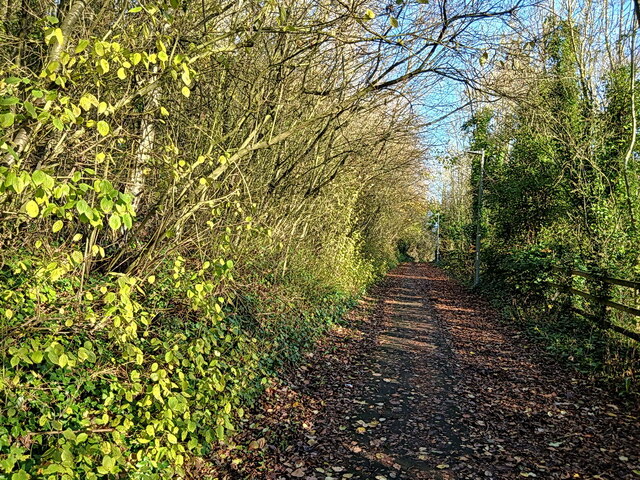
Wooded spoil heaps of the colliery survive beside the footpath towards the old Shifnal Road.
Redevelopment
The pit site is built over by a car dealership on the Stafford Park industrial estate.
Related mines
- Lawn Colliery — Linked underground for pumping; both Lilleshall Company pits at Priorslee.
- Stafford Colliery, Priorslee — Linked underground; Dark Lane's survivors escaped into Stafford in 1884.
Nearby mines
- Lawn Colliery — 0.1 miles (0.2 km) NE
- Stafford Colliery, Priorslee — 0.4 miles (0.6 km) SE
- Springwell Pit, Dawley — 1.7 miles (2.7 km) SW
- Kemberton Colliery — 2.4 miles (3.9 km) S
- Blists Hill Colliery — 2.9 miles (4.7 km) S
Straight-line distance, within 9 miles (15 km). Show on the map.
Disasters & major incidents
-
Dark Lane Colliery shaft accident, 1862
29 December 1862 · Winding / Shaft Accident · 12 fatalities
On 29 December 1862 the coupling box at the end of the winding rope broke at the Lilleshall Company's Dark Lane Colliery, in the Shropshire coalfield, and the box carrying twelve men and boys fell 290 feet to the bottom of the shaft. All twelve were killed.
What's uncertain
Points where sources disagree or the record could not be settled; both accounts are kept. All open questions in the archive.
- The cage fell 290 feet to the bottom of the shaft. (disputed) 3
- The cage fell some 900 feet to the pit bottom. (disputed) 1
Recorded claims
Individual factual claims, each attached to the source(s) that support it below. Where sources disagree, both are kept.
- The colliery was sunk in 1850 and had two eight-foot shafts by 1853, No. 2 going to 810 feet in the Pennystone. 1
- It was known as the Cage Pit or Flies Pit, and was probably the first in the coalfield to use cages. 2,1
- On 29 December 1862 the coupling at the end of the winding rope broke and twelve men and boys were killed. 3,4,1
- The cage fell 290 feet to the bottom of the shaft. (disputed) 3
- The cage fell some 900 feet to the pit bottom. (disputed) 1
- Production ceased around 1900, but pumping continued until 1911. 1
Photographs & further reading
The colliery's shafts, seams, the 1862 cage accident and what became of the site.
View sourceThe 1862 accident and those killed.
View sourceSources
- (secondary) Dark Lane Colliery — The Miner's Walk
- (secondary) The Springwell Pit Disaster by M. Peel — Dawley Heritage
- (secondary) Dark Lane Colliery Shaft Accident - Wellington - 1862 — Northern Mine Research Society
- (primary) Colliery Disaster: Dark Lane, 29 December 1862 — Durham Mining Museum
Record created: 3 October 2026 · Last researched: 3 October 2026